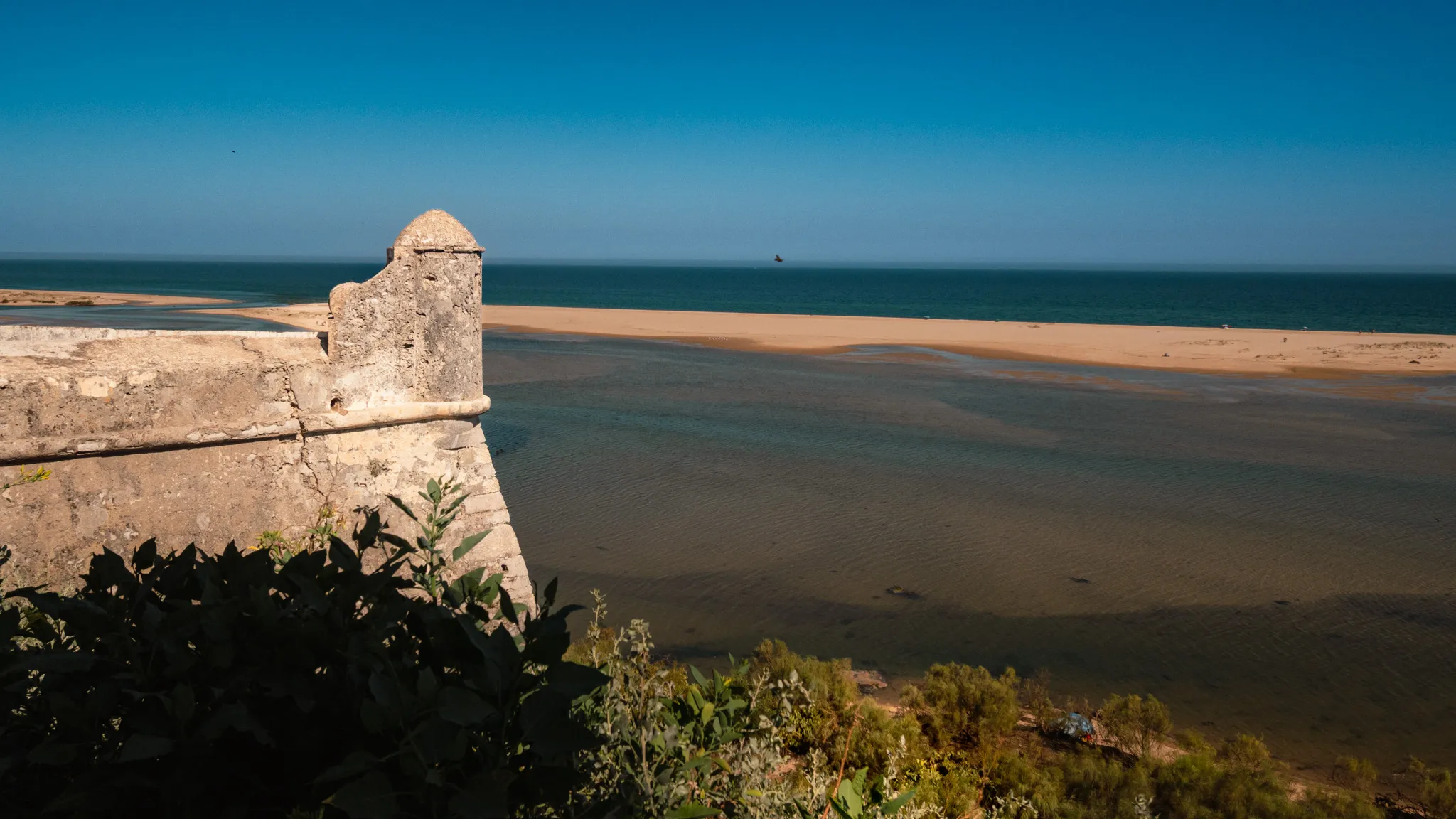
What a discovery. What a surprise.
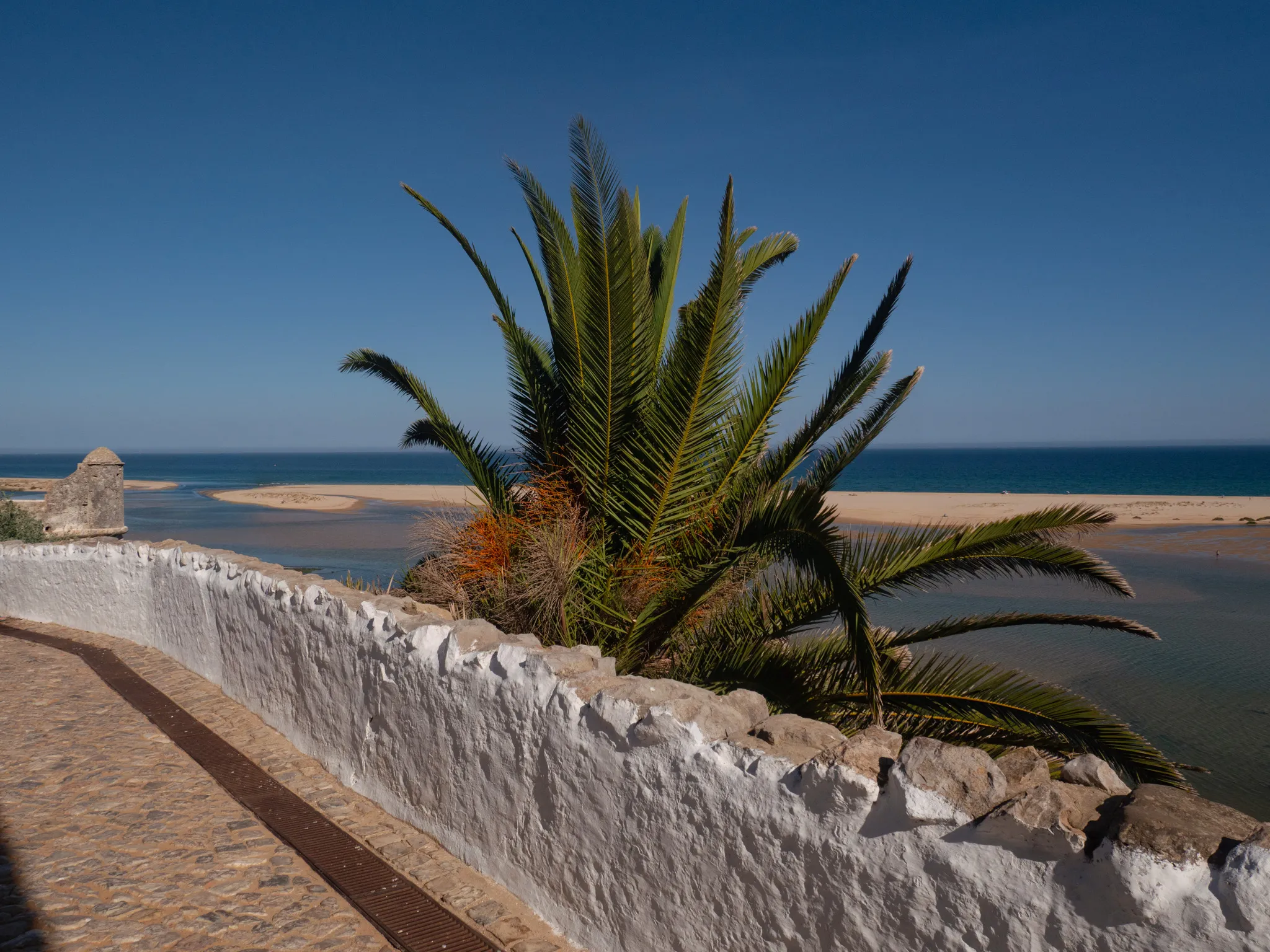
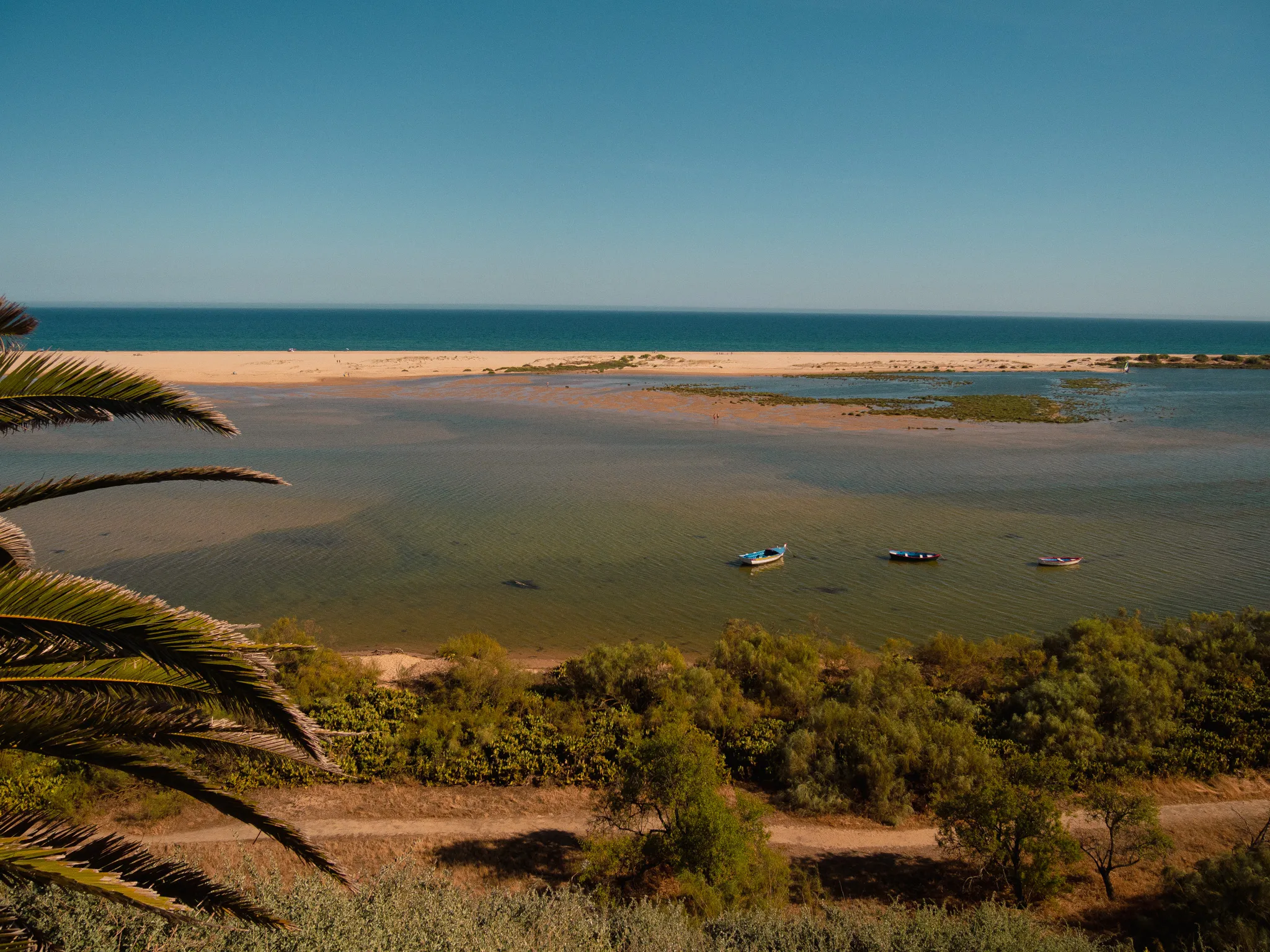
Cacela Velha is a tiny village perched on a hill above a magnificent bay, and the view immediately reminds me of the Bay of Arguin back in Mauritania. The tide is low, and dozens of people are crossing to the far side on foot, the water barely reaching their knees. From the top of the village the scene looks almost unreal: sandbanks rising out of the sea, the water shifting between blue and green, the whole landscape rearranging itself completely every few hours with the tide.
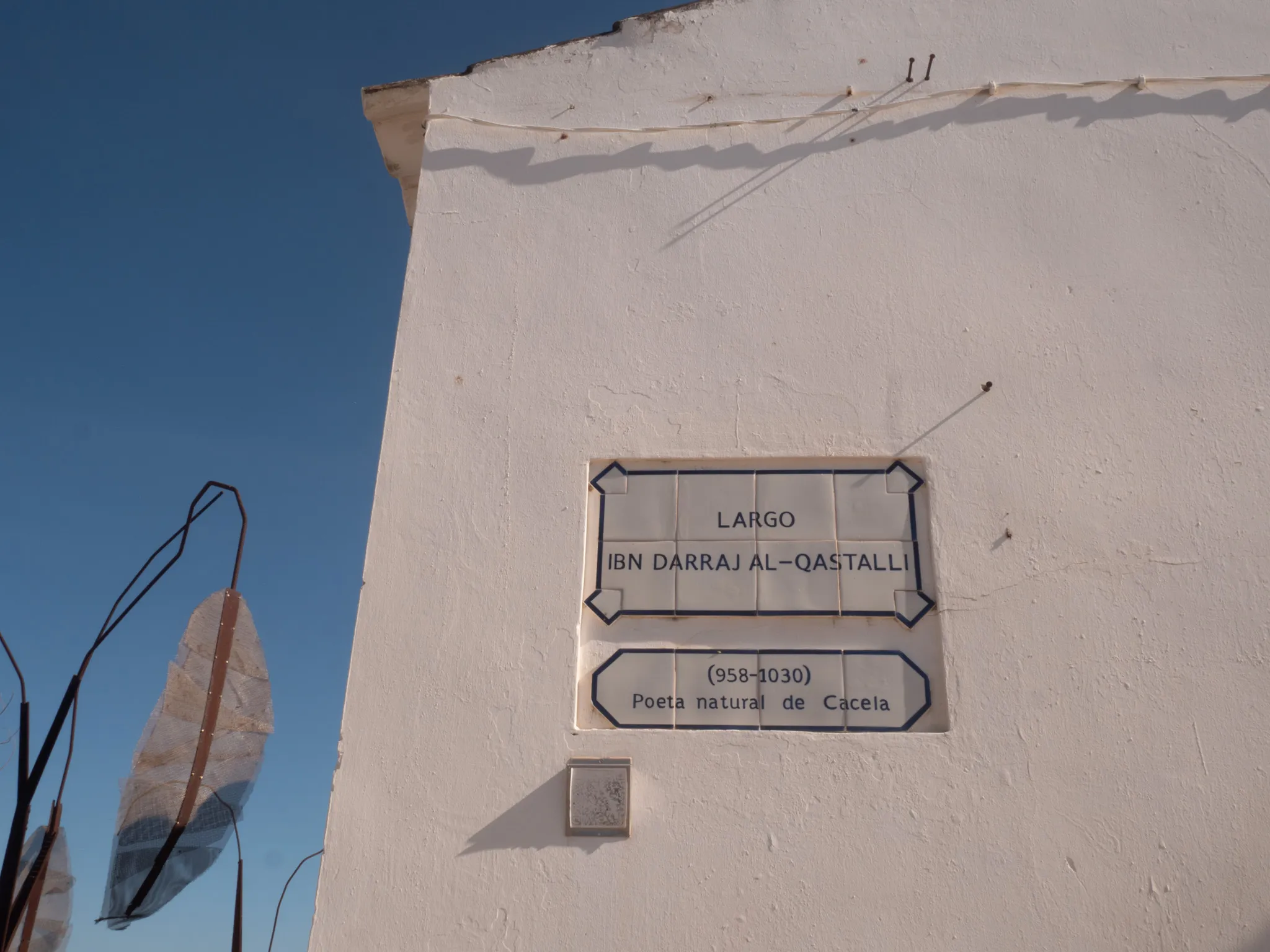
Perhaps that is why I keep noticing references to poets throughout the village: plaques, fragments of verse, names I do not recognise. It feels appropriate. Some places ask to be photographed; others ask to be described, and Cacela Velha clearly belongs to the second kind. I suspect the poets were drawn here by the same thing that drew me: nothing spectacular happens. There are no dramatic cliffs, no famous monuments, no endless list of things to do, only light, water and time, and yet every few minutes the picture is subtly different. The sea advances, the sea retreats, the colours change. It is the sort of place that reminds you nature does not need to perform to hold your attention.
A staircase winds down toward the beach, cacti lining the path, along with several signs warning of snakes. I make my way down. At the bottom, people are still crossing the bay, and I decide not to join them, not because it looks difficult, but because I do not trust the sea.
There is a reason I never learned to trust it.
I come from a country where swimming is surprisingly uncommon. Mauritania has more than seven hundred kilometres of Atlantic coastline, and yet swimming was never really part of my world growing up. The beach, yes. Swimming, not so much. So I learned late, like so many of the things I now consider ordinary. Swimming. Cycling. Hiking. For most people these are unremarkable; for me they were each a small adventure, each one requiring me to learn rules that everyone around me seemed to have received at birth.
Which is why walking across a bay, with the tide perhaps creeping back, feels a little more thrilling than it probably should. So I stay on the shore and watch.
What always fascinates me is how differently each culture decides what counts as normal.Back home, I return from a holiday with a tan and my family reacts as though I have survived a natural disaster.
And then there is the name itself. I had arrived convinced, you will remember, that Cacela Velha must be a village of beautiful, full-figured women, because to my Mauritanian ear velha sounds so close to our own word for exactly that. In Portuguese, however, velha simply means "old."
Here I am in Cacela Velha. The anti-velha, a woman who hikes in the midday sun, counts her daily steps, goes to the gym on holiday and comes home from Portugal with a deliberate tan. Had I explained all this to my grandmothers, they might well have concluded that Europe had finally finished the job.
Back to top