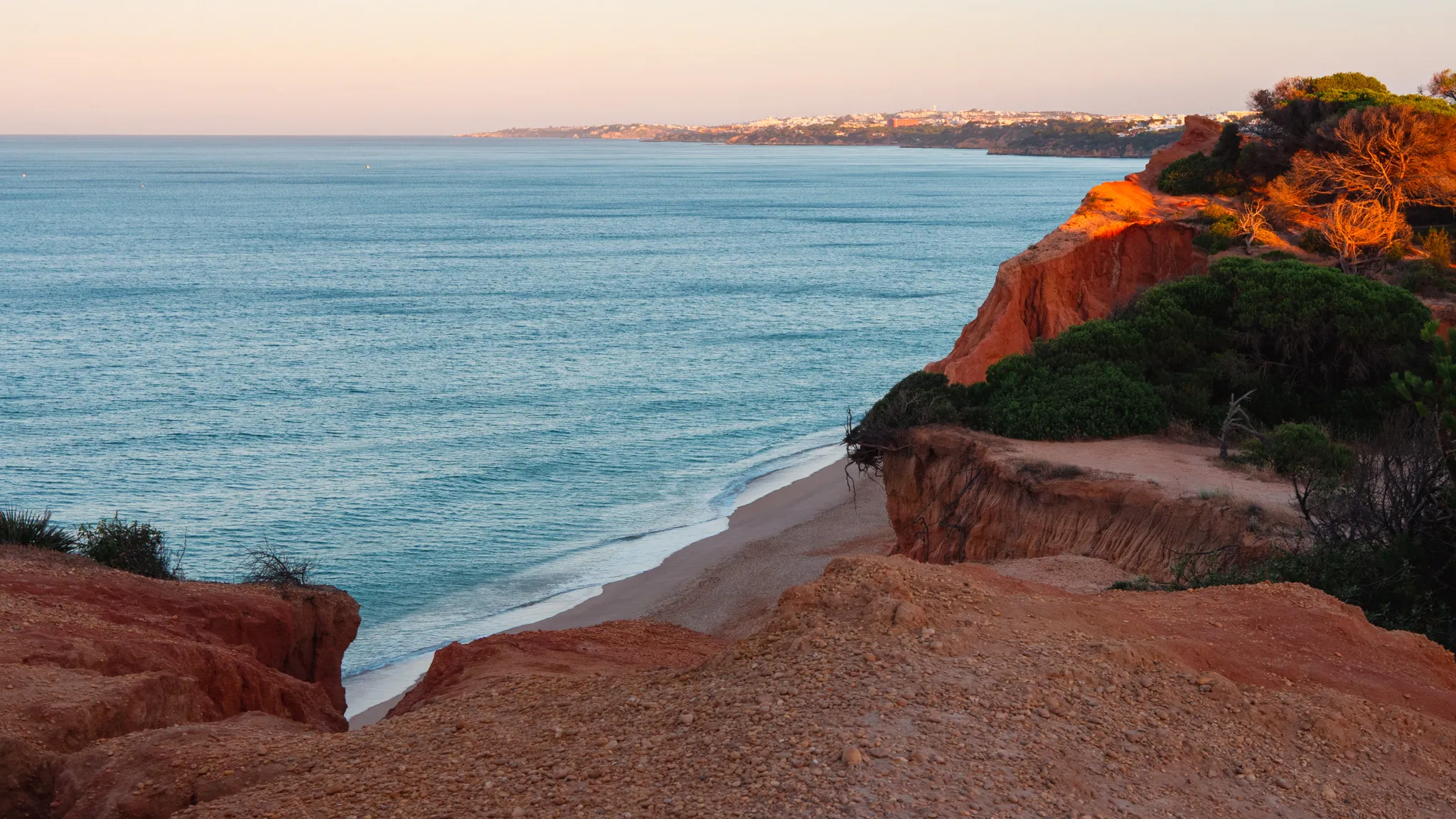
After a relaxing morning at the hotel, we set off toward Cacela Velha. On the way, a road sign points toward Olhão, it seems like a good idea, and so we go.
The town is a pleasant surprise. A beautiful red-brick market dominates the waterfront, the Mercado de Olhão, one of the town's landmarks and home to the largest fish market in the Algarve. If you visit, I recommend having lunch across from it: the street is lively, the produce looks fresh, and the whole place feels unhurried and real.
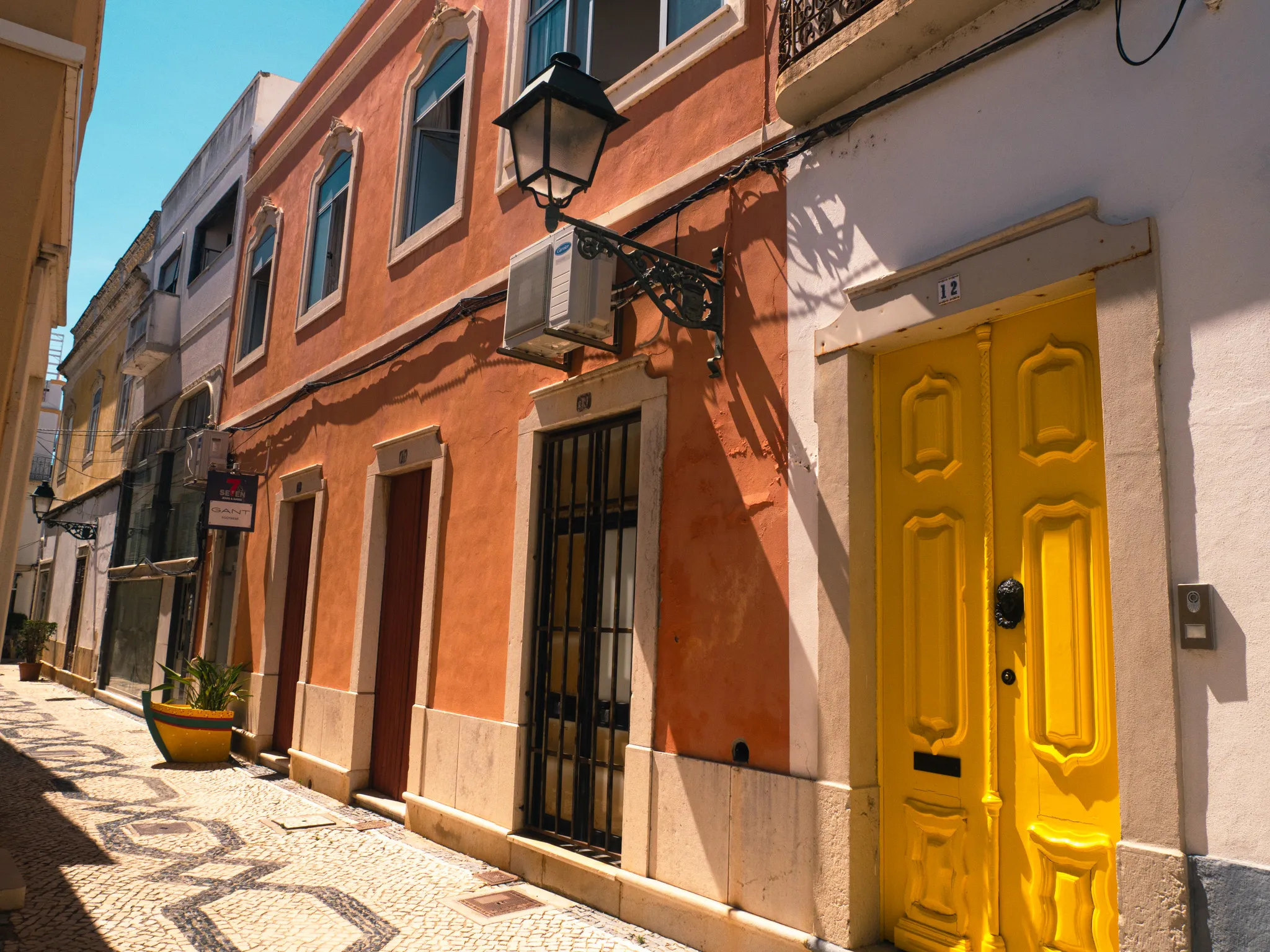
Afterwards I wander through the town, taken with the colourful houses and the decorative window frames. But what strikes me most is that parts of Olhão do not feel entirely European. The white cubic houses with their rooftop terraces remind me more of North Africa than of Portugal, and later I learn this is no coincidence: for centuries Olhão's fishermen traded across the sea with Morocco, and they built their homes in the image of the towns on the other shore. The locals even call it the "Cubist City."
Perhaps that is why the town feels strangely familiar.
A pink chapel catches my attention, and I discover later that it is the Chapel of Senhor dos Aflitos, where fishermen's families once came to pray for the safe return of their loved ones from the sea. Nearby, inevitably, a few tourists pose dramatically for photographs, taking their modelling careers very seriously.
After this unexpected stop, we drive on. None of this was planned; we found Olhão precisely because we were following no one's itinerary but our own: a road sign and a whim, no phone and no reviews to tell us what to think first.
So here I am, driving toward Cacela Velha, a place that is not particularly famous, which I added to my list for one reason only.
The name intrigued me. Not speaking a word of Portuguese, I had become convinced it must be a village dedicated to beautiful, full-figured women.
I should explain. Where I come from, beauty has long been measured in fullness: a round figure was a sign of health, of comfort, of being cherished and well cared for. Thinness was never the ideal it is in Europe (if anything, it was something to worry about), and we even have our own word for a woman of generous, admired proportions. To my Mauritanian ear, "Velha" sounds almost exactly like it.
So naturally, I imagined an entire village of them. At least in my imagination.
I was already curious. Read on to discover what Cacela Velha actually is.
Back to top