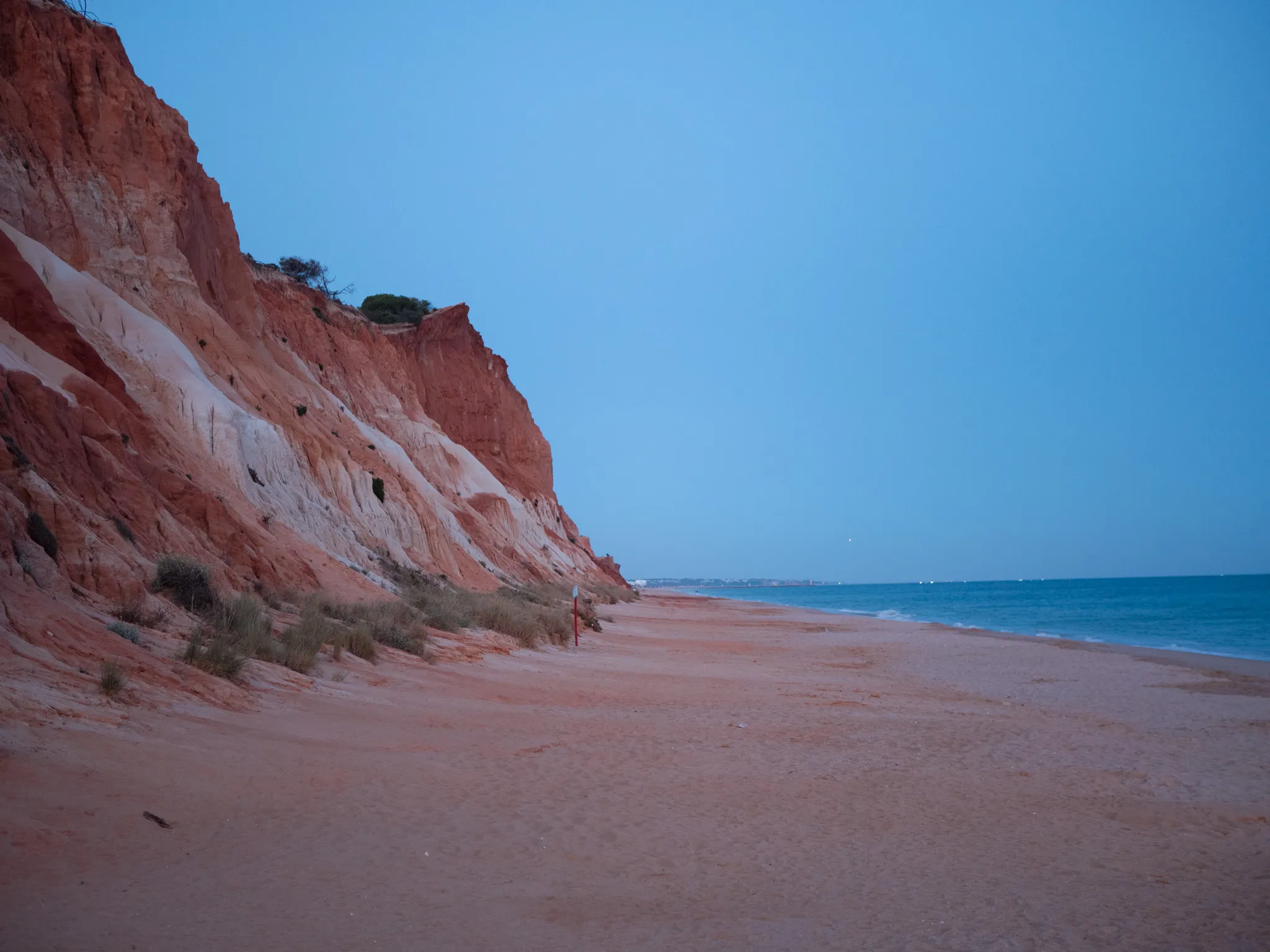
Our fifth day passed quietly, almost without our noticing it. On the sixth, we changed hotels, and I should say at once that this is the one I promised you, pages ago, when I admitted that the first hotel had left me faintly uneasy without quite knowing why. This is the EPIC SANA, on Praia da Falésia, and it was love at first sight.
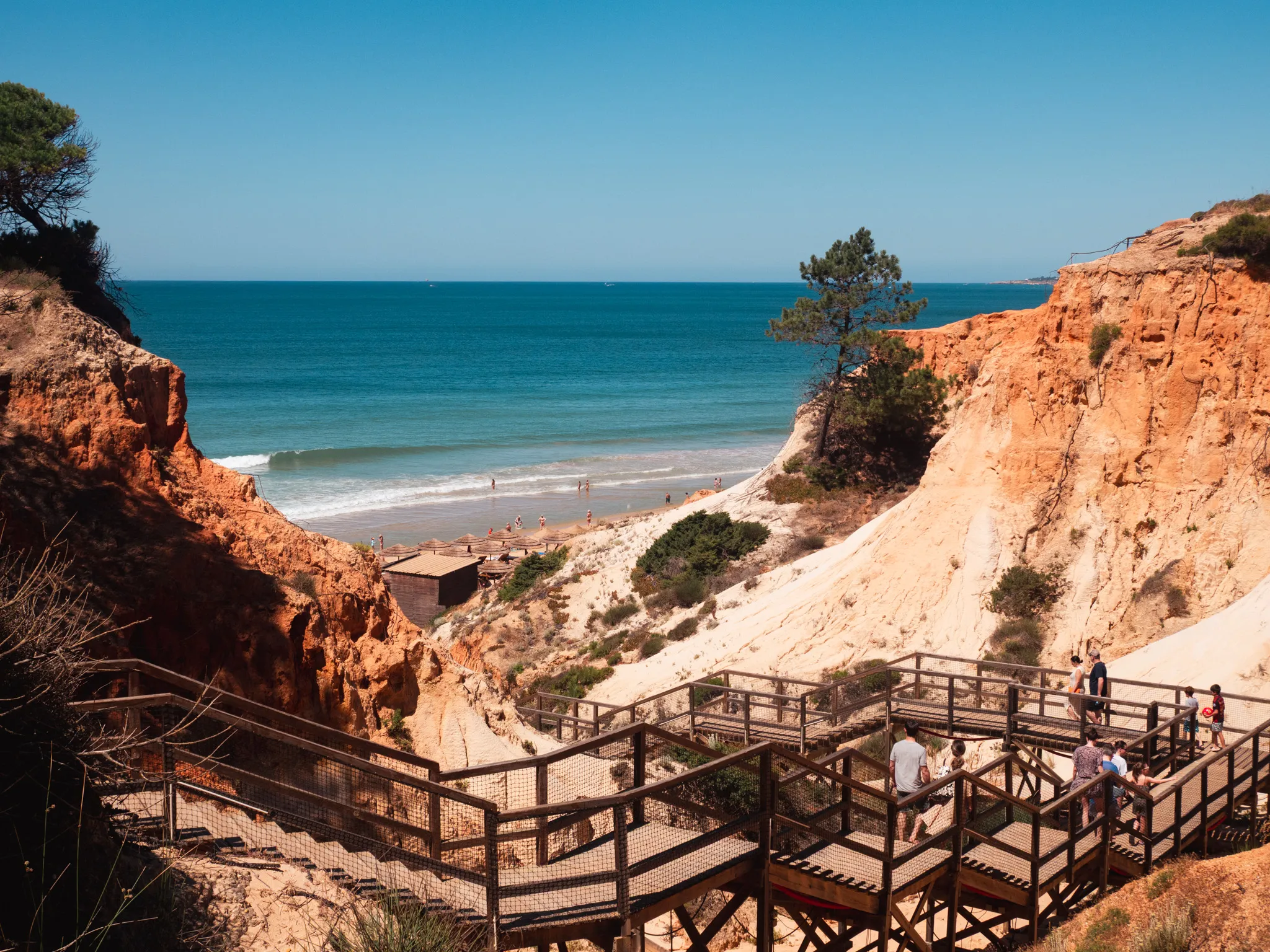
I am someone who tires of places quickly; I like to move, to change rooms, to begin again. But here I did not want to move at all. The hotel sits inside a pine forest, all refined calm and quiet luxury (a wellness spa, a scatter of pools, the smell of resin in the warm air), and from the gardens a wooden walkway carries you out over the trees and down the face of an ochre cliff to the beach below. The rock is striped in every shade of rust and gold; absurdly, it made me think of Antelope Canyon. The first hotel, I understand now, was simply not made for me. It was made for families, too big, too loud. Here, at last, I exhale.
That first evening we ate at the hotel's Japanese restaurant, UDDO. The waitresses moved in kimono, a great drum was struck at intervals across the room, and on every table sat a bonsai that looked older than me. Leather chairs, a hush of refinement, sushi that dissolved on the tongue and was set down with a kind of ceremony: for an hour I forgot entirely where in the world I was. My only disappointment: the waitress had promised to find out the age of the little bonsai on our table, and never came back to tell me. I am still wondering.
The next morning I set an alarm (on holiday, of all things) to catch the sunrise. At a quarter to six I walked out through the pines and along the top of the cliffs, and there was no one. Only me, and the enormous beach below, and the ochre walls, and the sun just beginning to push its first rays over the rim of the water. I love these moments. Nothing moving. The waves somewhere behind me, the forest somewhere ahead, and me between them on the cliff, already turning it into a memory while it was still happening.
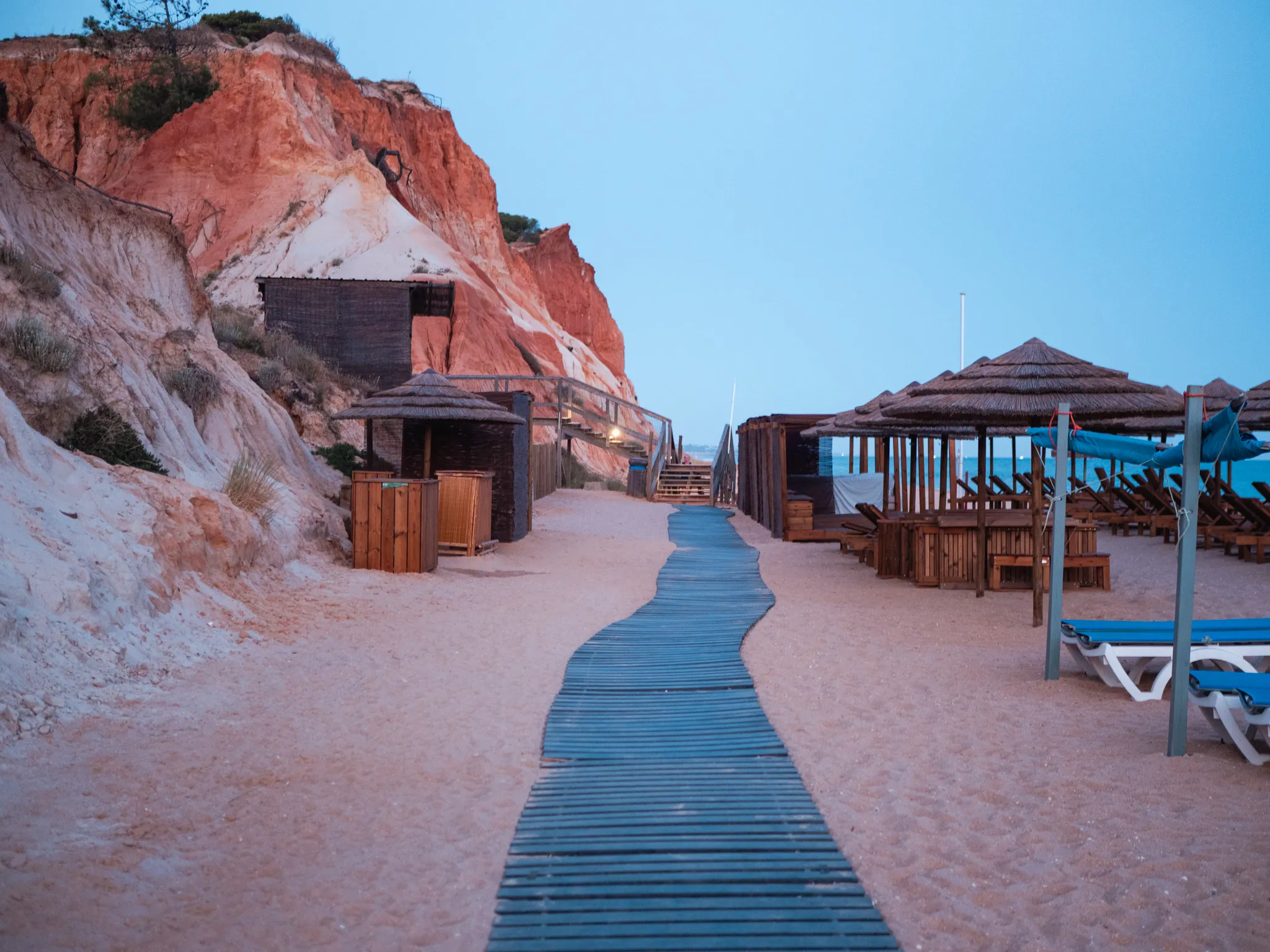
Later I went down to the beach itself. The water is that luminous turquoise, and so shallow you can wade out for what feels like forever. The hotel's loungers are not free, because this is not a private beach, and I find I am glad of it. A beach this beautiful should not be fenced off for the privileged few.
I have a small, slightly shameful habit: I give imaginary names to the guests I keep seeing. There is "Sam Altman," a man who could be the double of a certain technology chief executive. There is "the donna," a very elegant older woman who carries herself like the Italian grandmothers of old films. And there is "Rembrandt," a woman who settles in the same spot each morning and then spends the whole day at the edge of the pool, painting watercolours, with the most natural, unhurried air about her. Nothing dramatic happens here. Everything is simply, almost suspiciously, perfect. If you go, come here. I mean it.
Before I leave you, though, I have to confess something I have been carrying since earlier in this trip. I never went to the cape.
A few days ago I was very close to Cabo de São Vicente, the great headland the ancients believed was the literal end of the world, the place where the known earth stopped and the ocean began. I love places like that, places that mark the end of something. And I turned the car around.
I have told you, more than once in these pages, that I have a habit of not finishing things. Of stopping just short. Standing on these cliffs at Falésia, I think I finally understand why. I am a little afraid of ends. Of arriving. Of reaching the last page and finding nothing after it.
But there is another way to see it. Perhaps I turned back so that the end of the world could stay, for me, a thing still out there, unreached, and therefore endless. Maybe that is also why I love this view from the cliffs so much. It has no edge, no finish, nothing completed. It simply goes on.
On the last day, I cancelled the rest of my plans. There were other places I had meant to see, and in the end we chose to spend the final hours here, at the hotel, then on the beach, walking once more along the cliffs with the sea on one side and the pine forest on the other. It is a magnificent walk, and I recommend it without reservation. The sea stretched out immense and improbable, turquoise against the burnt orange of the rock, and I caught myself wishing I could tell Rembrandt to carry her paints out here, to the cliffs, instead of painting the same pool day after day.
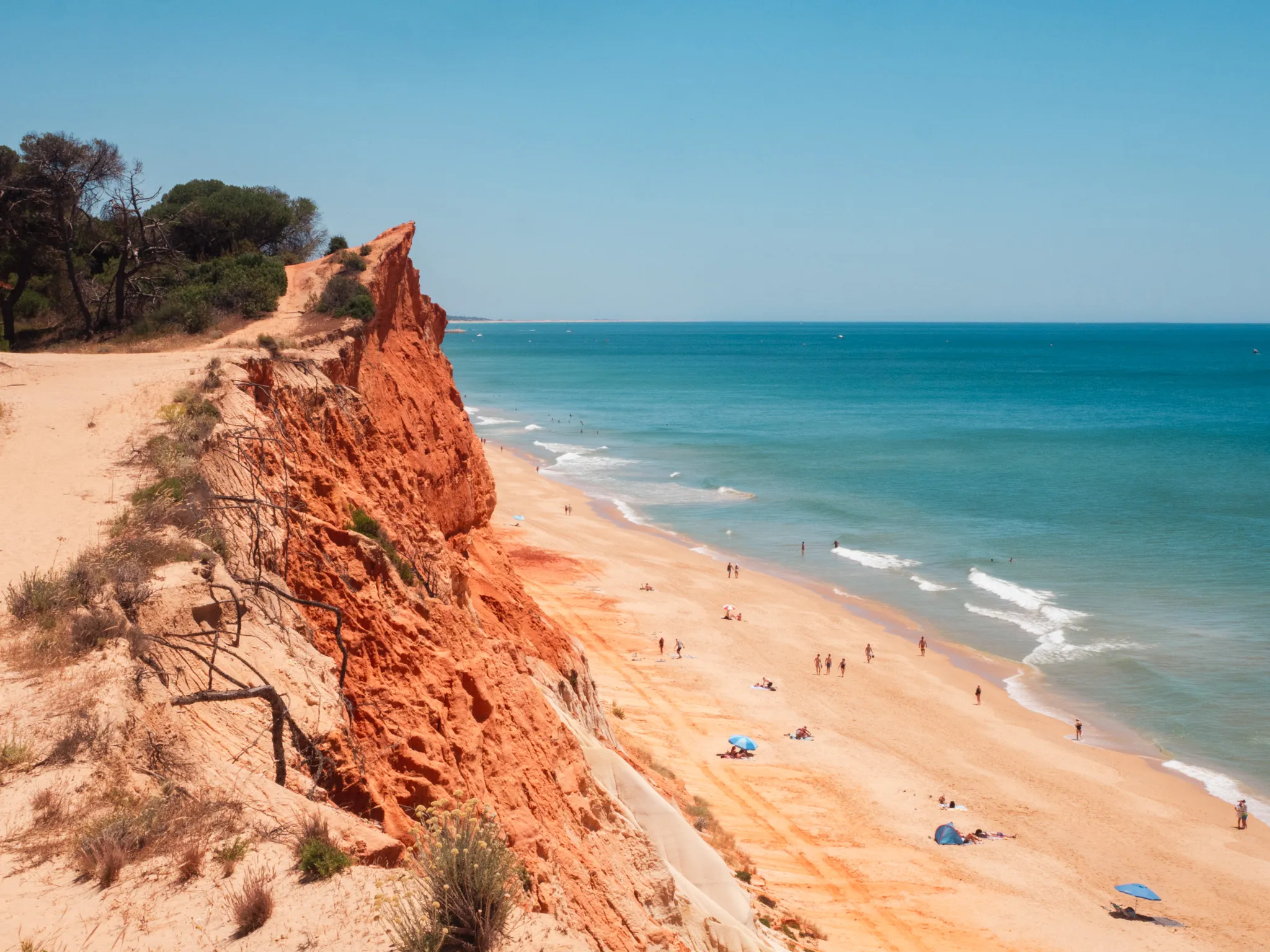
In the end we stayed three days at the EPIC SANA, far longer than we had planned, simply because we could not bring ourselves to leave. We did very little. And so, in truth, I have almost nothing more to tell you, except that doing nothing, in the right place, turns out to be its own kind of fullness. There is so much of the Algarve I still have not seen: caves I never entered, a cape I never reached, towns that are still only names on a list. I will come back for them. This was not the end of the Algarve for me. Only the end of this visit.
I think I will leave with a tightness in my chest. Everything was perfect: the slow, unhurried days, the sound of the waves, these endless cliffs. I loved all of it.
And I loved, most of all, that infinite view, perhaps, in the end, precisely because I never went to the cape.
Tomorrow we drive to Lisbon for two days, before flying home to Switzerland.
Back to top