I spent most of the boat ride from Sanur holding on to my seat. The fast boats bounce, and I'm not great with boats. Then the island came up out of the sea, a wall of white cliffs with water so blue at the bottom that it looked edited. It's only a short hop from Bali. It doesn't feel close once you're there.
Nusa Penida is the biggest of the three islands off Bali's southeast coast. Its small neighbours are Nusa Lembongan and Nusa Ceningan, linked to each other by a yellow footbridge. Penida is the wild one. It's dry and hilly, still quite rural, and the famous spots sit on the edge of very high limestone cliffs at the end of slow, bumpy roads. We stayed two nights, and I'd give it more if you can. Please don't try to do it as a day trip. You'd spend most of it in a car.
Day 1Getting there
Fast boats leave from Sanur beach throughout the morning and take 30 to 45 minutes, depending on the sea. There's often no proper pier, so you may wade out through the water to get on. Pack light. Only bring what you can carry easily with wet feet. Most boats land on the north coast, around Toyapakeh or Banjar Nyuh, and that's also where most hotels and restaurants are.
I'd love to tell you I sat there calmly enjoying the view. I didn't. Worth it, though.
Book the boat a day ahead in high season, and ask your hotel to have a driver waiting at the harbour. Since April 2026 you pay the island entry fee (about 25,000 IDR) online before you arrive. Since September 2026 a lot of the big spots also charge their own entry on top of that, so check prices before you go.
Where we stayedKesuma
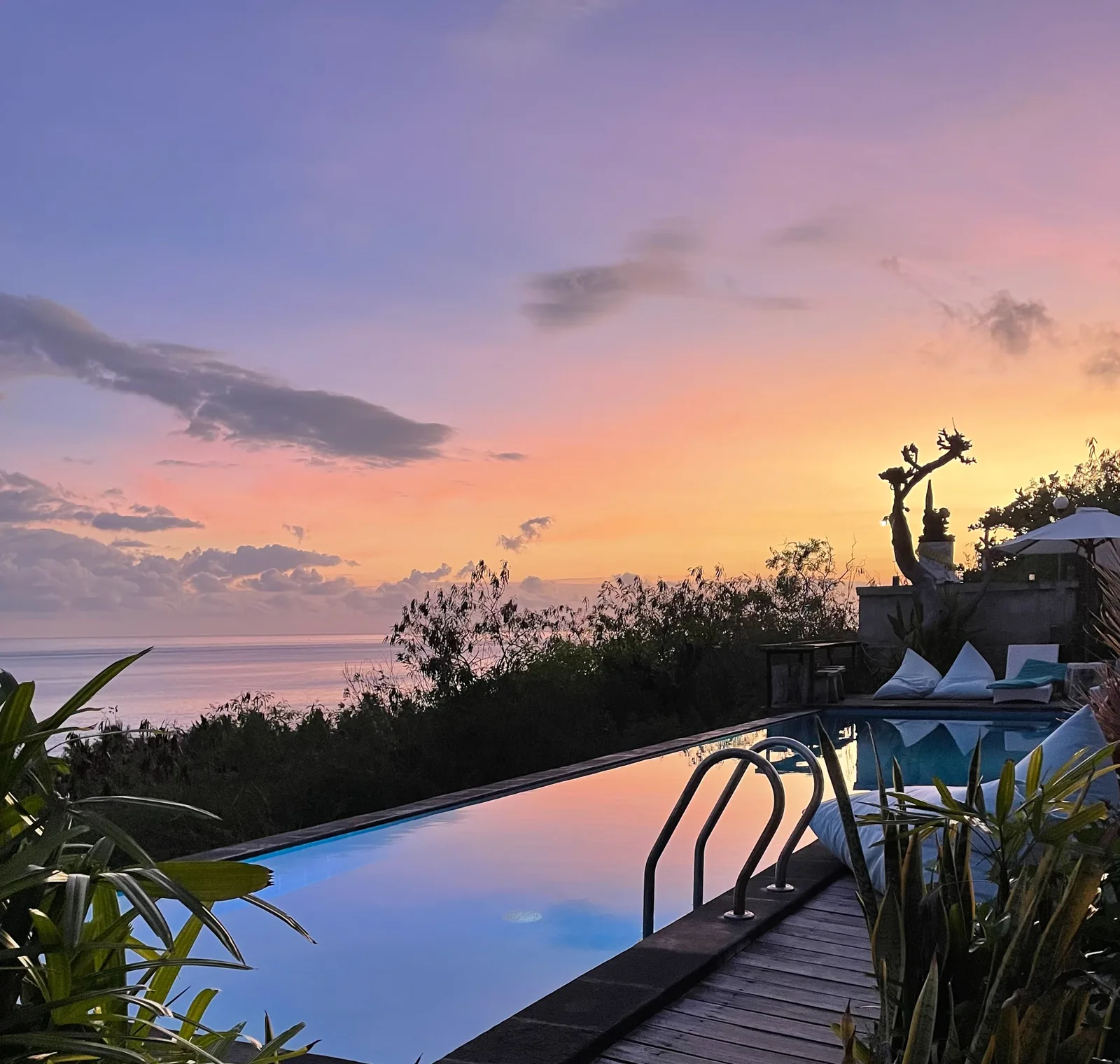
We stayed at Kesuma, an Airbnb with little separate bungalows and a private pool looking out to the sea, with orange ixora flowers all around it.
We also had a roommate. On the first night a gecko settled on the curtain, right above the bed. I didn't mind him until he started calling. Geckos here make a loud, clicking "geck-o" sound, over and over, and that's literally where their name comes from: "gecko" is borrowed from the Malay word for the animal, which copies its call. So now you know. He stayed all night, and he was louder than the waves.
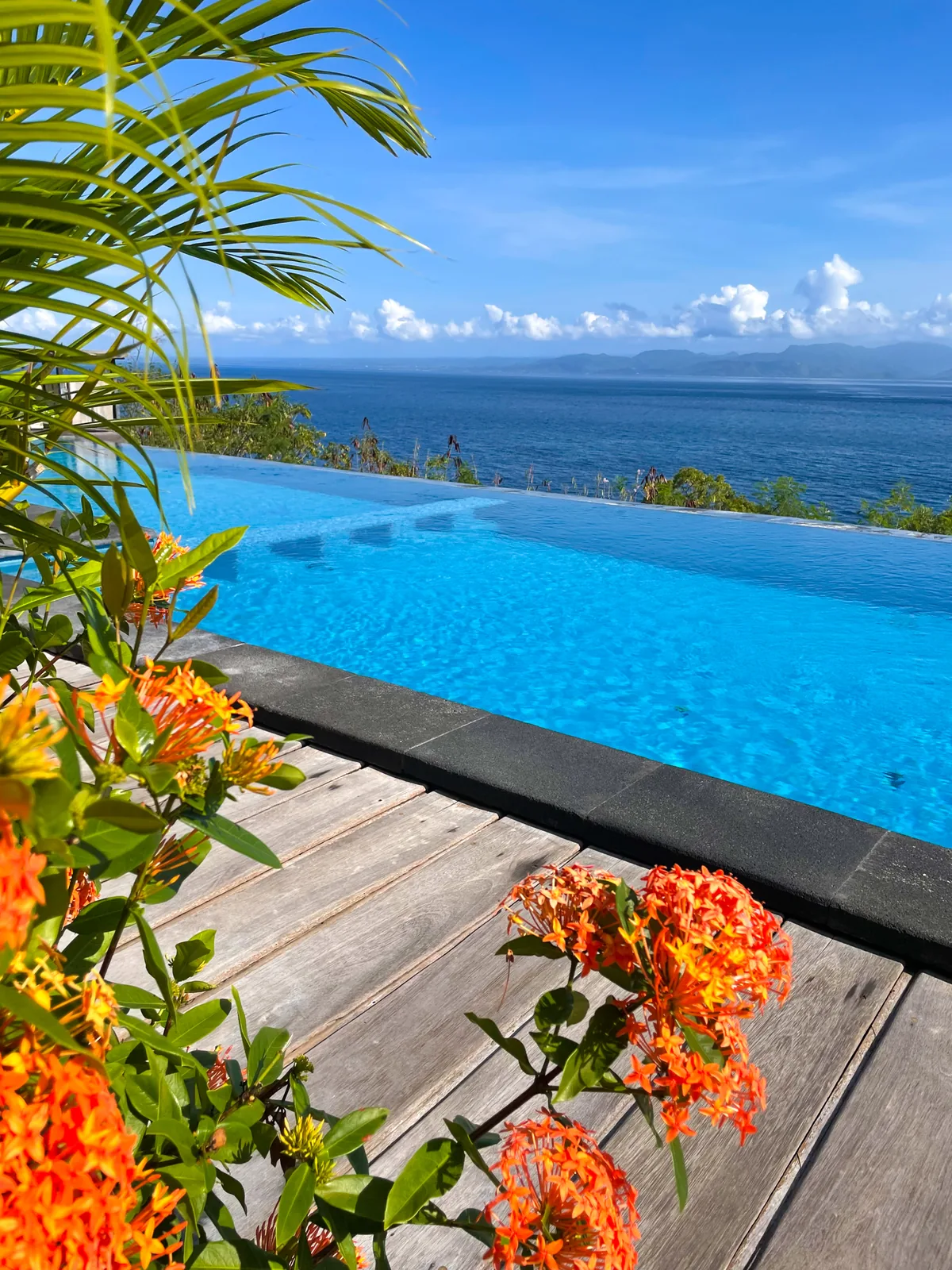
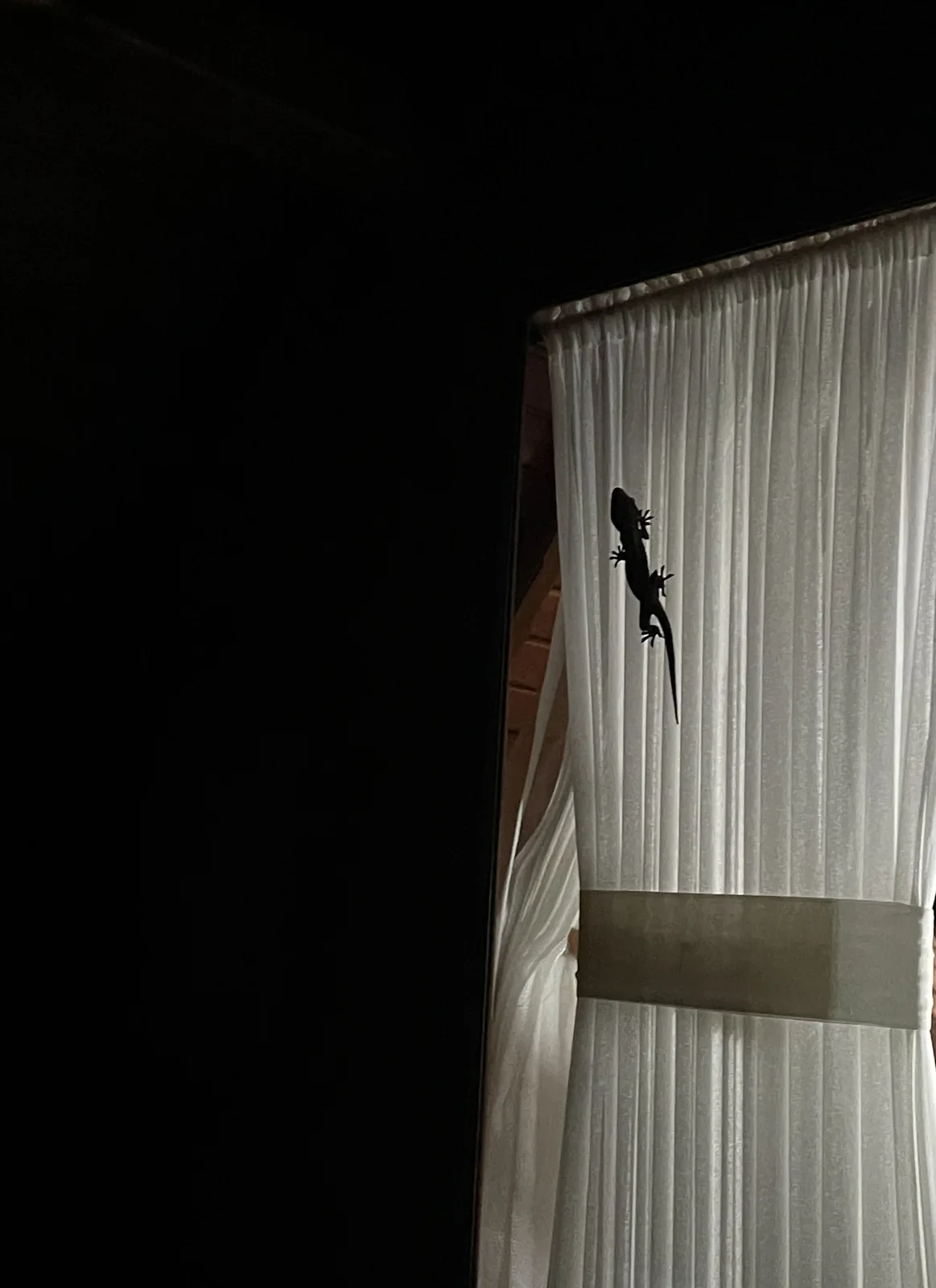
Our pool, with the sea right behind it. And our roommate on the curtain, first night.
Kesuma gave us a scooter for free, and we did try it. But the roads here are steep and full of potholes, so after that we hired a local guide with a car. He was amazing. He knew exactly which spot to go to at which hour, so we kept missing the crowds. On the steep parts of the hikes he gave us a hand, and he took lovely photos of us too. You'll see how much that mattered at Kelingking.
A driver or guide with a car for the day is the easy way to see the island. Agree the price and the route the evening before. The west coast (Kelingking, Broken Beach) and the east coast (Diamond Beach, the treehouse) are about 1.5 hours apart on these roads, so do one side per day. If you do ride a scooter, only do it if you're really confident: the roads are narrow and steep, with loose gravel on the bends.
Day 2Kelingking
Kelingking means "little finger" in Indonesian, and from the top you can see why. A long, thin headland reaches out into the sea. Most people see a T-Rex instead. It's the cliff you've probably seen online, and it's the reason a lot of people come to the island at all. We got there super early in the morning, which I really recommend.
"Fewer people, less waiting."
There were monkeys at the top too.
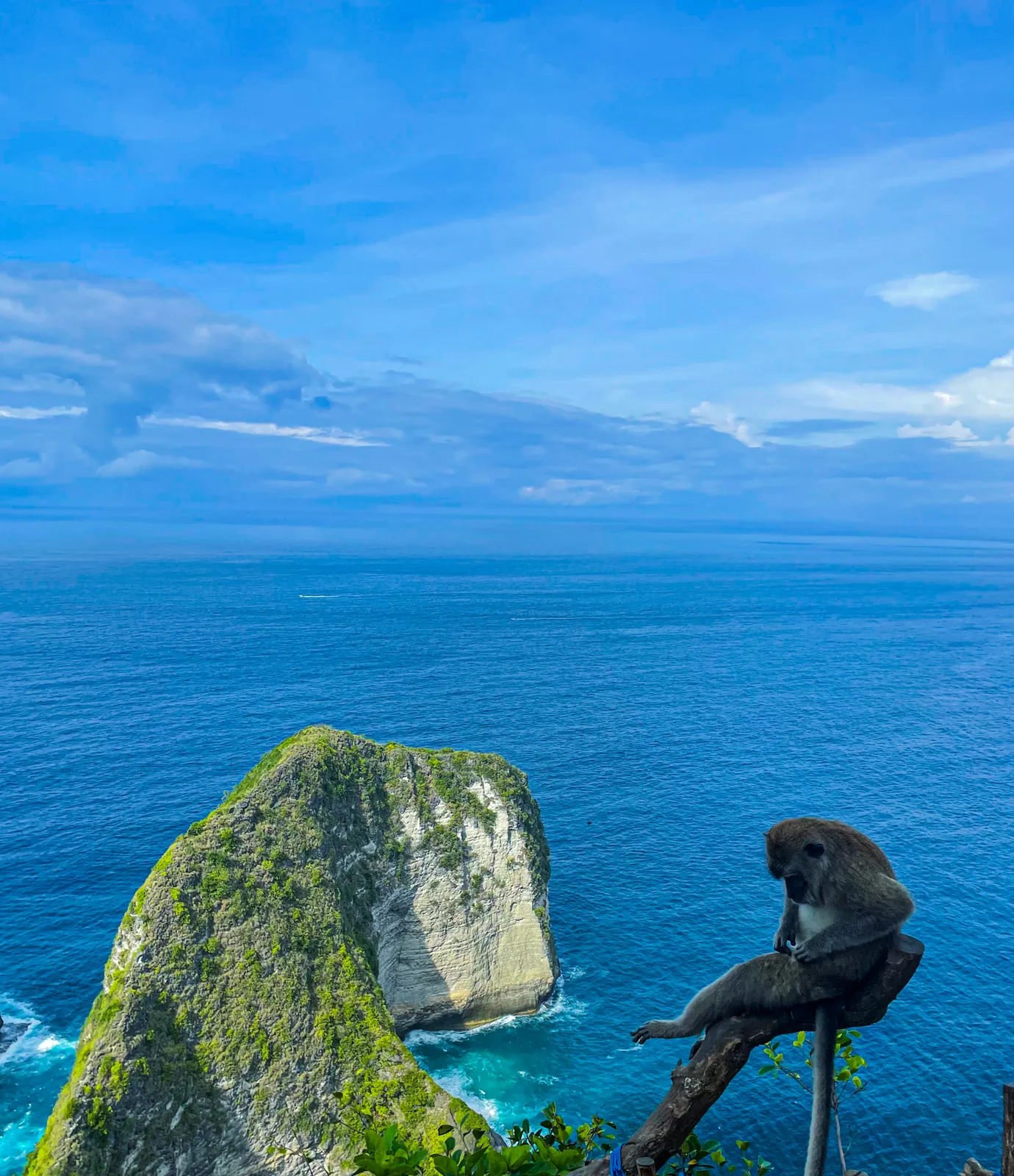
You can stay at the top for the famous view, and loads of people do. We went all the way down. The path runs down the spine of the headland on rock steps and roots, with bamboo railings to hold on to, and it takes about 45 to 60 minutes each way. It was steep and a bit intimidating. This is where our guide really earned his money. Good shoes and plenty of water are a must.
The beach at the bottom was beautiful, but the waves were strong, so we didn't swim. You go down for the view back up at the cliff, and for the feeling of having done it.
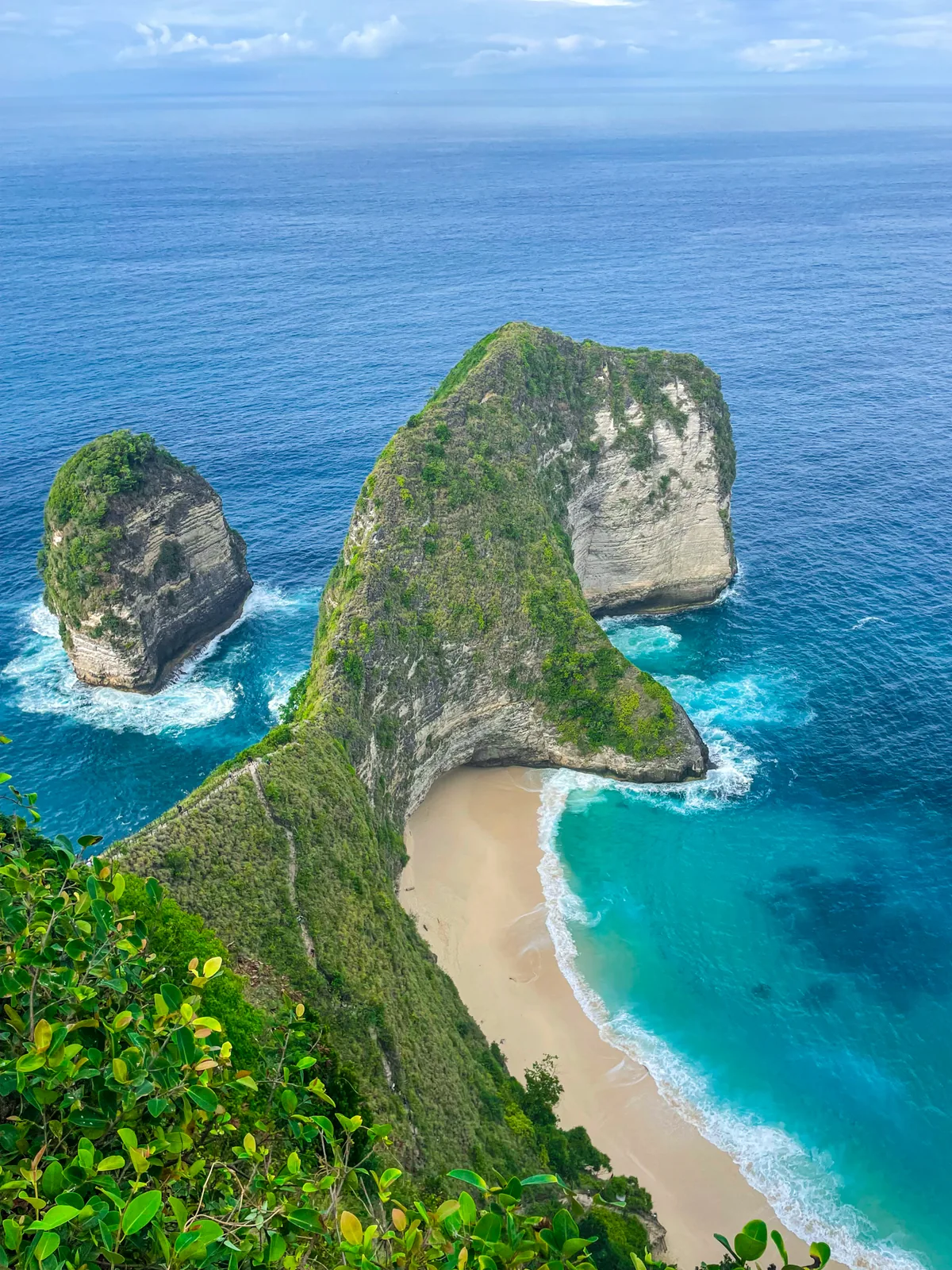
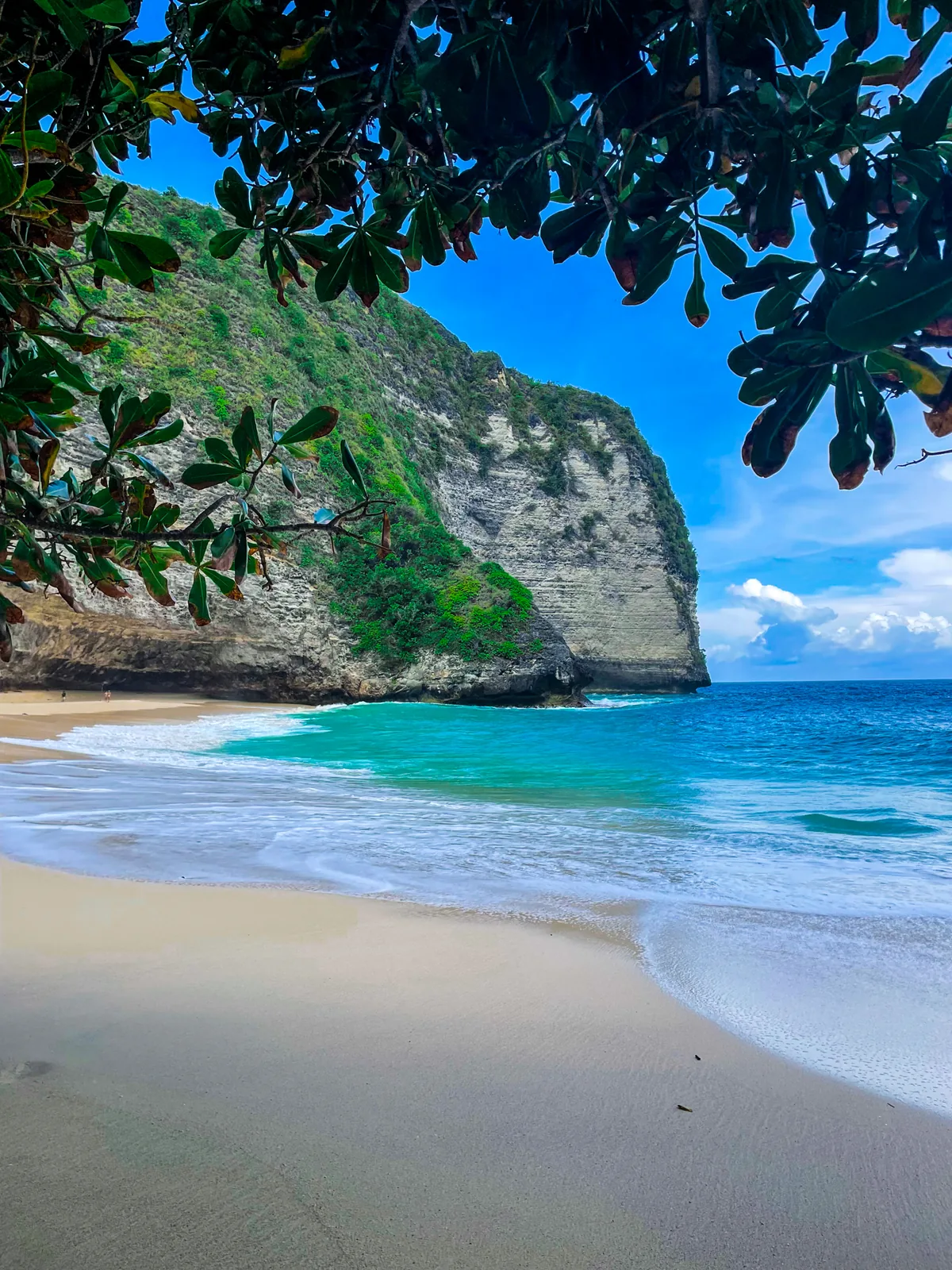
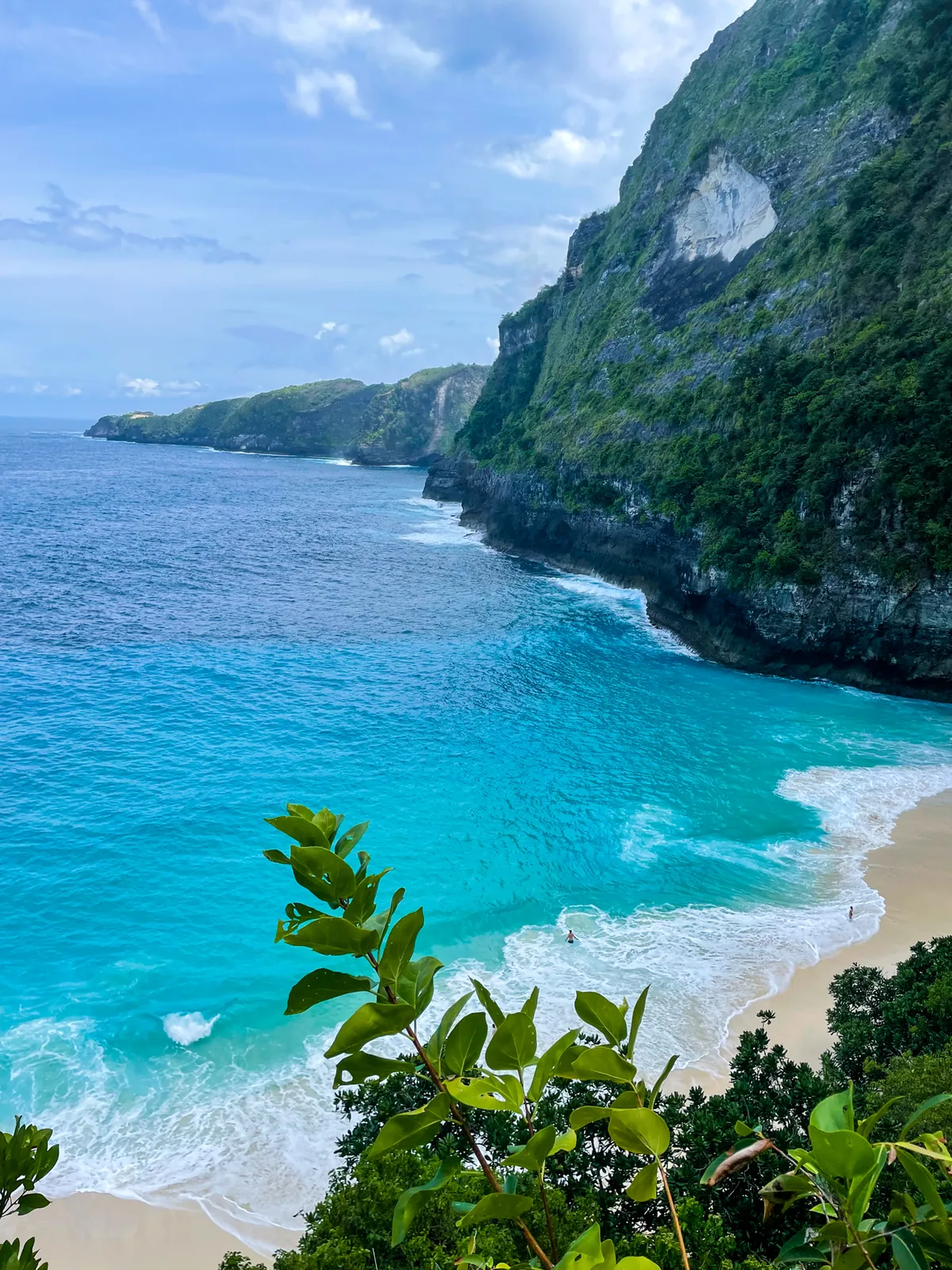
Go at sunrise if you can. Count on roughly 45 to 60 minutes each way. Wear proper shoes, not flip flops, and bring lots of water. The waves are strong, so don't plan on swimming. After heavy rain the path gets slippery and is sometimes closed.
Still day 2Broken Beach and Angel's Billabong
After Kelingking we went on to Broken Beach. Its Balinese name, Pasih Uug, means "broken sea", and that's exactly what it looks like: a round cove where the sea comes in through an arch in the cliff, as if part of the wall had fallen in. A path runs around the rim, and from the top you look down on the whole circle.
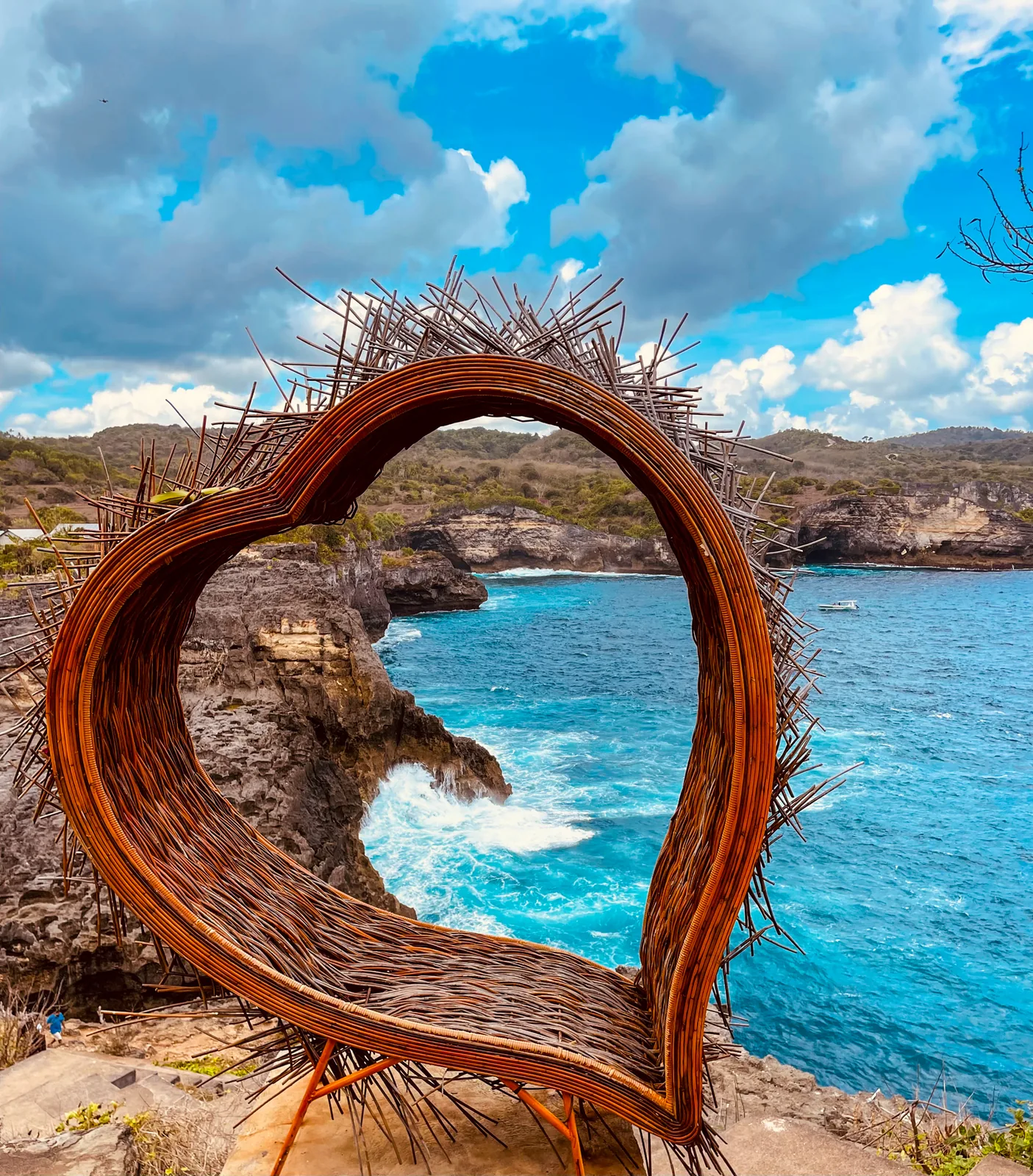
Angel's Billabong is a short walk away, and it was another highlight for me. It's a natural rock pool right on the edge of the sea, clear and green between the cliffs and filled by the waves. On a calm day at low tide the water is completely still. When the swell comes in, the waves break straight over it.
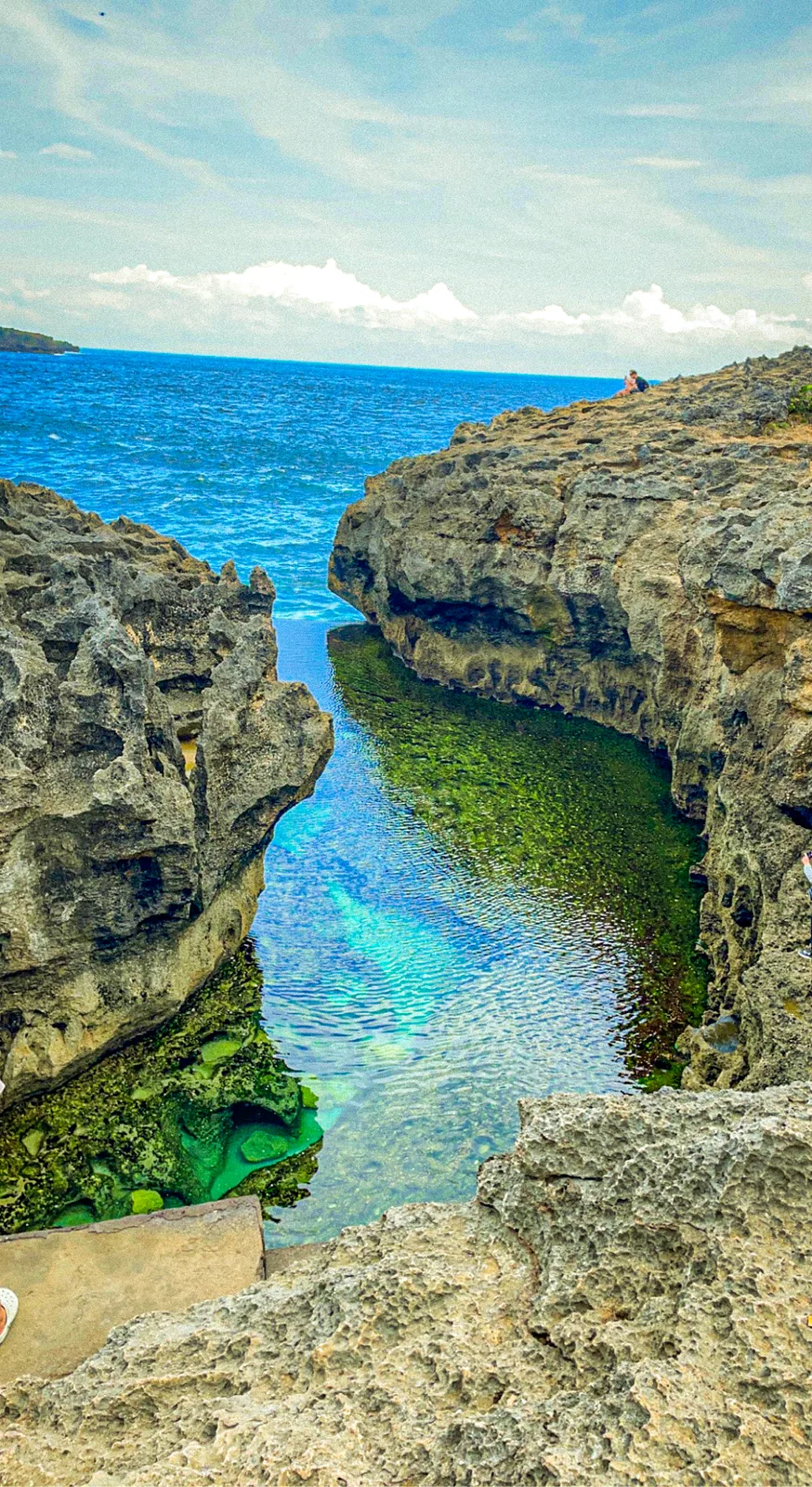
Angel's Billabong is only safe at low tide when the sea is calm. People have been swept off the rocks here. Ask your guide before going anywhere near the water.
Day 3Diamond Beach and Atuh
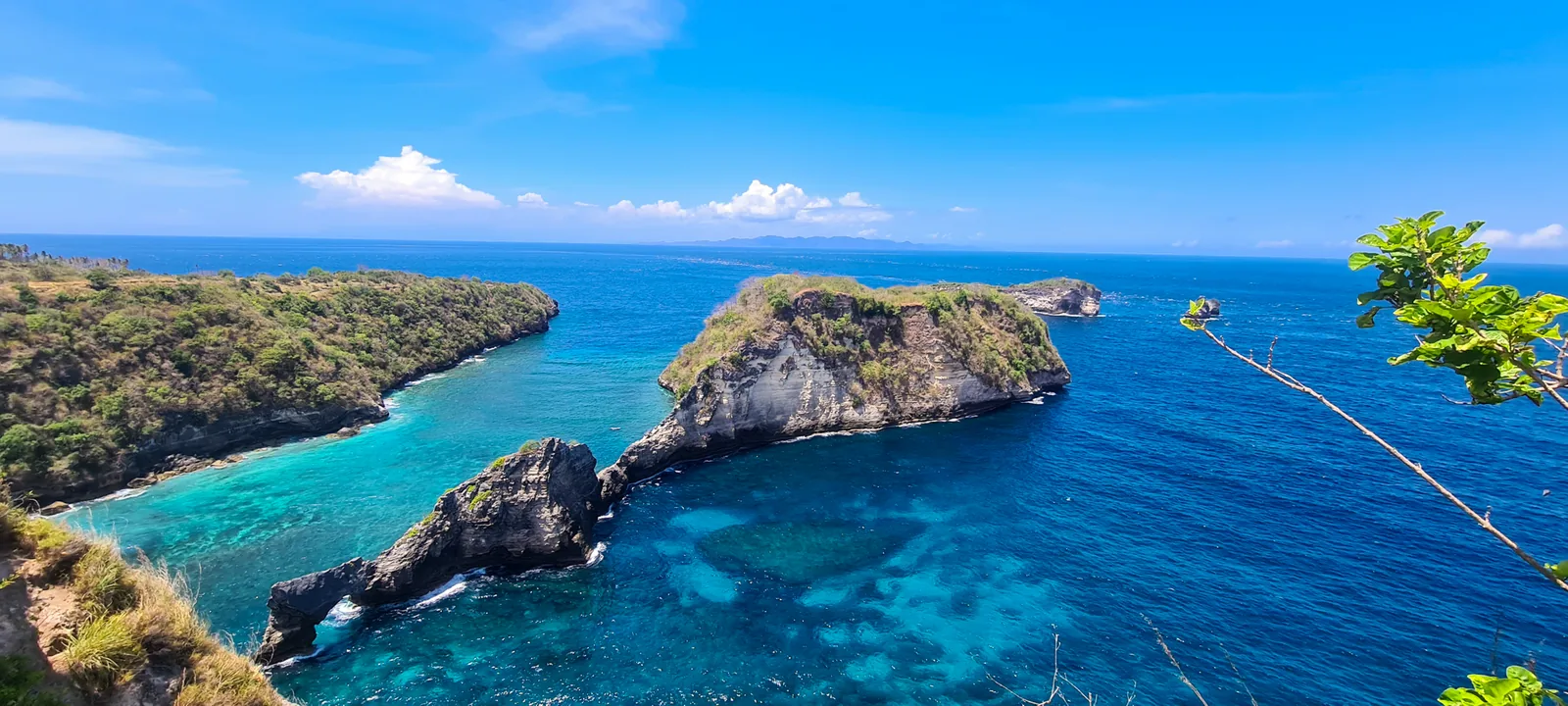
On our last morning we crossed to the east side of the island. You reach Diamond Beach by a staircase cut straight into the white cliff, and at the bottom the water is a blue I still can't quite describe. We also went down the stairs to Atuh Beach next door, a wider bay with a rock arch standing in the water. Then we climbed up to the Thousand Islands viewpoint, where the coast breaks up into rocks and little islands in very deep blue water.
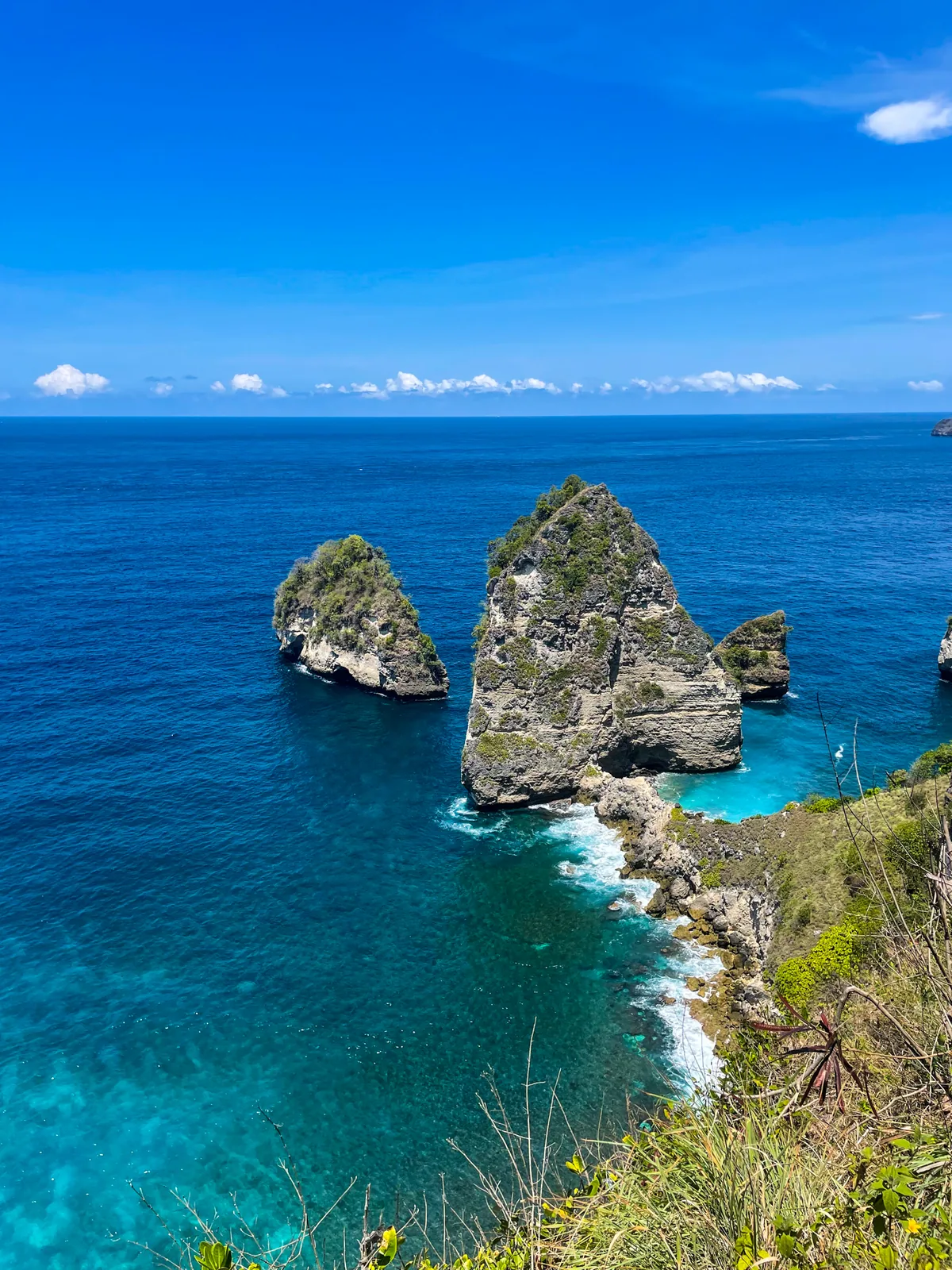
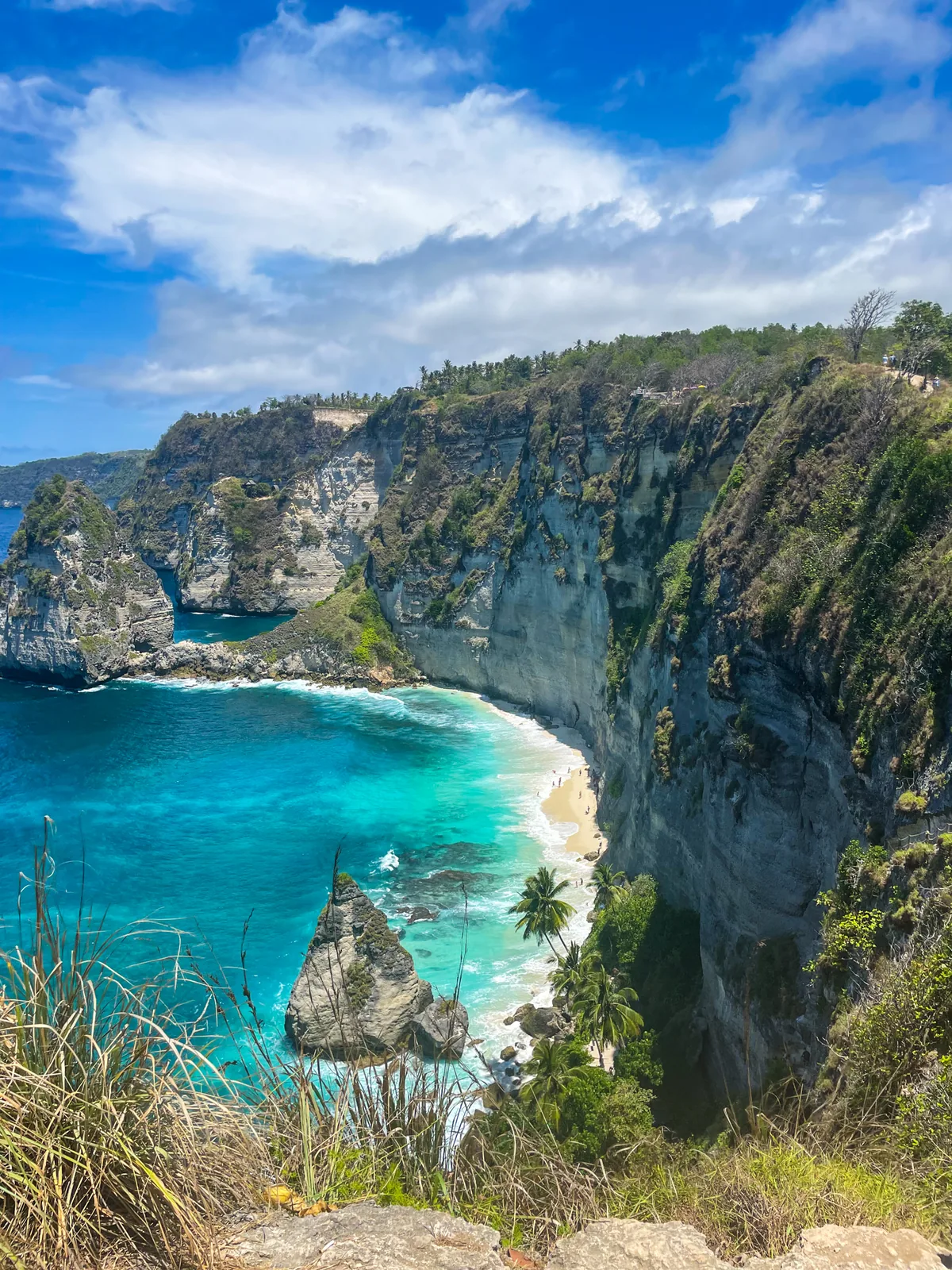
The coast near Atuh and Diamond Beach.
Right next doorThe treehouse
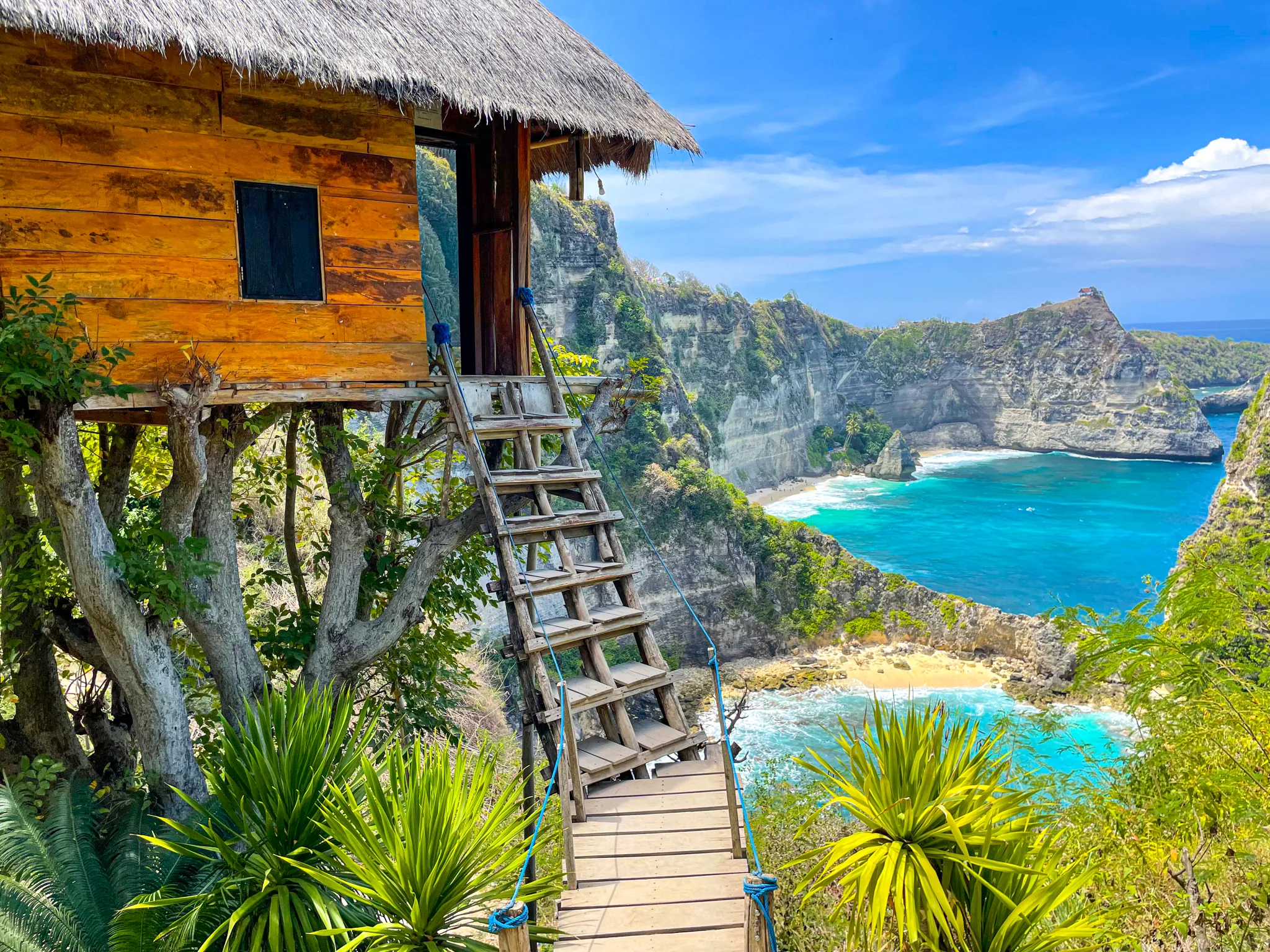
A short walk along the cliff from the Thousand Islands viewpoint is the treehouse from the top of this page. It's called Rumah Pohon Molenteng, which just means the Molenteng treehouse, and it was put up by a local family on their land above the sea. It's a little wooden hut with a thatched roof, sitting on tall stilts at the very edge of the cliff, with the bay and the rock islands right behind it.
It's a photo spot now, so you pay a small fee to the family at the entrance, and then you wait for your turn on the ladder. A few of the huts can even be rented for the night if you don't mind basic.
It's pretty, but to me it felt a bit staged. You pay, then you stand in a queue and wait while everyone before you does their photo. That's good to know about Bali in general. Some places are built around the photo more than the place.
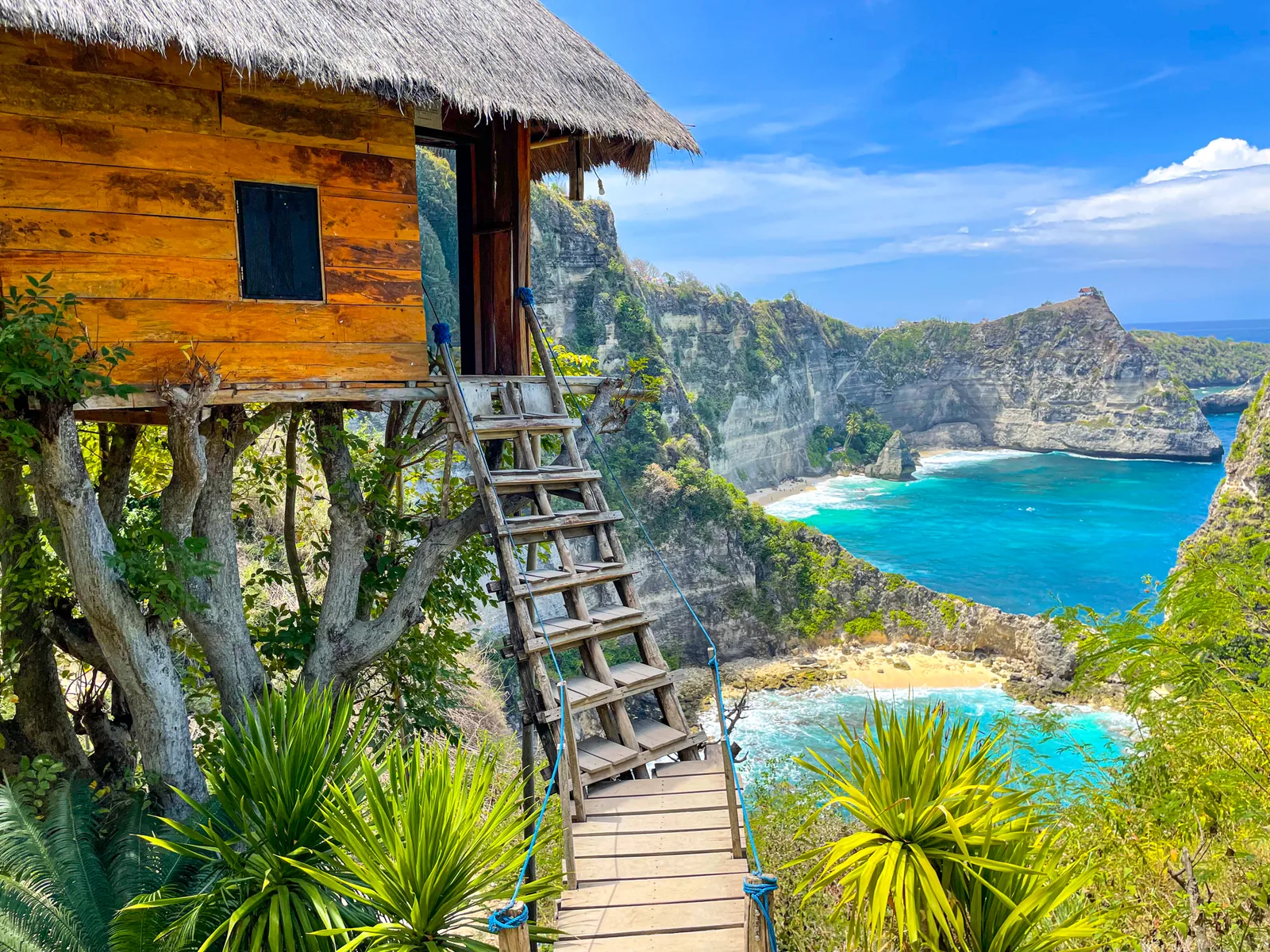
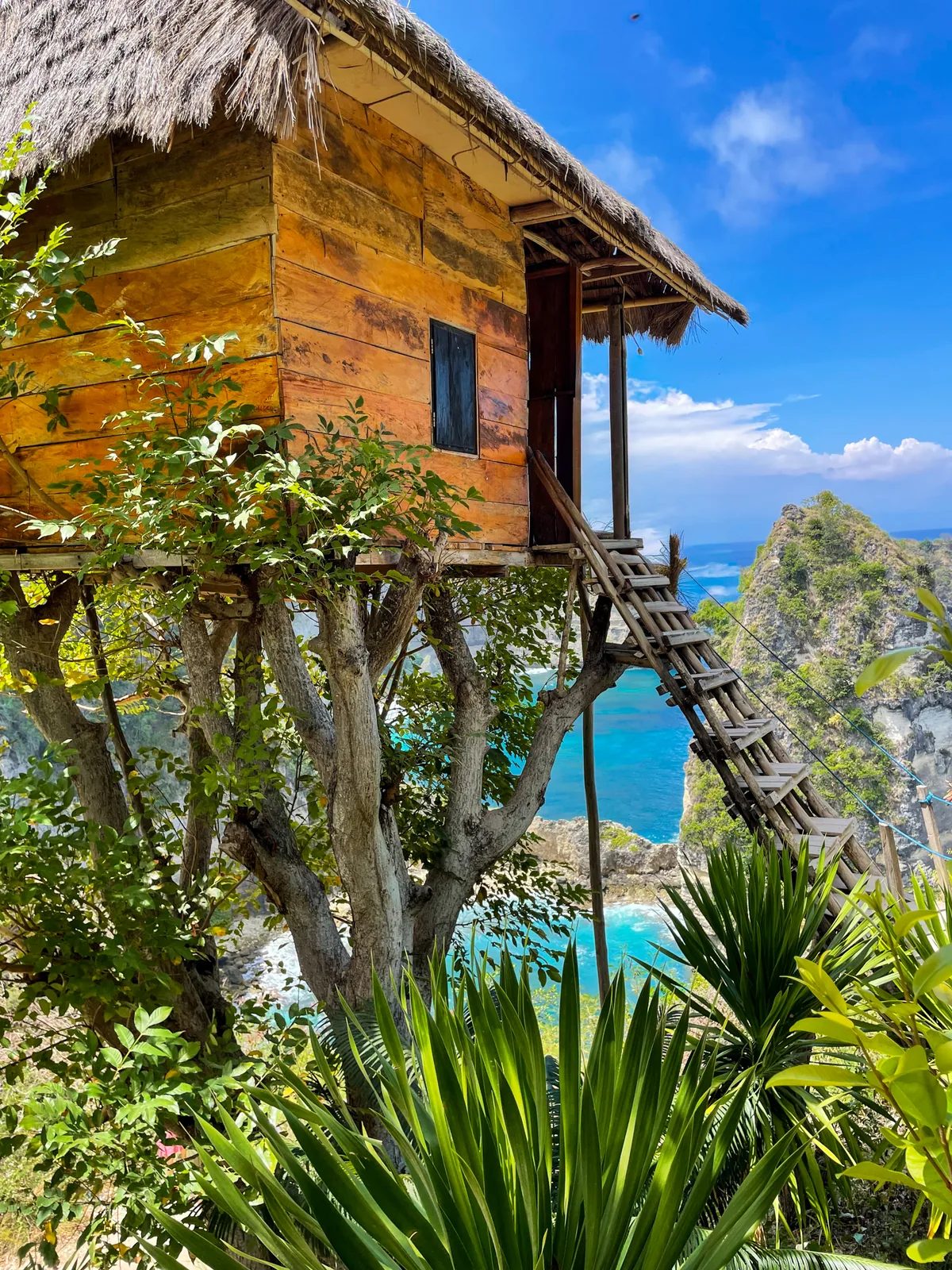
Go straight after Diamond Beach, before the day-trippers arrive from Bali around late morning. The treehouse, Diamond Beach, Atuh and the Thousand Islands viewpoint are all within walking distance of each other, so park once.
My honest takeTeletubbies Hills
Teletubbies Hills are a patch of small, round, grassy hills in the dry middle of the island, named after the kids' TV show because they look like its set. Honestly, I didn't really get it. Maybe it wasn't for me. After the cliffs, it just didn't feel special.
The best partThe evenings
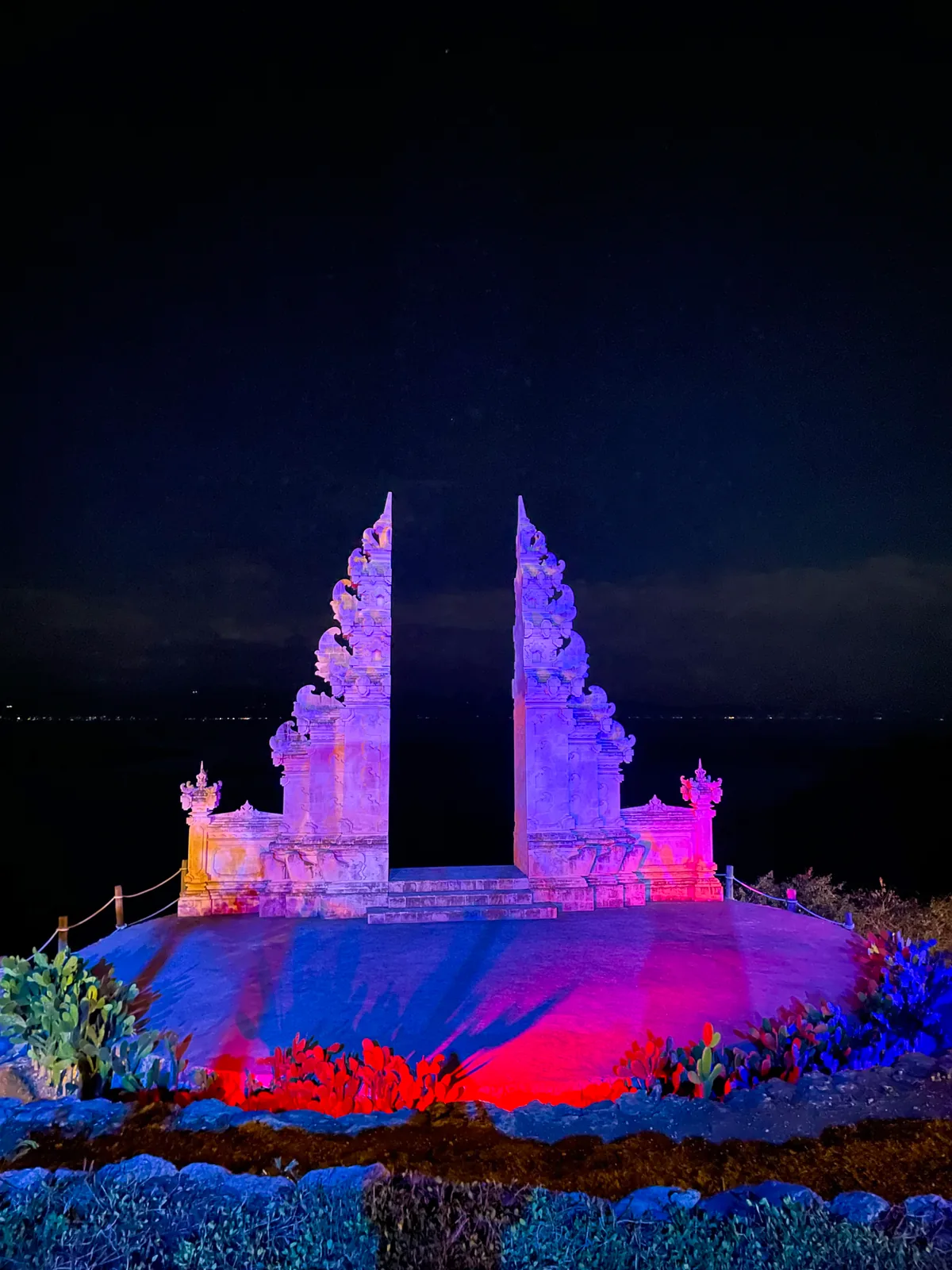
After a day of climbing around in the dust, we'd shower, sit down for dinner, and there would be live music. Nothing fancy. It was my favourite part of every day.
Good to knowBefore you go
Bring cash. There are a few ATMs on the north coast, around Toyapakeh and Sampalan, but they run out, and most small warungs and entrance gates only take cash. Sleep on the north coast too, since that's where the boats land and where you'll find food in the evening.
The best time to go is the dry season, roughly April to October, when the sea is calmer for the crossing and the cliff paths are dry. There's very little shade at the viewpoints, so a hat and sunscreen matter more than you'd think. And leave some margin at the end: the last fast boats back to Sanur go in the afternoon, and the drive to the harbour always takes longer than planned.
The boat was bumpy, and Kelingking made me nervous. And then you stand above those cliffs and you just think
"Wow. This is unreal."
After that it was the boat back to Sanur (I survived) and on to Ubud. If you want the whole Bali trip stop by stop, it's all in my Bali itinerary.