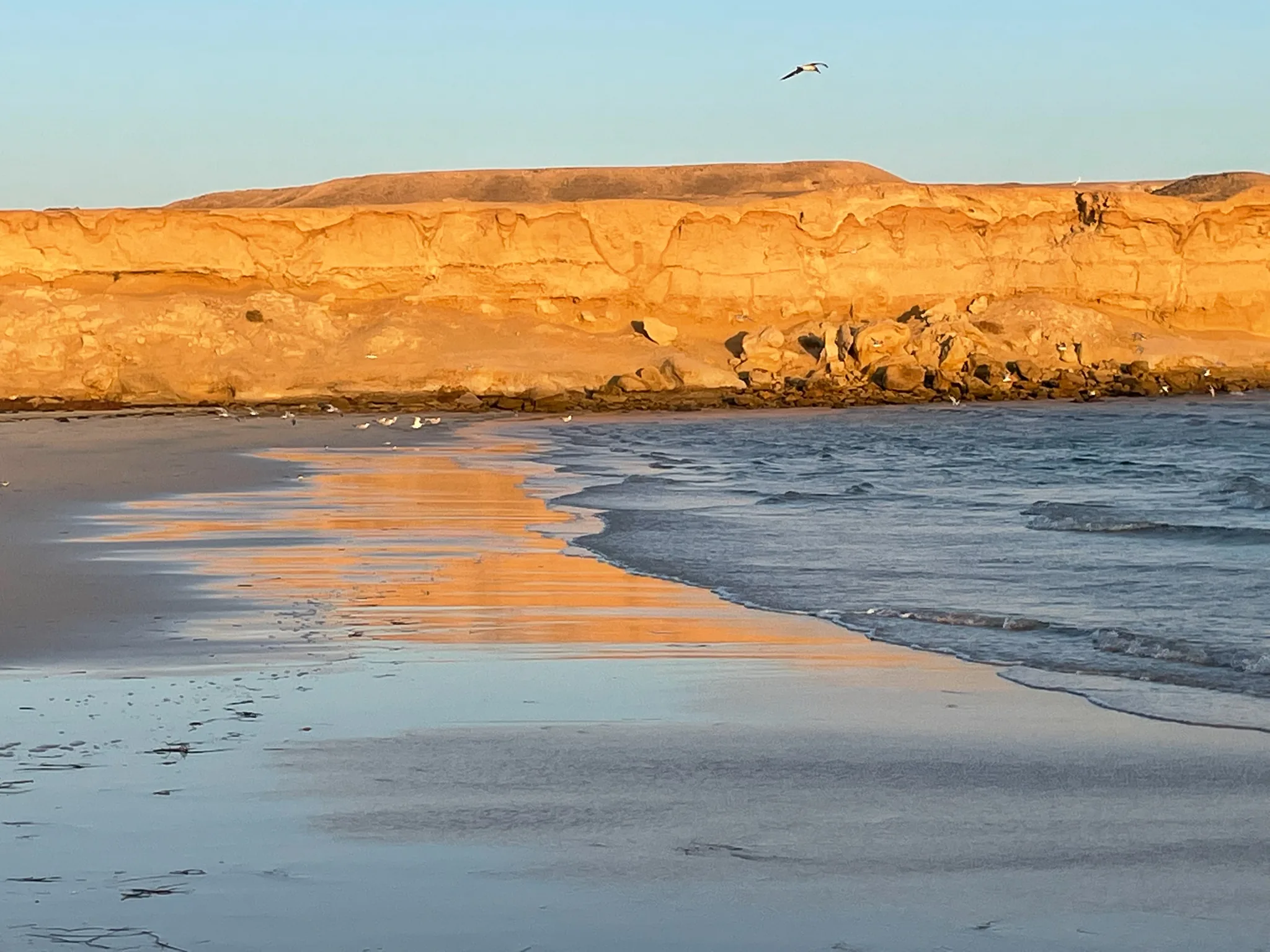
Mauritania is still untouched by mass tourism. There are no big crowds here. What it does have is a coastline extraordinarily rich in marine life, and a culture of hospitality that is really strong.
This trip was a family one. We set off from Nouakchott and headed north to Banc d'Arguin National Park, the UNESCO site where the Sahara runs straight into the Atlantic. It is huge and remote, and ecologically it is precious.
First, the countryMauritania, in a nutshell
If you are wondering where exactly this is: Mauritania sits on the Atlantic side of West Africa, with Western Sahara to the north and Senegal to the south. Most of the country is Sahara. The capital, Nouakchott, is right on the ocean, and it is where almost every trip here begins.
People speak Hassaniya, the local Arabic, and French will get you by in most places. Then there is the tea. Sweet mint tea is part of daily life here, traditionally served in three rounds, poured slowly and from a height. If someone offers you a glass, say yes and take your time over it. That is the quickest way to understand what I mean when I talk about Mauritanian hospitality.
The driveGetting there is not something to improvise
This is the one lesson I would put in capital letters if I could. Once you leave the paved road, there is almost nothing to guide you. The land is very flat, and the tracks simply fade away into the sand.
So: a 4x4 is mandatory, not a nice-to-have. Go with a local guide or a driver who knows the area. GPS is useful and you should have it, but treat it as a backup to your guide, never a replacement. Safety first, always.
Book a 4x4 with a local guide or an experienced driver before you leave Nouakchott, and bring GPS as a backup. Check the current park rules before you go.
ArrivingPure space
When you arrive, the feeling is pure space. The desert just stops, and the ocean starts. There is nothing built between you and the horizon.
It took me a while to grasp the scale of it. The park was created in 1976 and became a UNESCO World Heritage Site in 1989. It stretches along the coast between Nouakchott and Nouadhibou and covers about 12,000 square kilometres, and a big part of that is not land at all. It is sea, very shallow, dotted with sandbanks and small islands and carpeted with seagrass. Those shallows are the secret. They work as a giant nursery for fish, which is why this coast is so alive.
"Sand, sea, silence. No beach clubs, no noise."
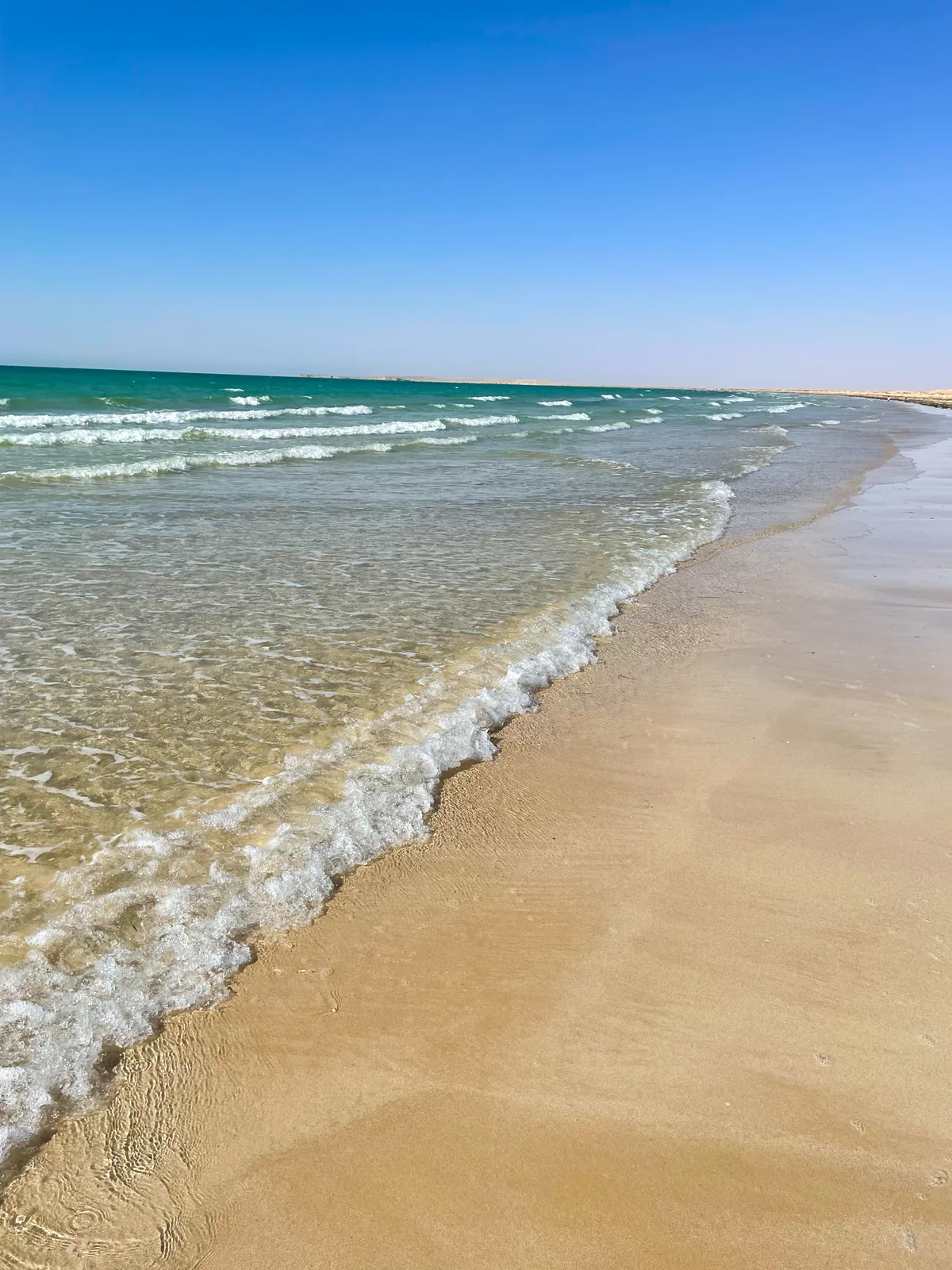
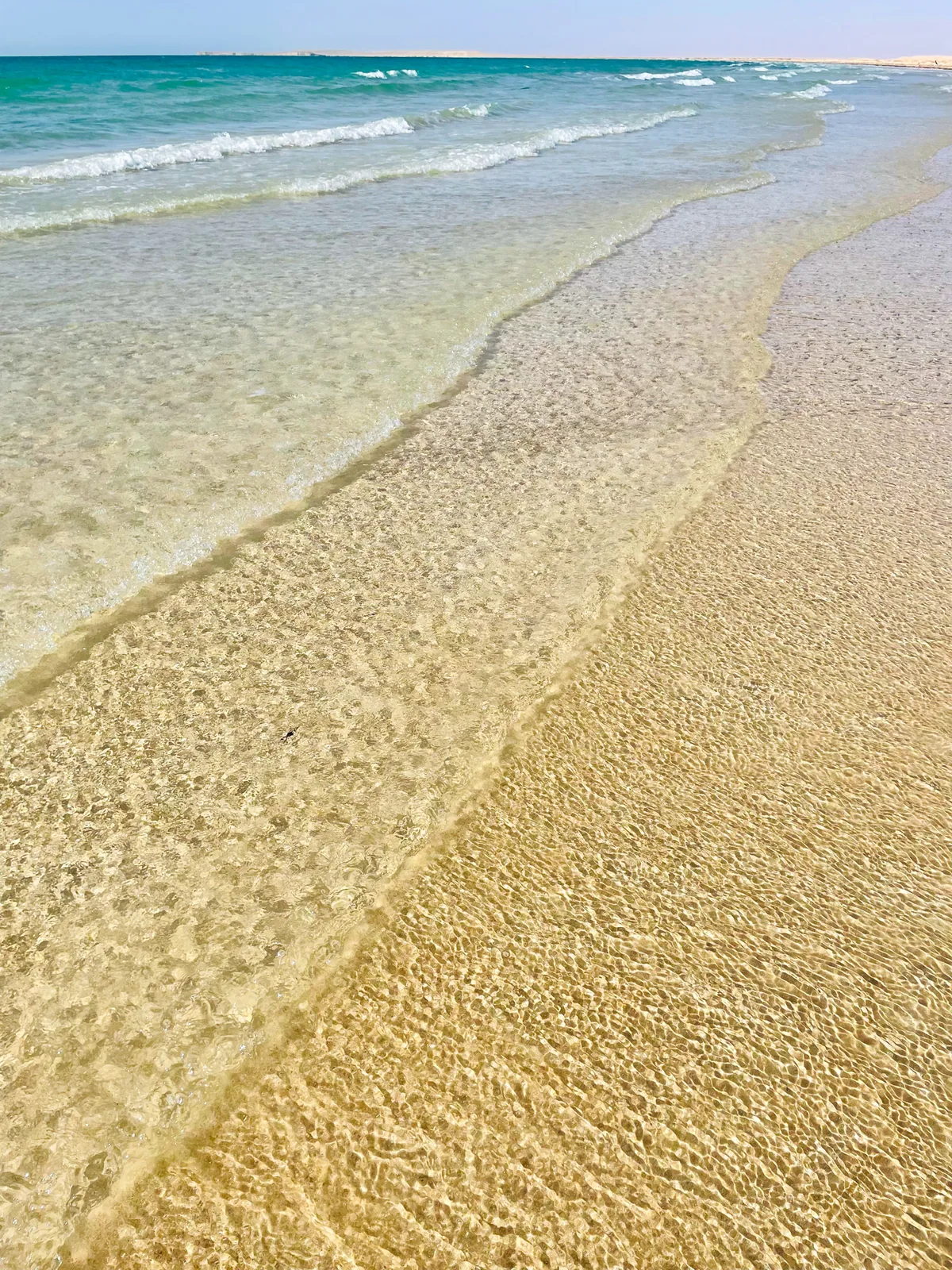
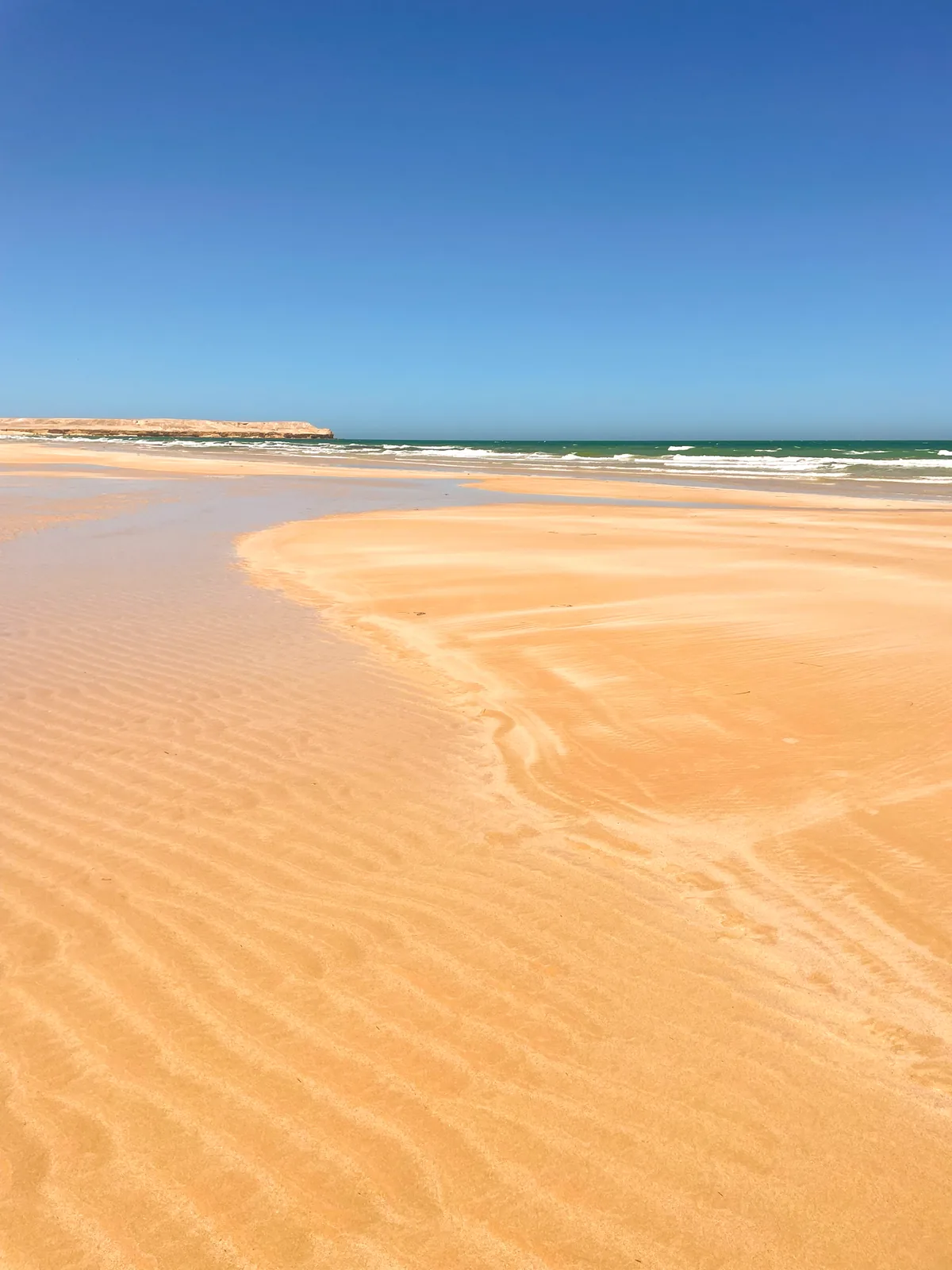
The shoreline in daylight, and water so clear you can see every ripple in the sand.
It is rare to be somewhere with no background hum at all. No beach clubs, no traffic. Just the wind and the water.
Where we sleptTwo nights in a tent
We camped with our own tent for two nights.
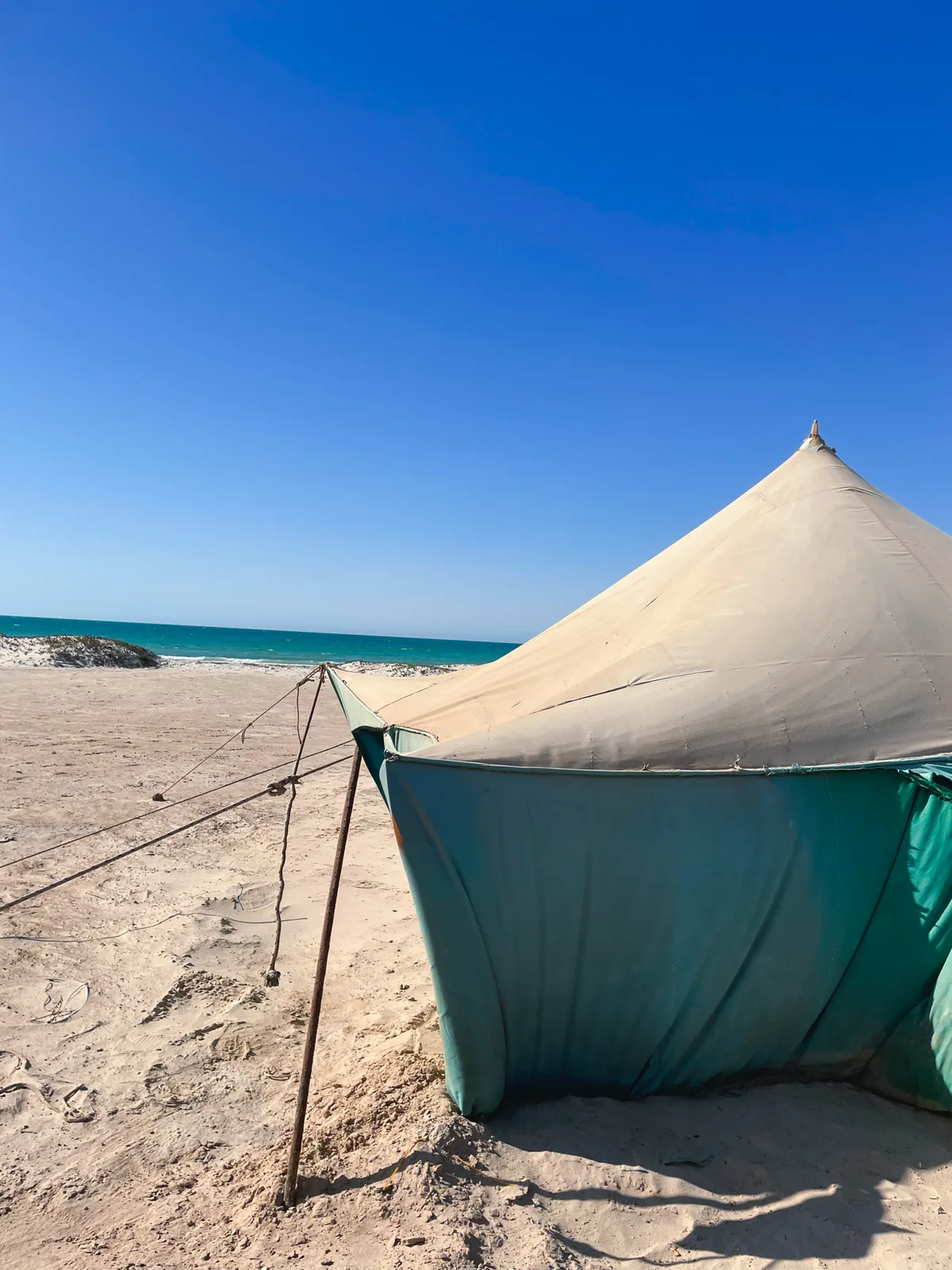
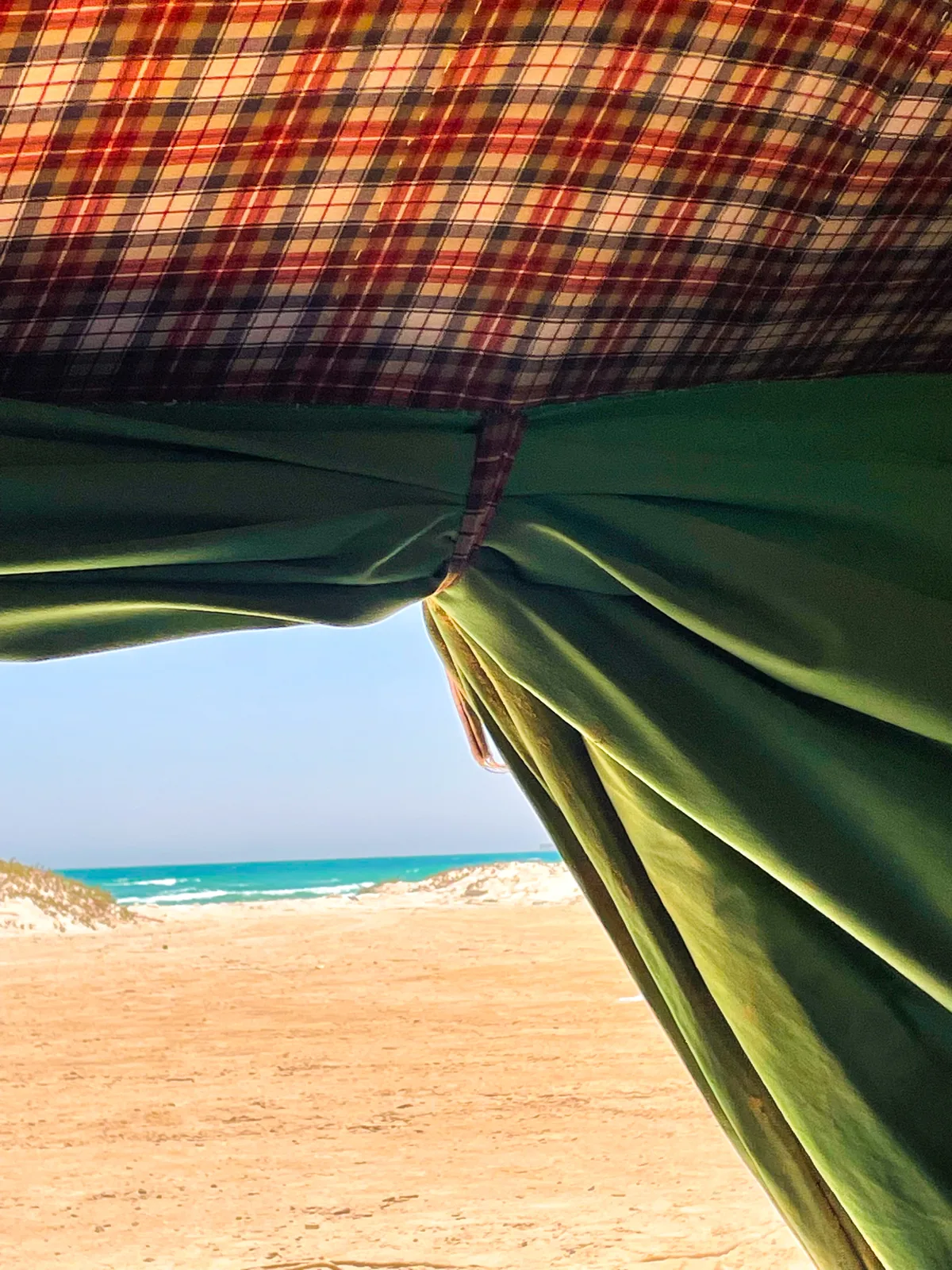
Our camp on the sand, and the view from inside the tent.
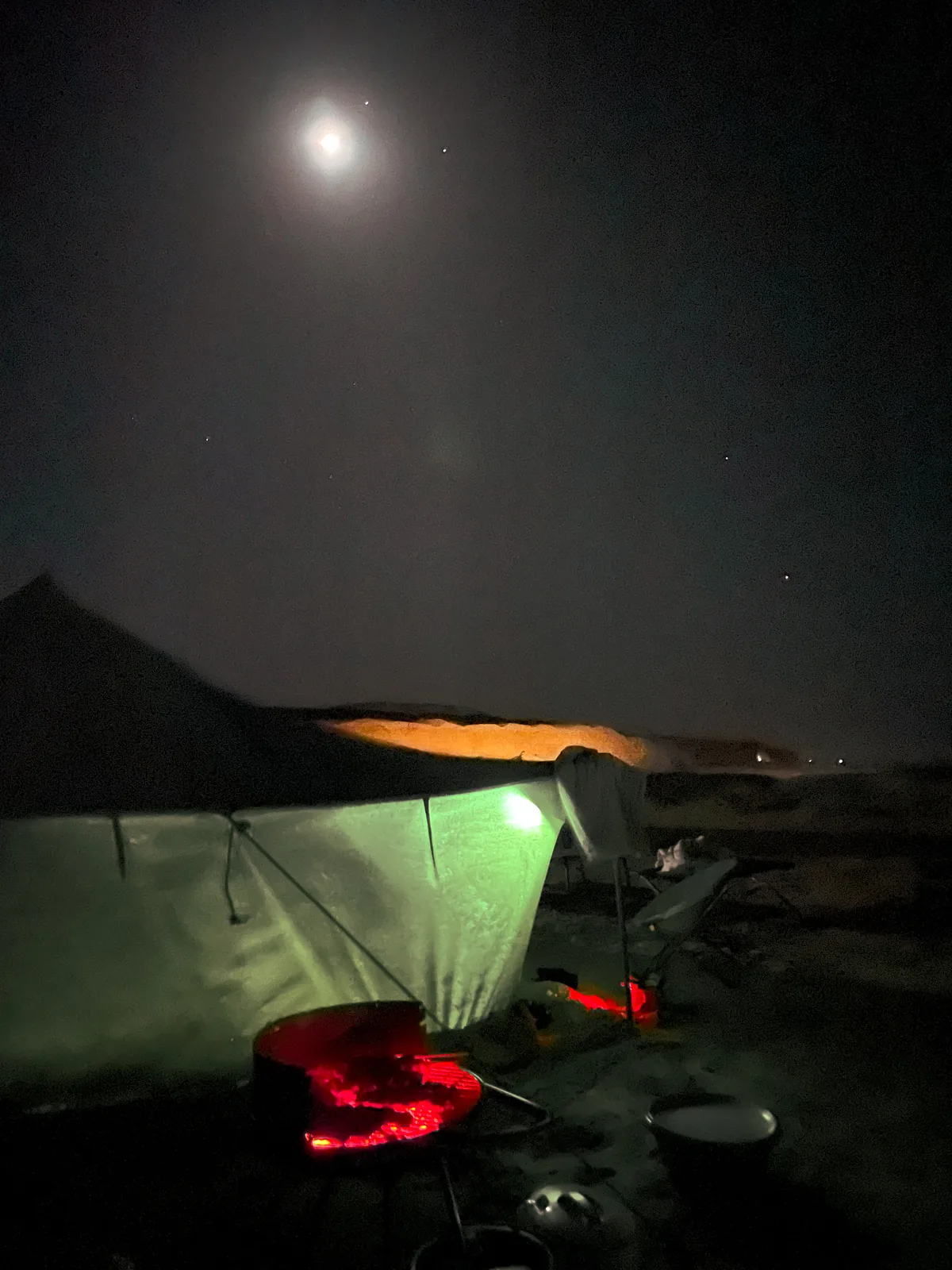
In the evening we lit a barbecue by the ocean and ate with the sound of the waves right there.
Then night came, and with it the silence. I don't think I have ever heard silence like that. It is so complete that it almost feels loud. Above us the sky filled with stars, far more than you ever see from a city.
The next morningMorning fishing, and the catch
We woke up and went fishing. And I caught a huge fish.
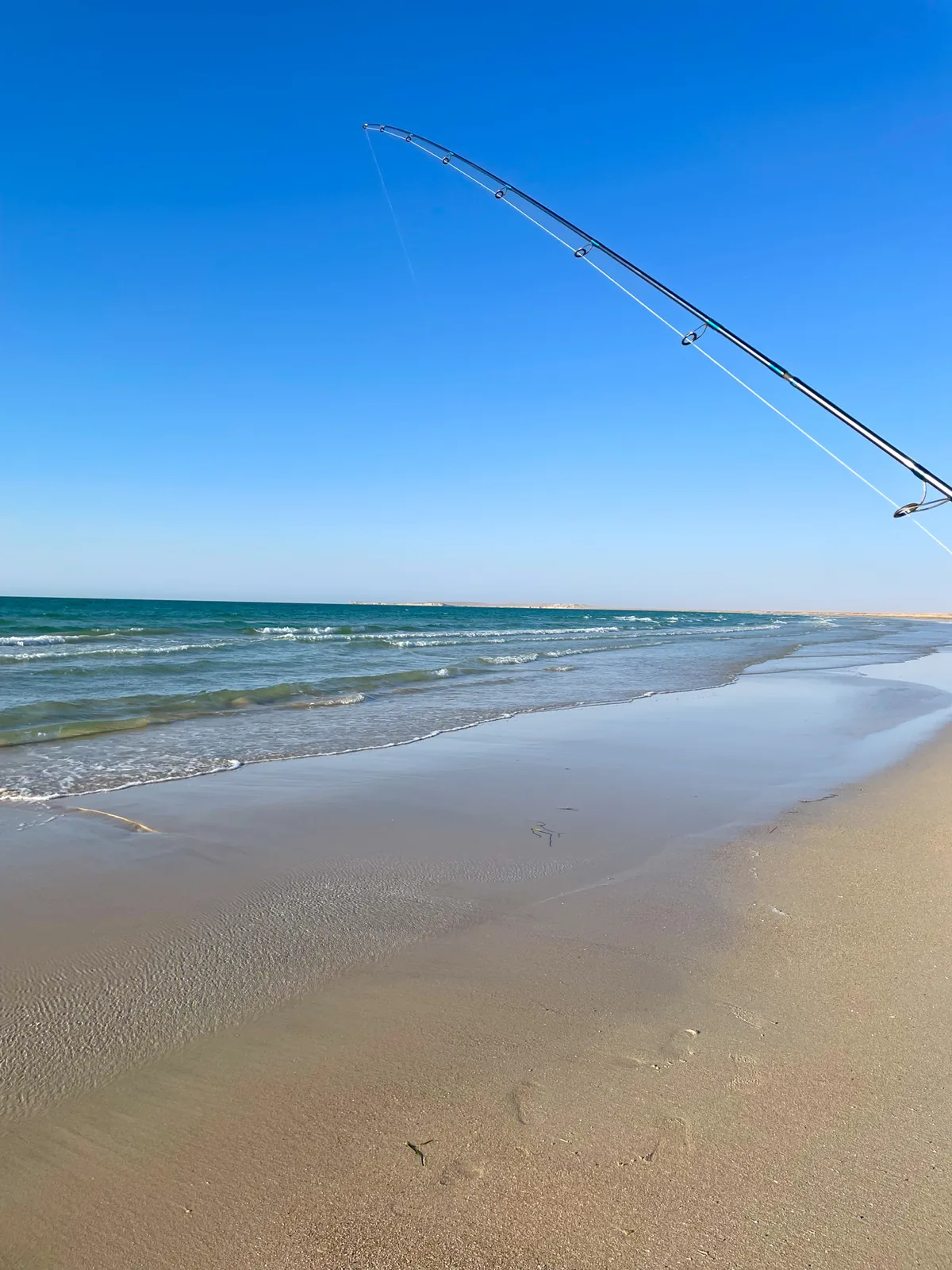
Then we ate it right there by the sea, as fresh as fish can possibly be. That moment stays with you.
Fishing inside Banc d'Arguin National Park is regulated, and traditional fishing rights belong mainly to the Imraguen communities. Always check the current rules, ideally through your guide, and do not assume that fishing is allowed where you are camping.
The real localsA winter home for millions of birds
Here is the fact that surprised me most. Every winter, more than two million shorebirds come to Banc d'Arguin, many of them from the Arctic, where they breed in summer. In some years the dunlins alone come close to a million. The park counts well over a hundred bird species, and flamingos and pelicans nest on its islands.
You don't need to be a birdwatcher to feel it. Even from the beach you see flocks lifting off the waterline and settling again a little further along. If you want to get closer, the classic way is by lanche, the local sailing boat, usually arranged from the fishing village of Iwik. The islands themselves are protected, and setting foot on them needs a special permit from the park.
The people of this coastThe Imraguen, and visiting with respect
You can't really talk about Banc d'Arguin without talking about the Imraguen. They are the traditional fishing communities of this coast, and they are central to the park's story. Their name is often translated as "the fishermen". They speak Hassaniya, sprinkled with fishing words of Berber origin, and today only a small community, living in a handful of villages inside the park, carries this way of life on.
They sail boats called lanches: wooden, with a sail and no engine. The design came from Canary Island fishermen who worked this coast in the early twentieth century, and the Imraguen made it their own. Motorboats are banned inside the park, so the lanches are the only fishing boats allowed on these waters. Their knowledge of the sea here runs very deep.
The story everyone tells about them involves dolphins. For generations, Imraguen fishermen would beat the water to call dolphins towards the shore, and the dolphins would drive the schools of mullet into the shallows, straight into the waiting nets. That mullet is also behind the coast's best-known delicacy: the women of the villages salt and dry the roe into a bottarga that has become a symbol of Imraguen know-how.
Two stories I loved learning. In the 1400s the Portuguese built a fort on Arguin Island, one of the first European trading posts on this coast. And in 1816 the French frigate La Méduse ran aground on these very banks. What the survivors went through on their makeshift raft inspired Géricault's The Raft of the Medusa, the huge painting that hangs in the Louvre today.
This is their home and their livelihood long before it is anyone's weekend. If you want to learn more about them, visiting with respect, through a local guide or an organised trip, is usually the right way to go.
PracticalWhen to go, and what to pack
Winter is a great season for migratory birds. But if you are camping, keep a very close eye on the wind. Sandstorms can make things rough, and a night in a tent in a strong wind is a very different experience from the calm one I have been describing. Check the forecast before you commit to a date, and be ready to move it.
If the birds are your priority, aim for roughly October to March, when the Arctic visitors are here. Early morning and late afternoon are the best times to watch them, and the light on the cliffs is gorgeous then too.
On the admin side, there is a park entrance fee. It is modest, but check the current amount with your guide. Going beyond the mainland shore, onto the islands for example, needs a permit, which your guide can help arrange. And please leave your camp exactly as you found it. There are no bins out here, so whatever you bring in, you take back out.
Carry water and food, more than you think you need. Bring a first aid kit. And pack warm layers for the night, for when the sun goes down.
Water, food, a first aid kit, warm layers for after dark, and GPS (with a guide). Check the wind forecast before you go.
As for how long to stay, one or two nights is plenty for most people. You don't need a week here. You need enough time to stop, and then to notice that you have stopped.
Why goThe point of it all
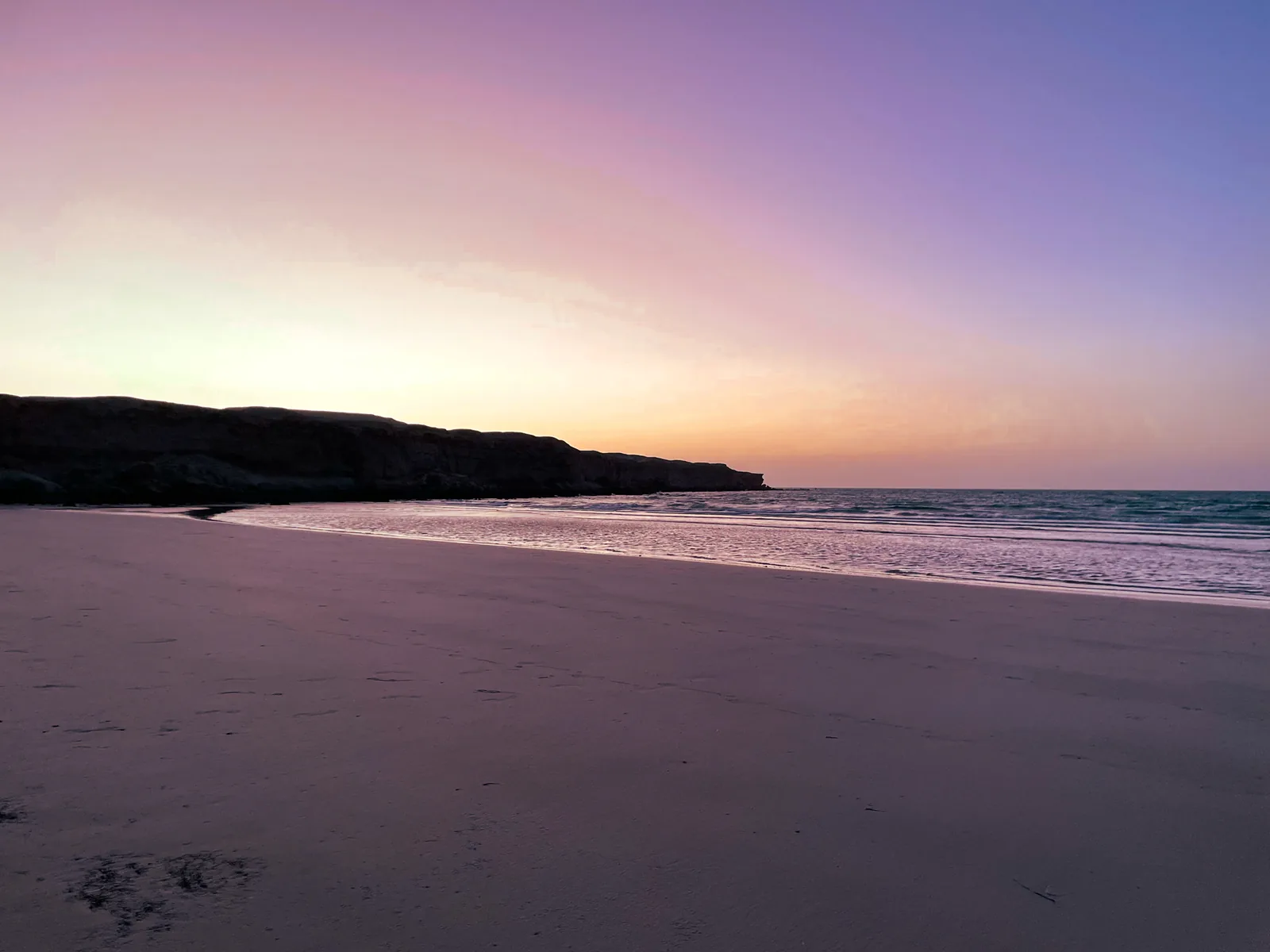
Banc d'Arguin is not a place for a packed schedule. There is no list of sights to rush between, and I think that is exactly why it stayed with me.
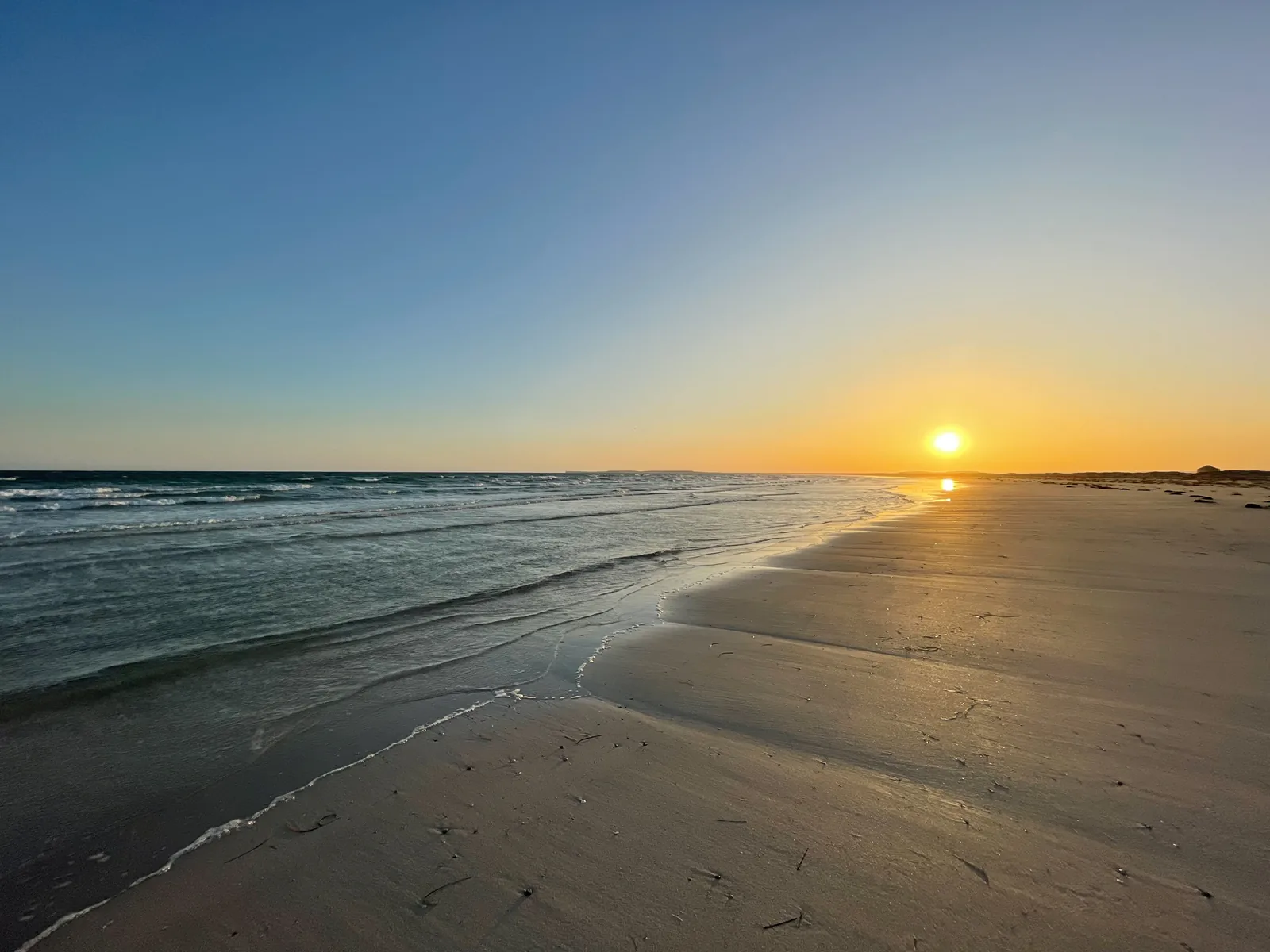
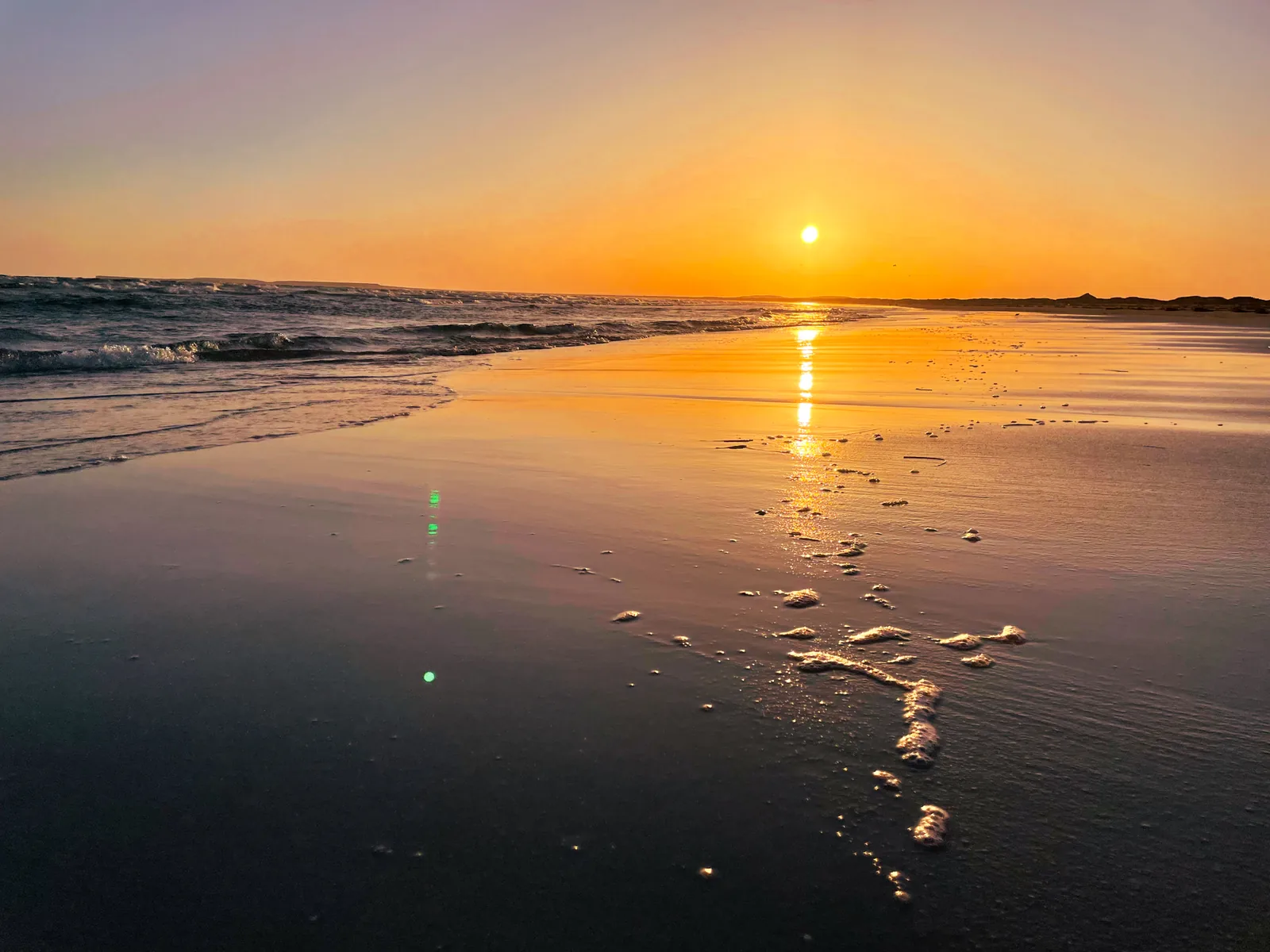
Sunset on the Banc d'Arguin coast, with the whole beach to ourselves.
"It is not about ticking off activities. It is about space, and that rare sense of being away."