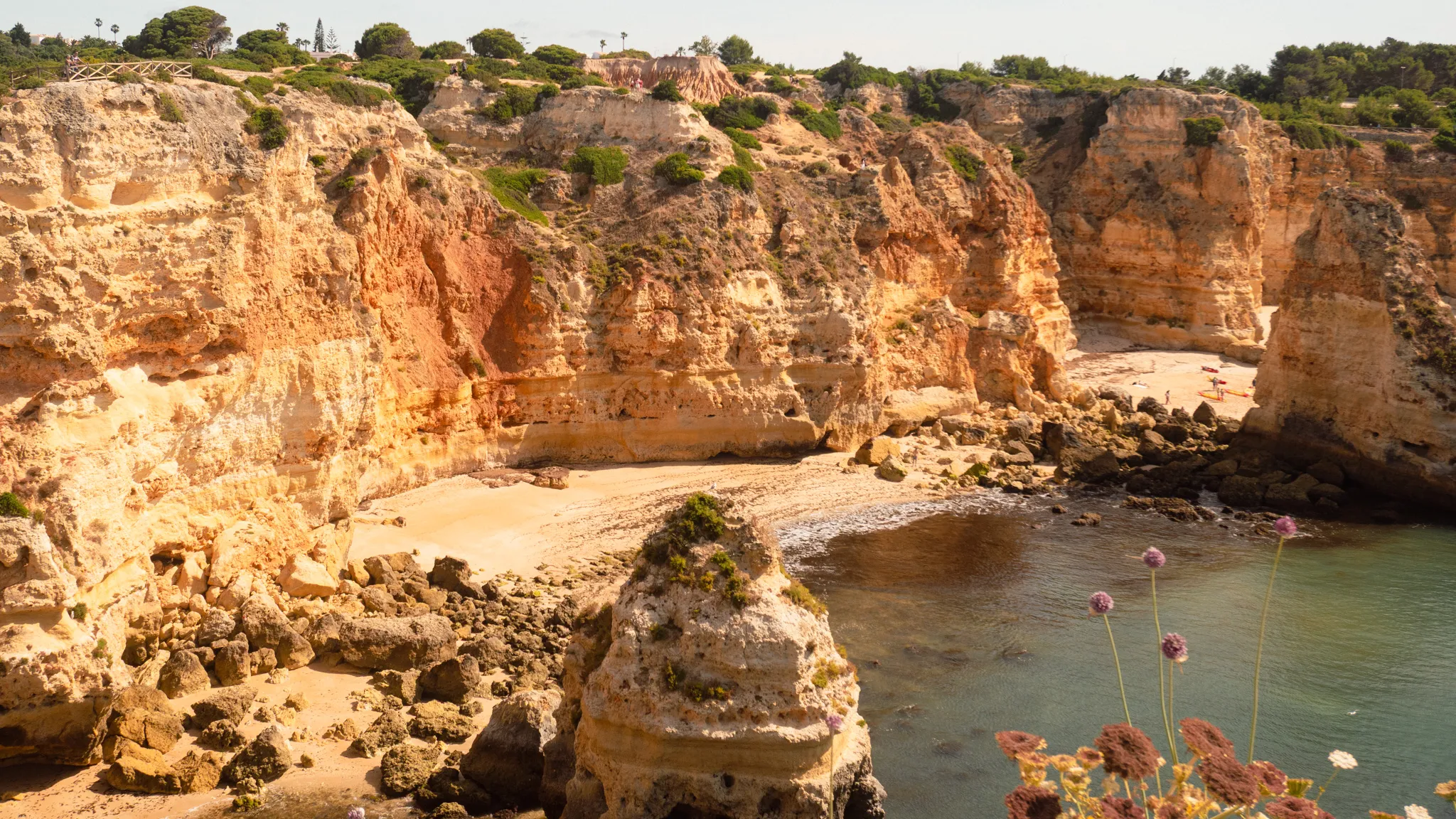
We had set out at half past eight, partly to beat the sun, since the Seven Hanging Valleys trail offers very little shade and by midday the heat becomes merciless. It runs for about six kilometres along the cliffs between Praia da Marinha and Praia de Vale Centeanes, past the Alfanzina lighthouse and a long string of hidden coves, and I can tell you without hesitation that it is worth every step.
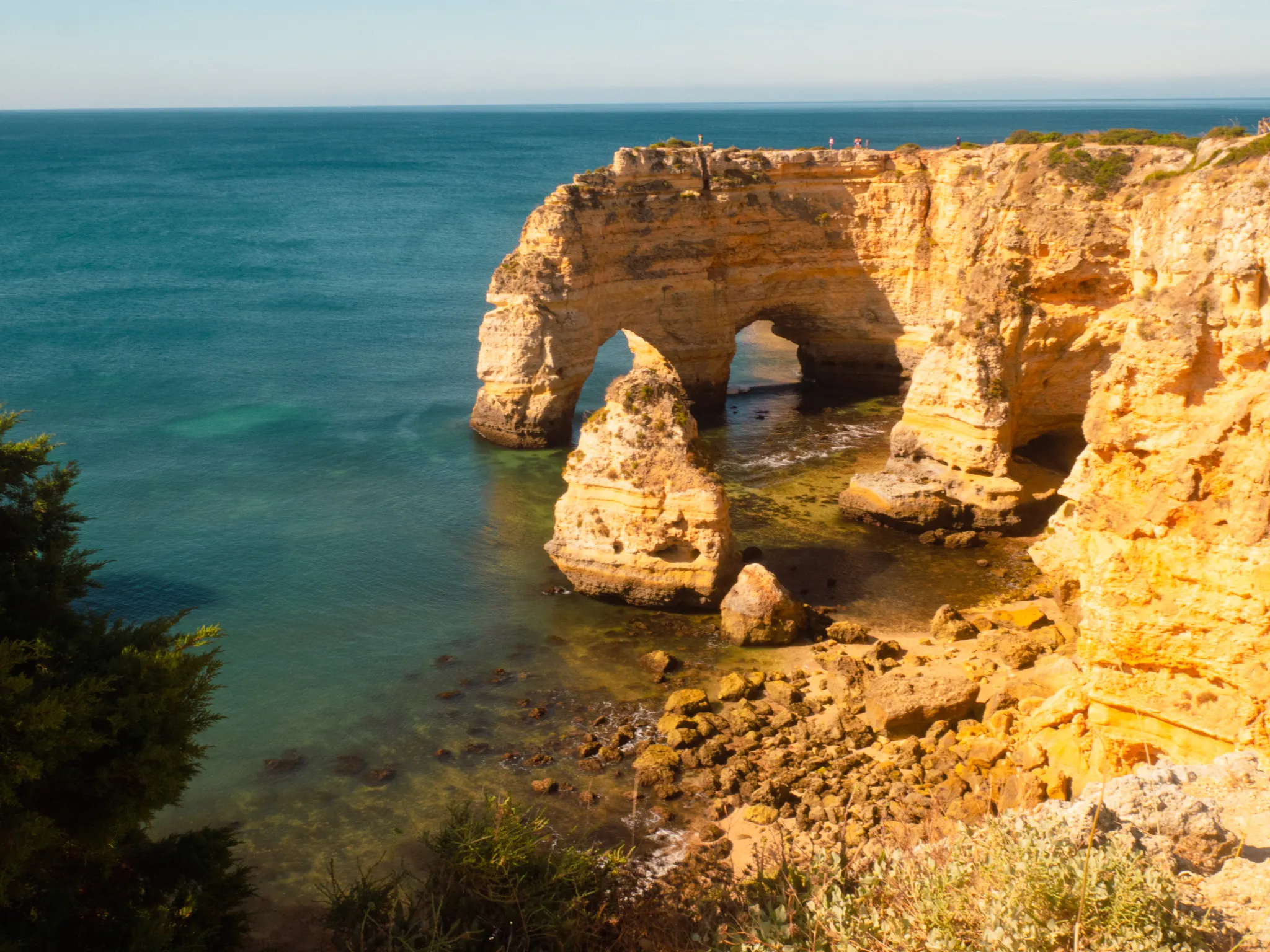
It also passes above the famous Benagil cave, though "above" is the operative word. From the trail you can only glimpse it from the top, behind a barrier that keeps you back from the edge, and in truth there is little to see from there. To actually enter the cave, with its great round opening in the roof like an eye held open to the sky, you have to come from the sea: by boat, by kayak, or by paddleboard.
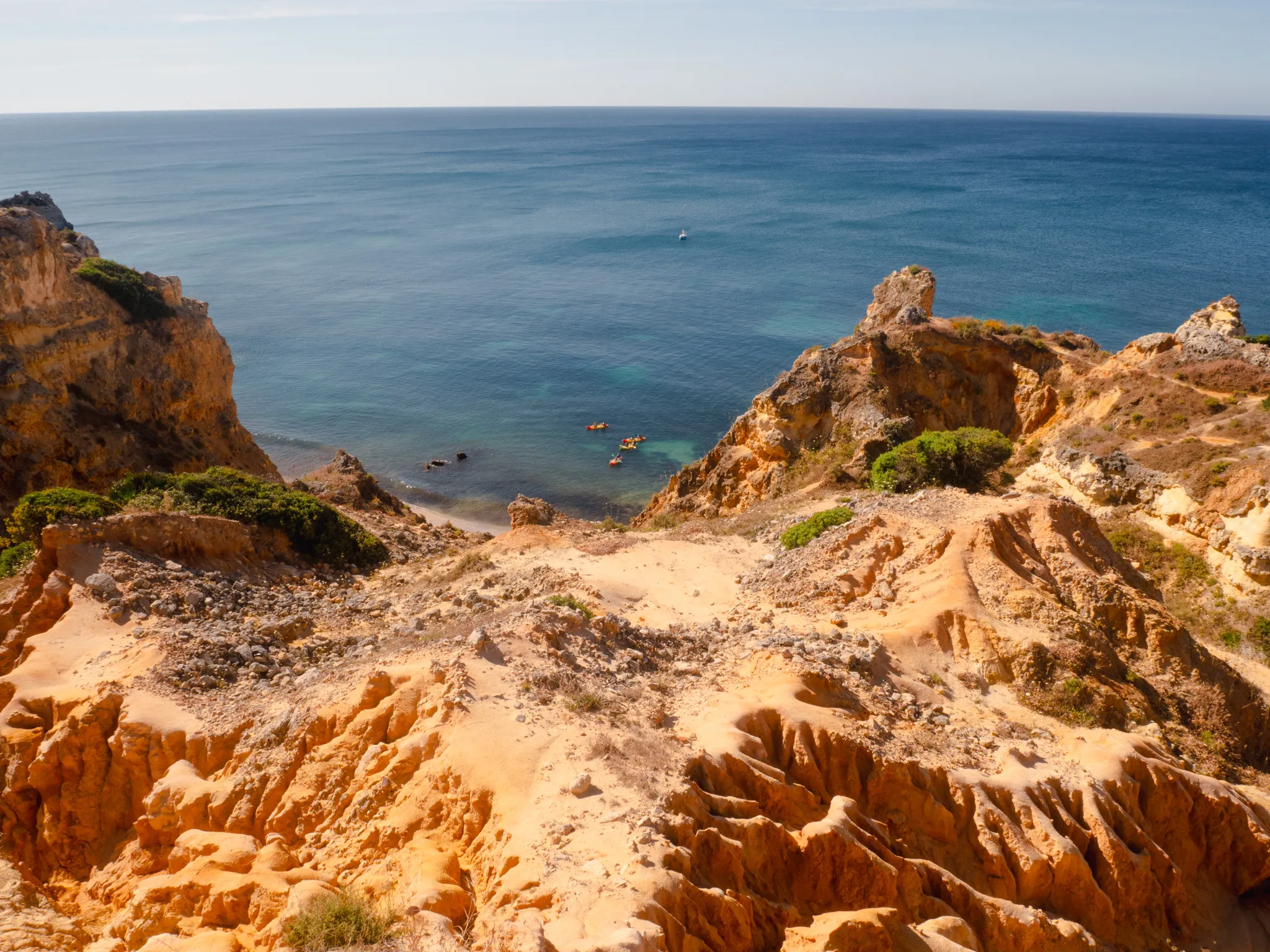
Everyone says the kayak is the finest way to arrive. I am, I should admit, a poor swimmer; the kayak frightened me, and a boat would not have let me climb down anyway. So I stayed on the cliff and looked at the cave from the rim, behind the barrier, from above: not the cave itself, only its outline thrown up to the light.
A shadow of the thing. And I photographed the shadow.
The image made me think of another cave. Plato's. In his famous allegory, prisoners spend their lives staring at shadows projected onto a wall, believing them to be reality because they have never seen anything else. The story is more than two thousand years old, yet standing above Benagil I wondered whether we had simply modernised the cave. The shadows are no longer cast by a fire. They glow from our screens. And like Plato's prisoners, we often mistake the representation for the thing itself. I had come all this way to a cave, and what I wanted from it was an image of a cave.
There was another reason the thought stayed with me. For the first time in years, I was travelling with a real camera instead of relying on my phone. The photographs disappointed me because it was honest.
The sea was less blue. The cliffs less dramatic. The sunsets less spectacular. I kept looking at the images and thinking: that can't be right.
For years, I had grown accustomed to the world my phone produced. The colours enhanced automatically. The sky brighter. The water more turquoise. Everything slightly improved before I ever saw the photograph. Slowly, I had started to trust the image more than the thing itself. The photograph had become the reality.
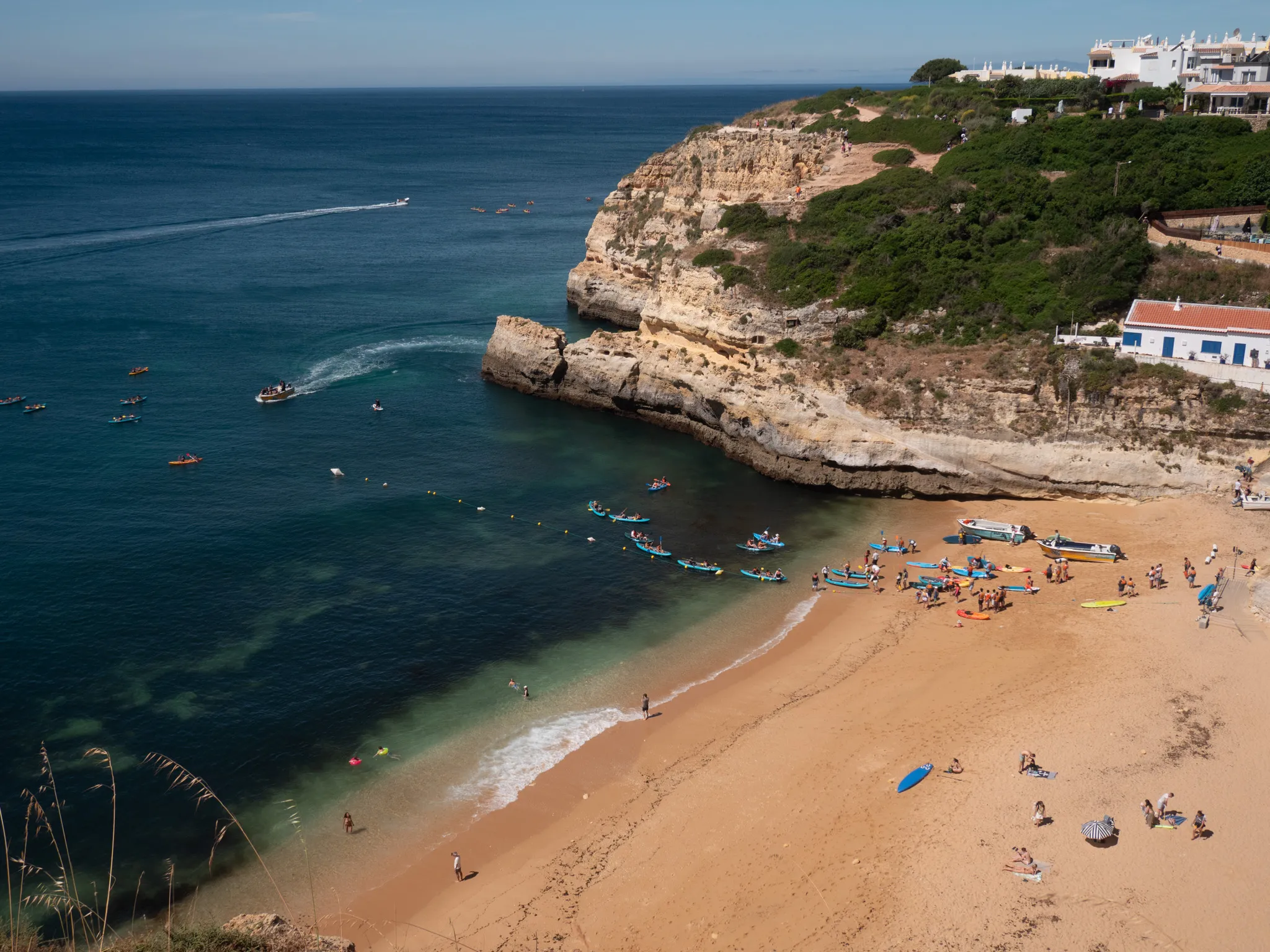
Now the camera was showing me something closer to what was actually there. And I found myself resisting it.
Perhaps Susan Sontag was right. She argued that photographs are a kind of appropriation. They borrow reality but never fully contain it. Standing above Benagil, photographing a cave I would never enter, I understood what she meant.
We no longer mistake the shadow for the thing. We often prefer it. The photograph is cleaner. Brighter. More permanent.
And the image no longer waits for the experience. More often it comes first. We rarely photograph a place because we found it beautiful; we go because we have already seen the photograph and want one of our own. Benagil is famous for a single picture, that round eye of rock open to the sky, multiplied a thousand times before anyone arrives. People do not come to find the cave. They come to repeat an image they already carry.
The experience itself is messy. It includes heat, fear, hesitation, wonder, uncertainty. A photograph contains none of those things. And yet they are often the most important part.
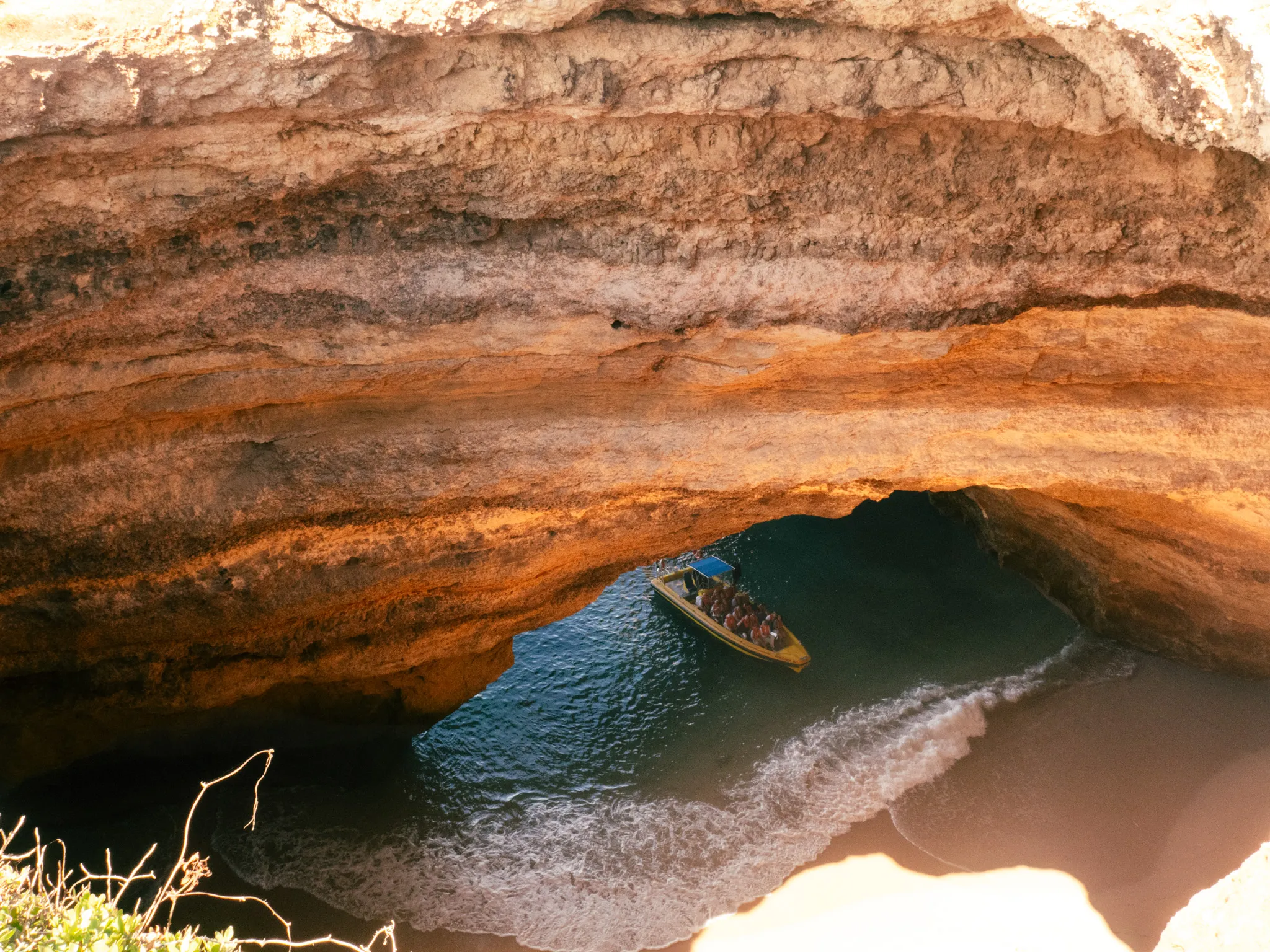
I never entered the cave. But for once I looked at it instead of through a lens, and let it stay the thing itself. I am still learning to be satisfied with that.
Back to top