We landed in Lisbon on a June morning, my first time in Portugal, and the air was cooler than I had expected. A hire car was waiting, and we followed the coast south into the Algarve for a week before looping back to Lisbon at the end. What follows is the route we actually drove: the dramatic cliffs of the west first, then the quieter towns of the east, and a last stretch of pine forest and ochre sand before the drive home.
Getting thereThe drive down
We flew into Lisbon and picked up a car at the airport. The Algarve is roughly two and a half hours south by road, an easy drive, and the car is what makes the region open up. Half of what we loved most, we found by following a road sign rather than a plan.
Lisbon to the coast. Rent a car and the drive does the rest.
Day two, the western cliffsThe Seven Hanging Valleys
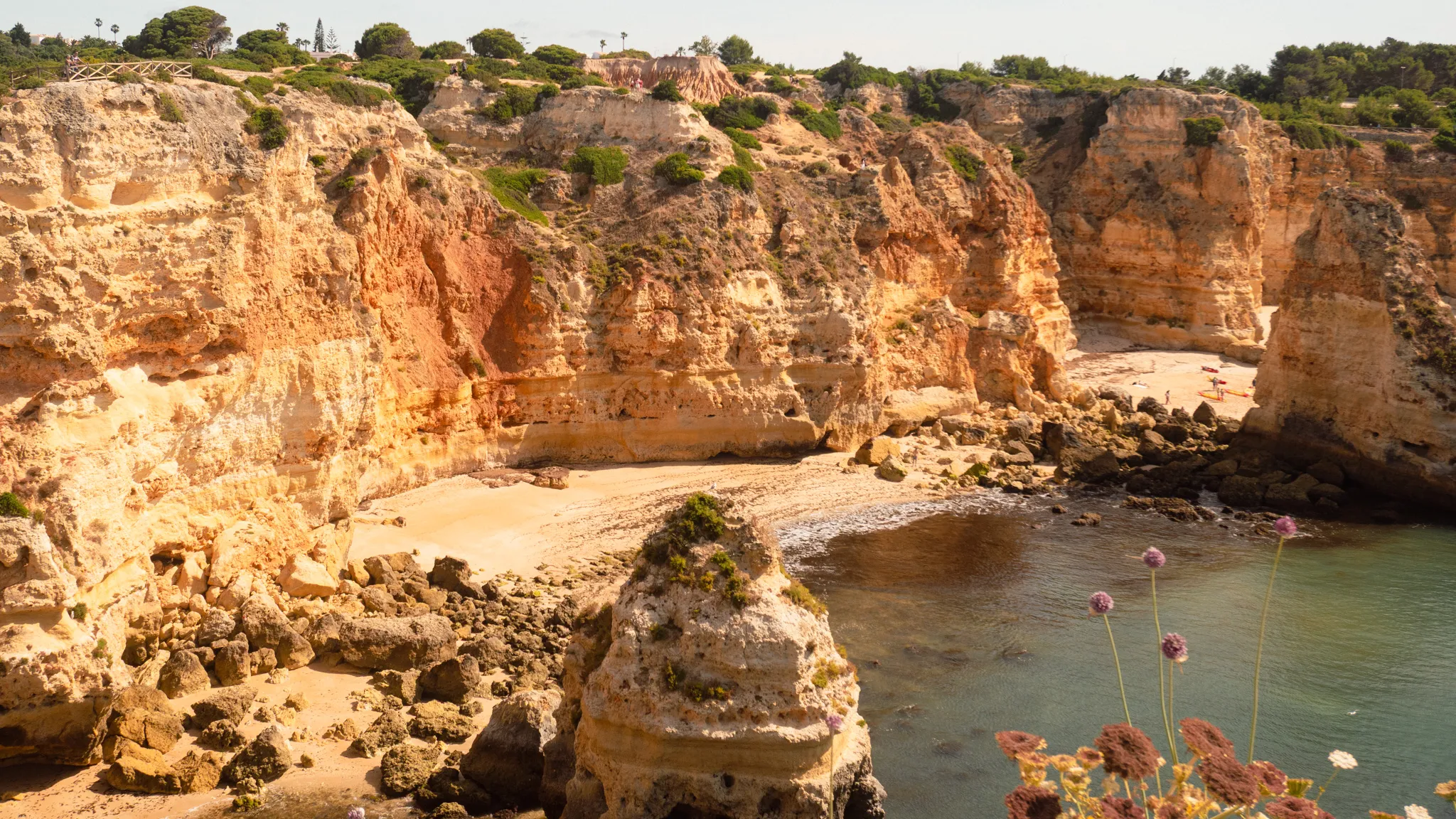
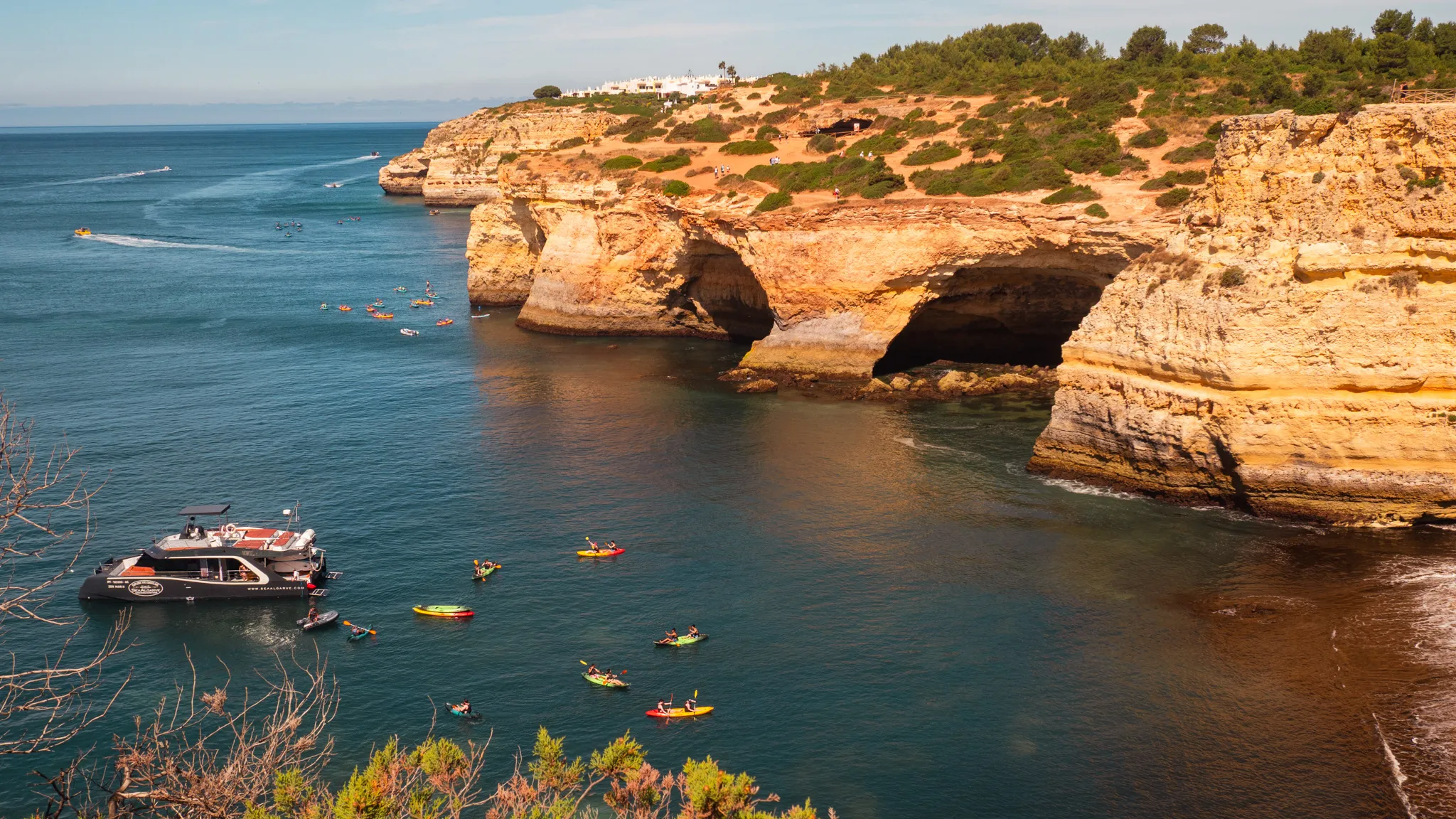
We set out at half past eight to beat the sun, because the Seven Hanging Valleys trail has very little shade and by midday the heat turns merciless. It runs about six kilometres along the cliffs between Praia da Marinha and Praia de Vale Centeanes, past the Alfanzina lighthouse and a long string of hidden coves, and it is worth every single step.
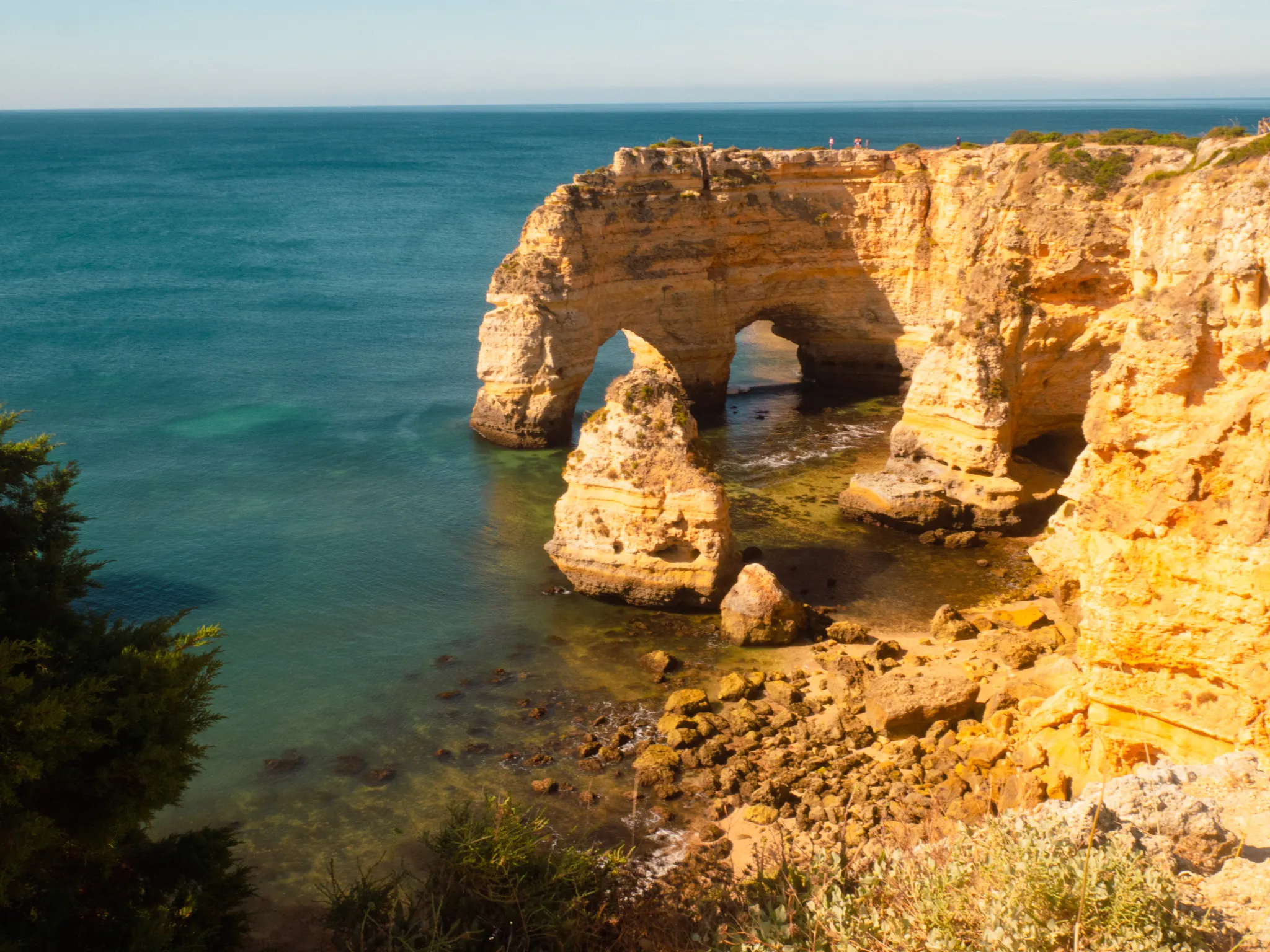
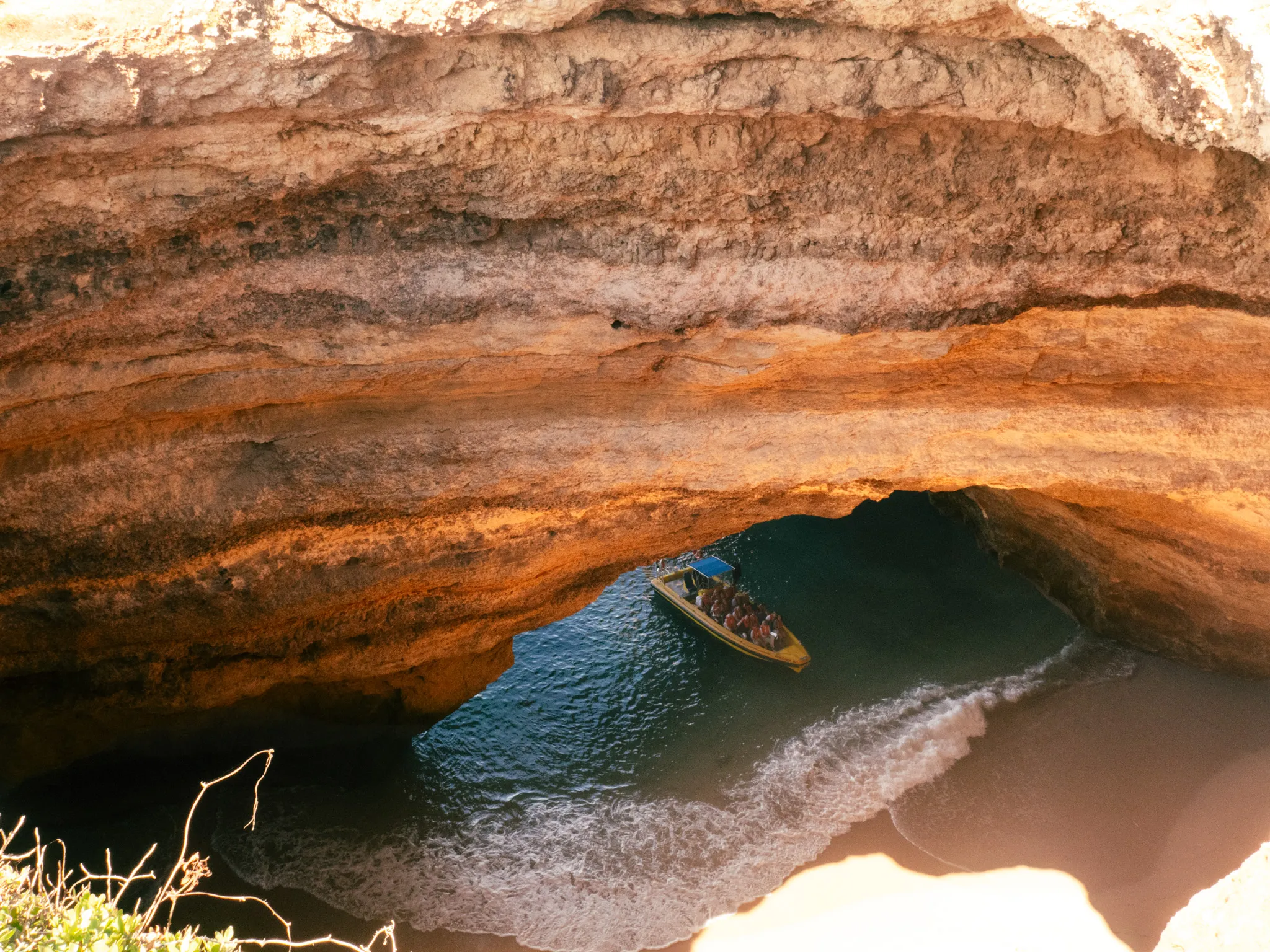
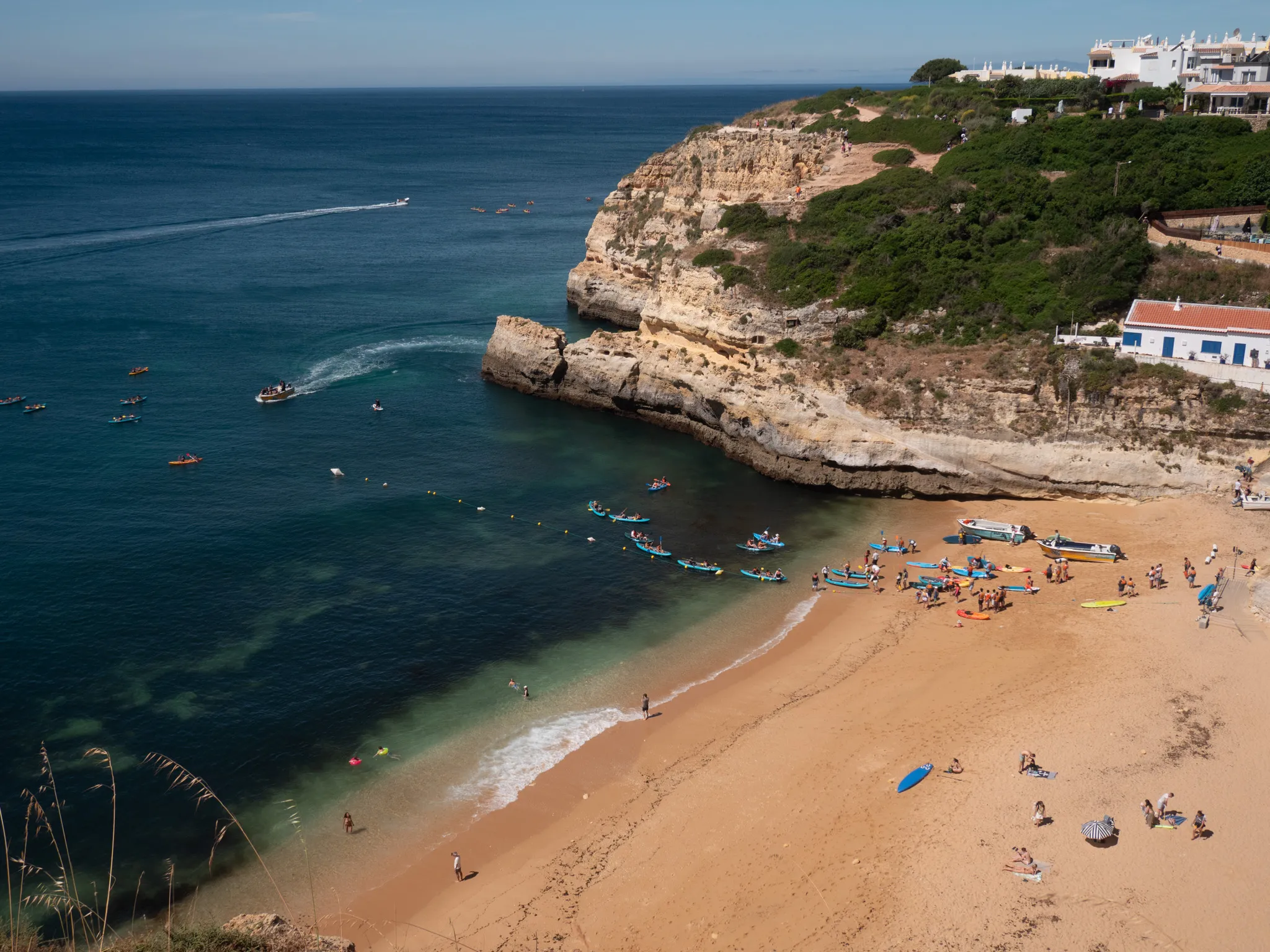
The trail also passes above the famous Benagil cave, with its great round opening in the roof like an eye held open to the sky. From the path you only glimpse it from the top, behind a barrier. To actually go inside, you have to come from the sea, by boat, by kayak, or by paddleboard, and most people say the kayak is the finest way to arrive.
Start the Sete Vales Suspensos trail early, by 8:30, from Praia da Marinha. Bring water and a hat, because there is almost no shade. To see inside Benagil, book a kayak or boat tour that reaches it from the water.
Ochre and turquoisePonta da Piedade
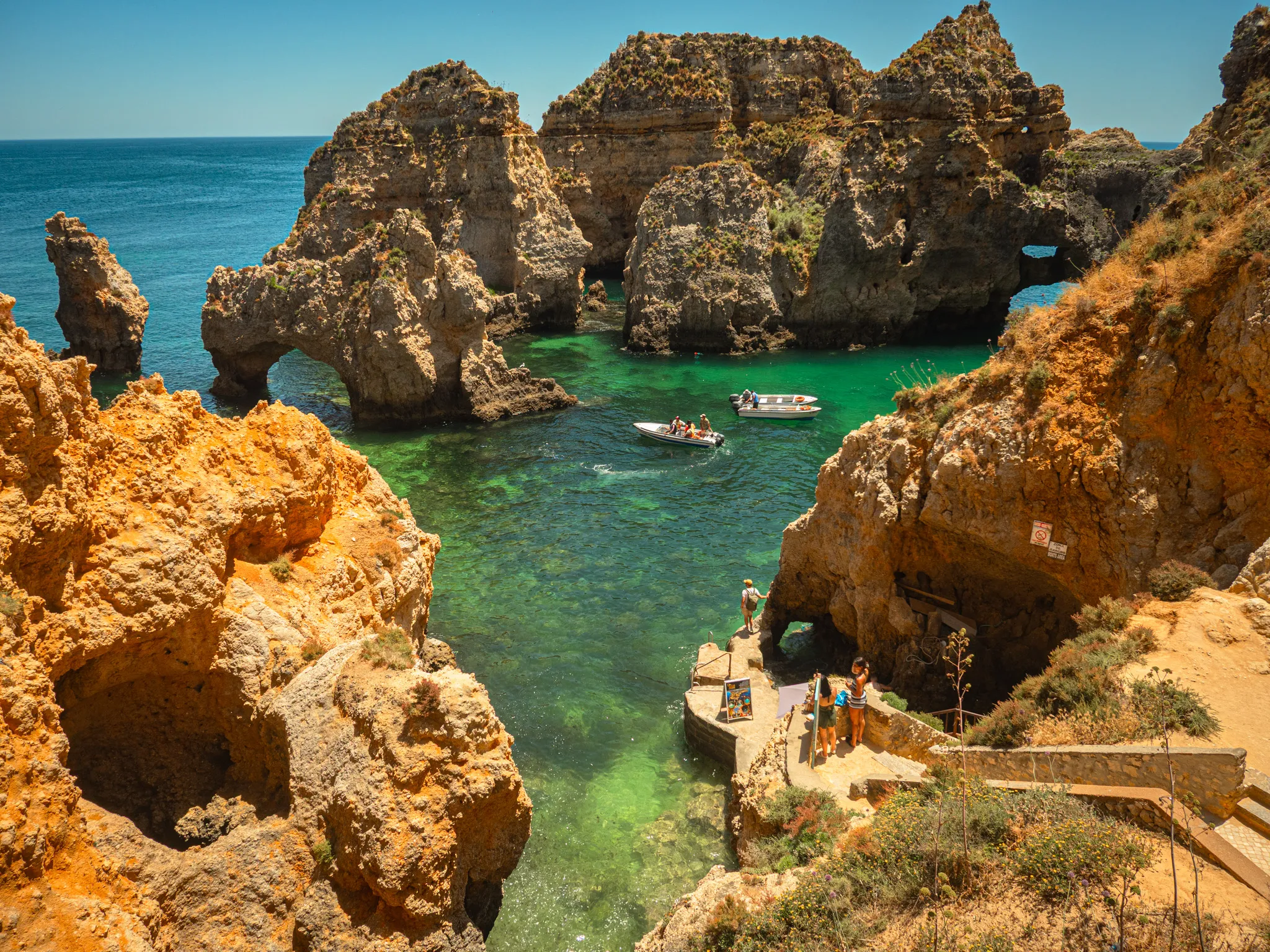
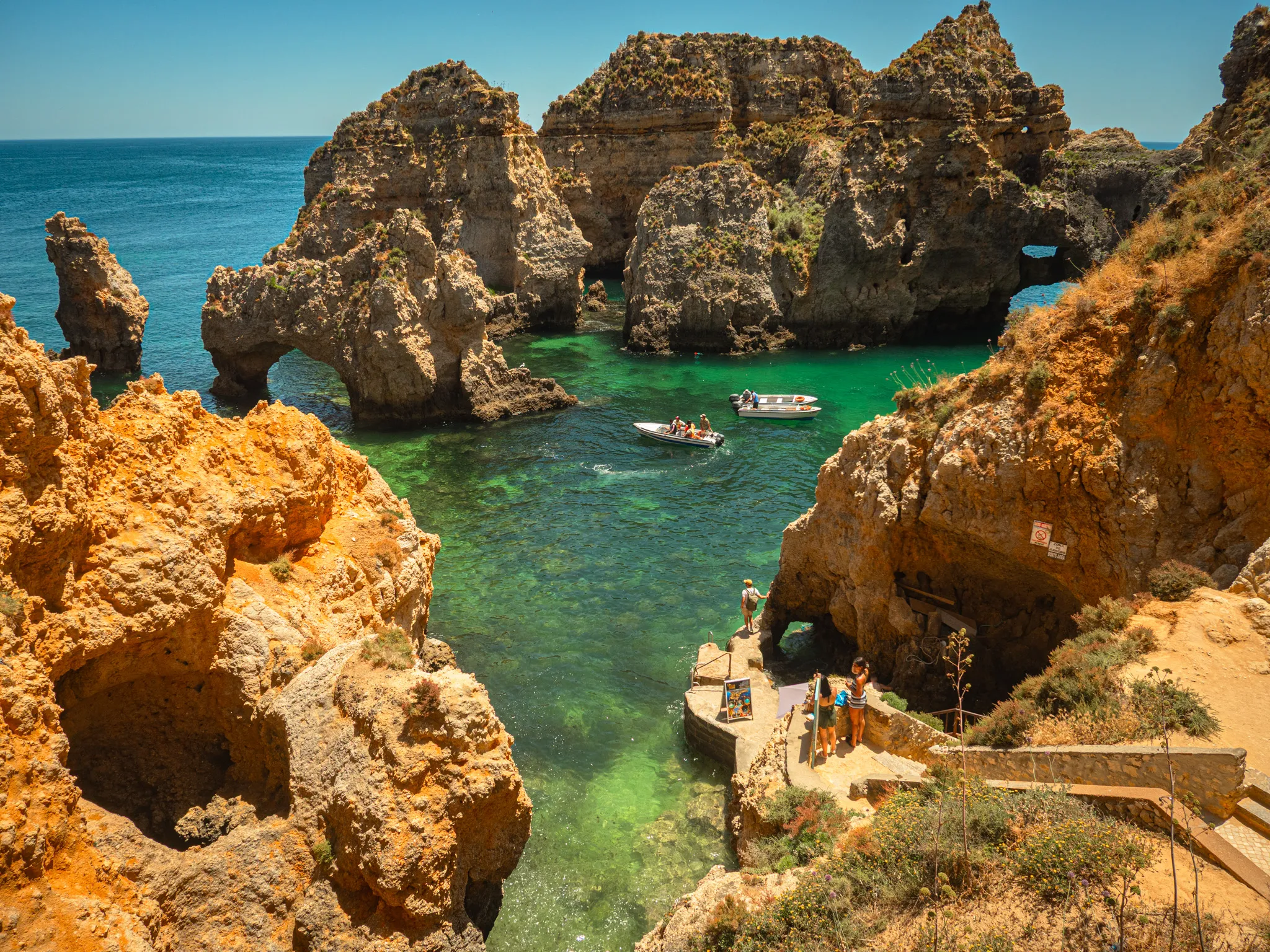
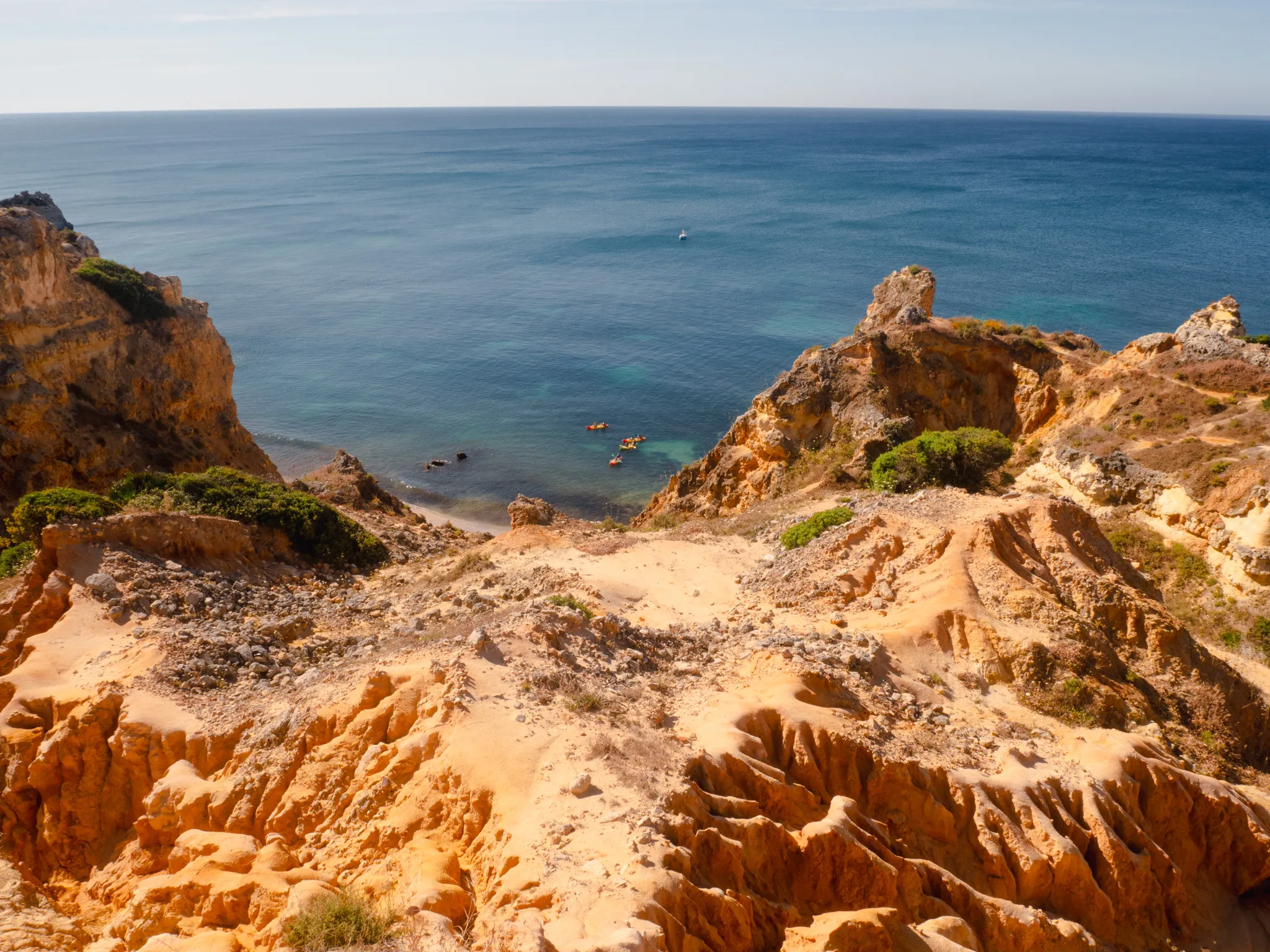
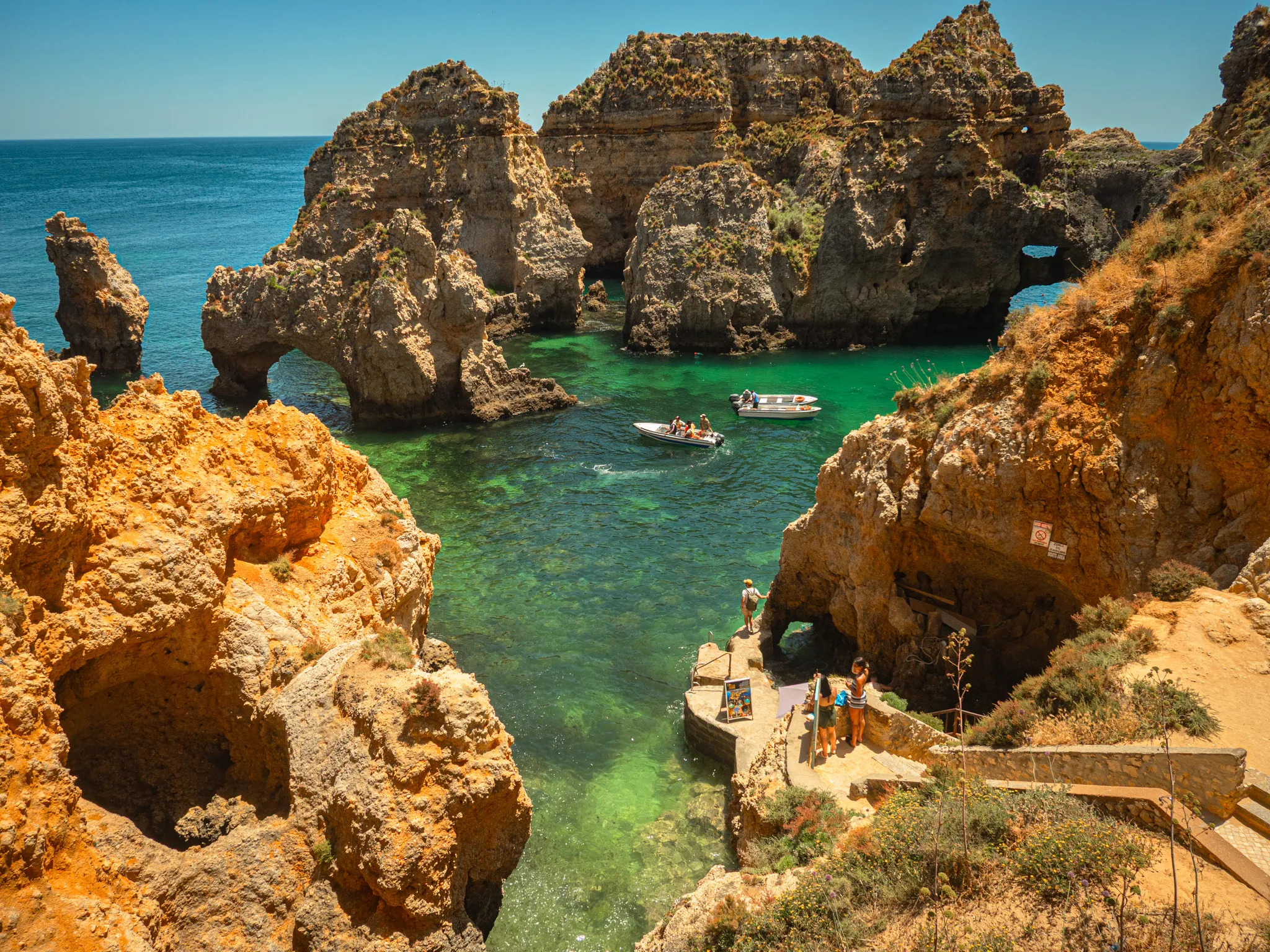
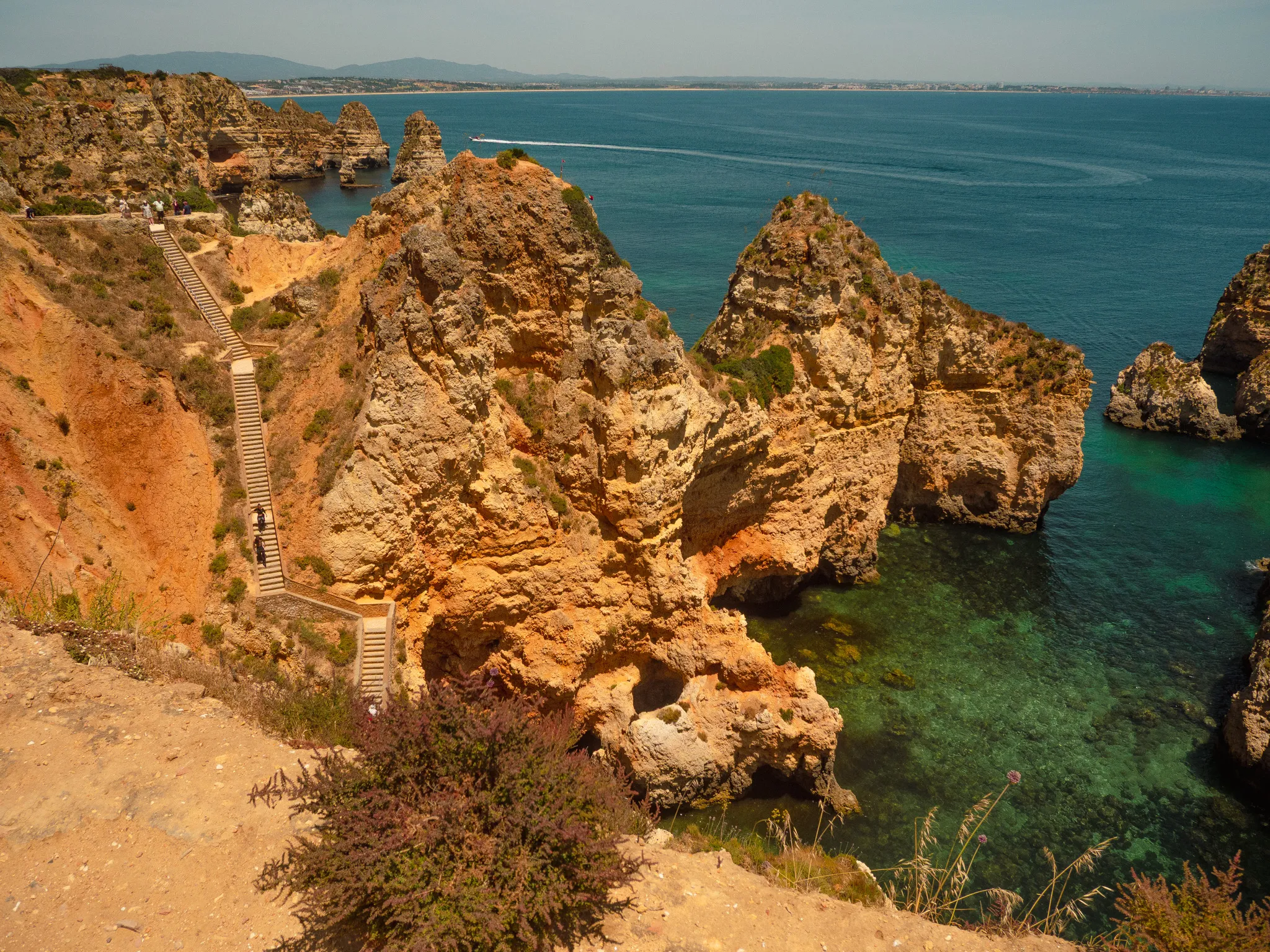
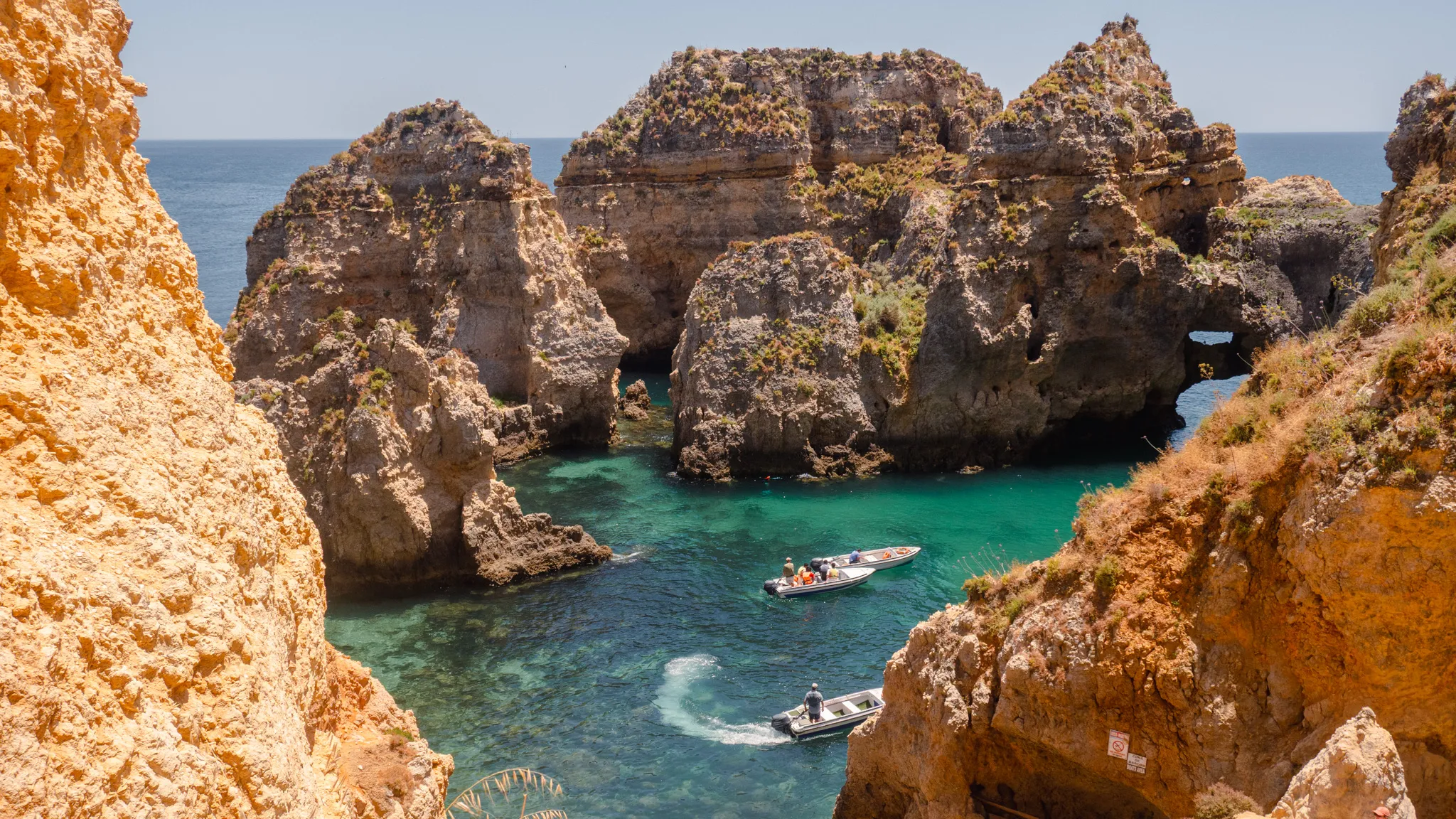
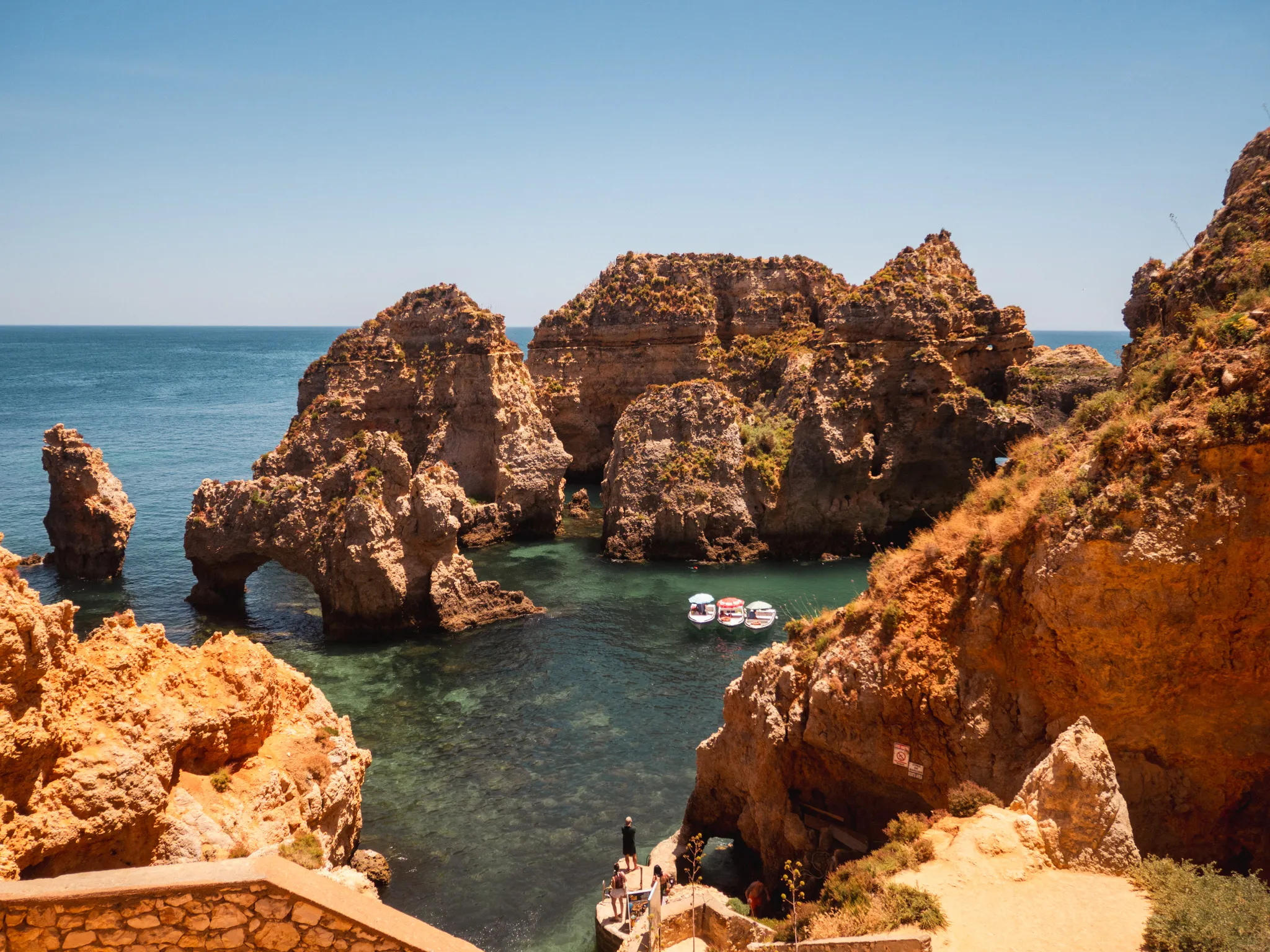
About forty-five minutes from Albufeira, Ponta da Piedade is the kind of place you should not miss. There is a large car park and the path is well marked, a wooden boardwalk along the cliffs, and then a magnificent staircase down toward the sea. The water is dark blue shot through with turquoise, and it meets the ochre of the rock. Each formation, a guide was explaining, carries the name of a local fisherman.
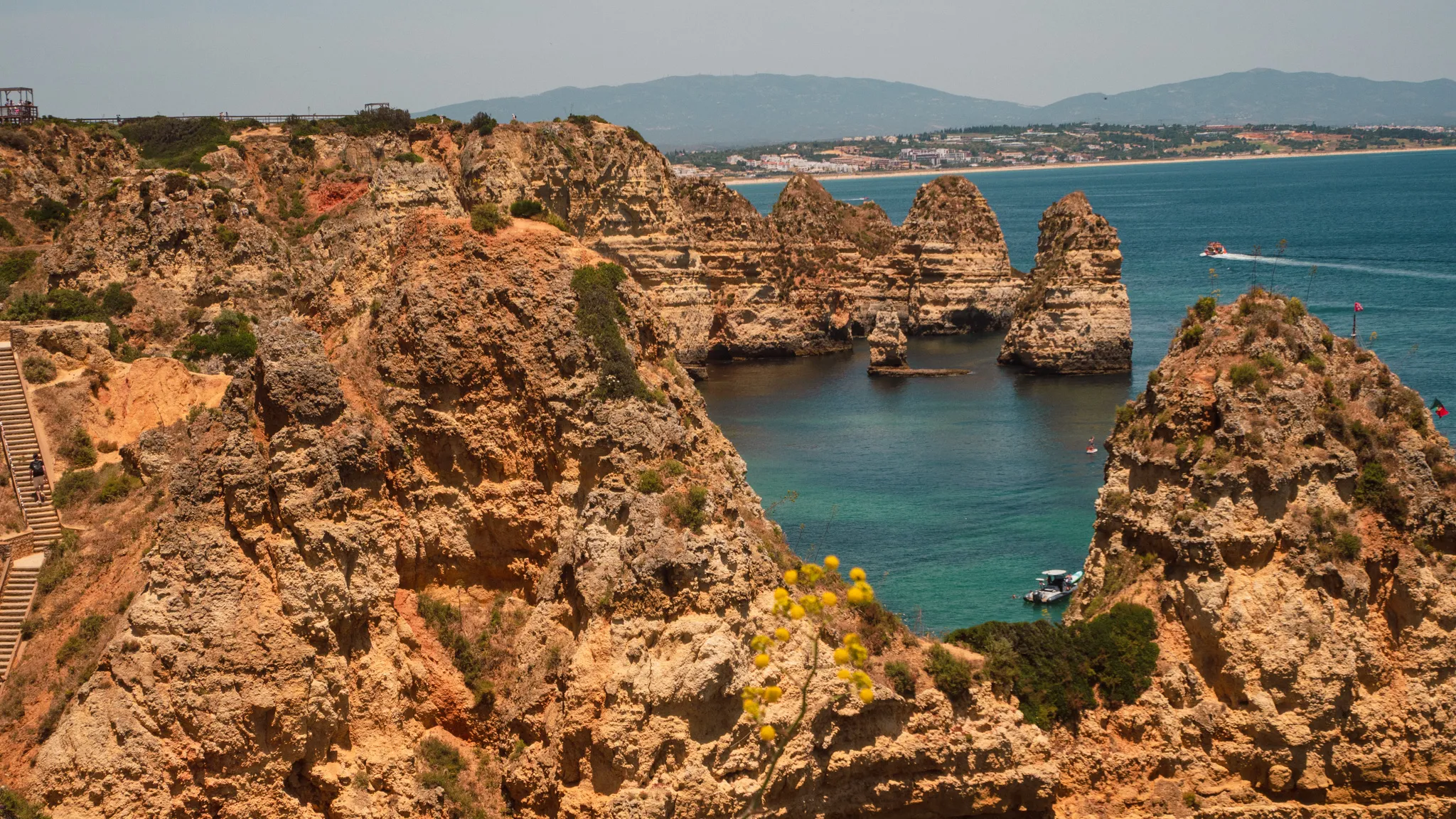
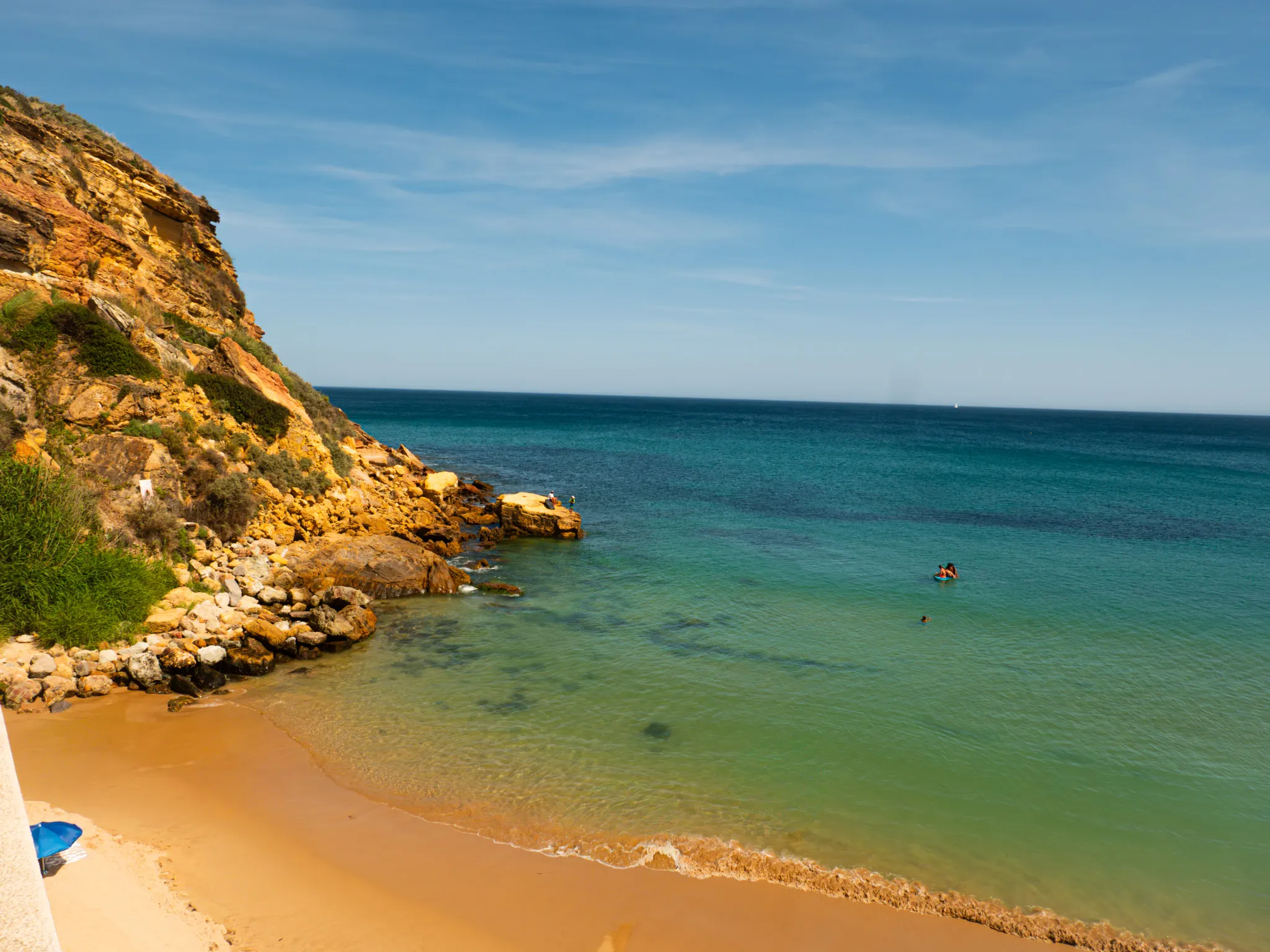
At the bottom of the staircase, small boats take visitors through the caves, so bring cash and, unlike me, book ahead. This is also one of the best places in the Algarve to watch the sun go down. About fifteen minutes away on foot is Praia do Camilo, where a wooden staircase drops to a small cove and a tunnel through the rock opens onto a second beach beside it. By midday both are busy and shade is hard to find, but the water is that same clear turquoise. I found a thin strip of shade at the foot of the cliff and gave the afternoon to a book instead of a screen.
A village by the waterBurgau
Burgau is tiny: white houses tumbling down the hill toward the sea, blue shutters, doors left open to the afternoon breeze. For a moment it made me think of Greece. We had lunch at Mia, a restaurant overlooking the water, and everything was good, the fish especially.
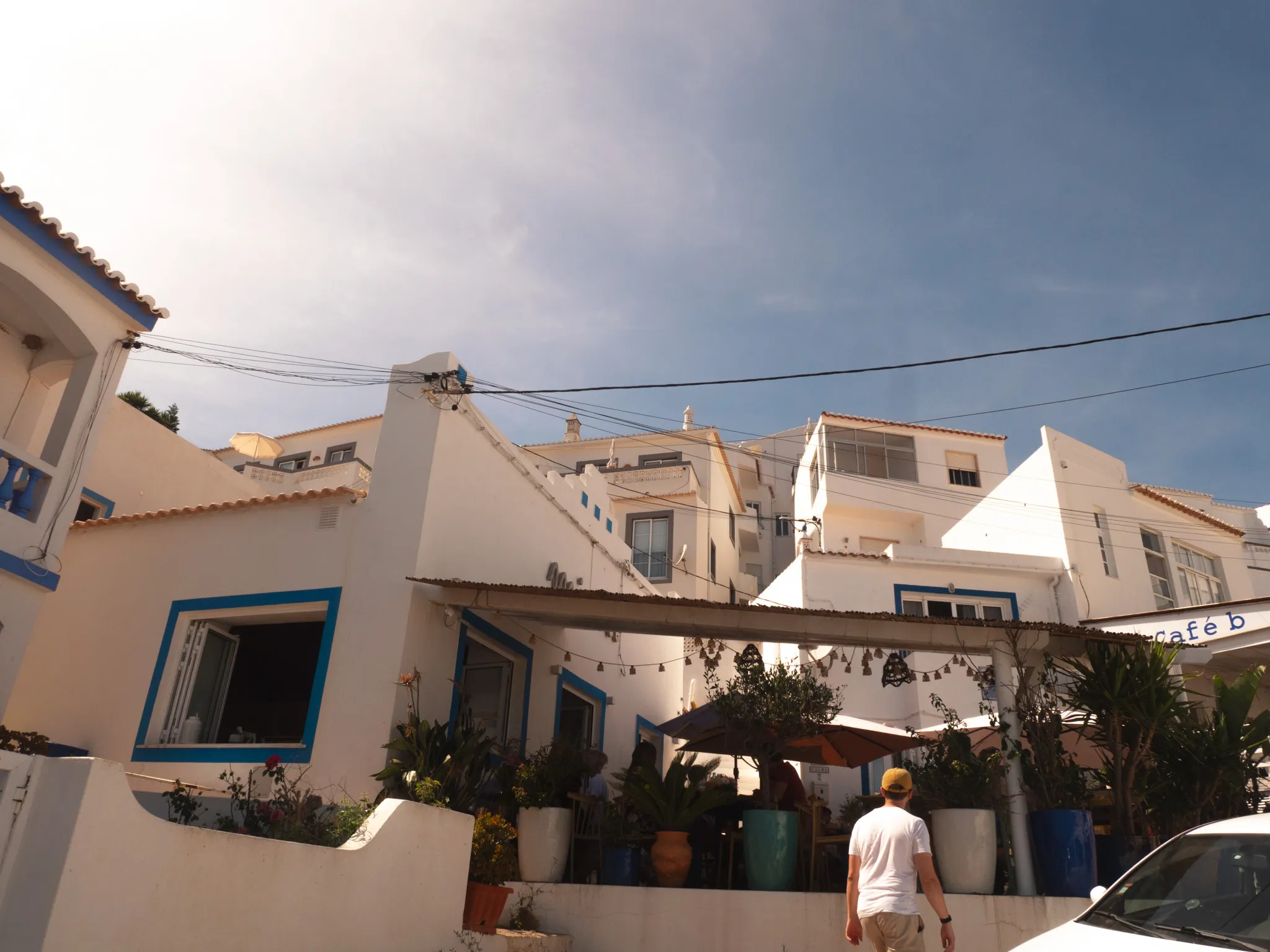
Burgau, and lunch by the water at Mia.
An unplanned stopOlhão, the cubist city
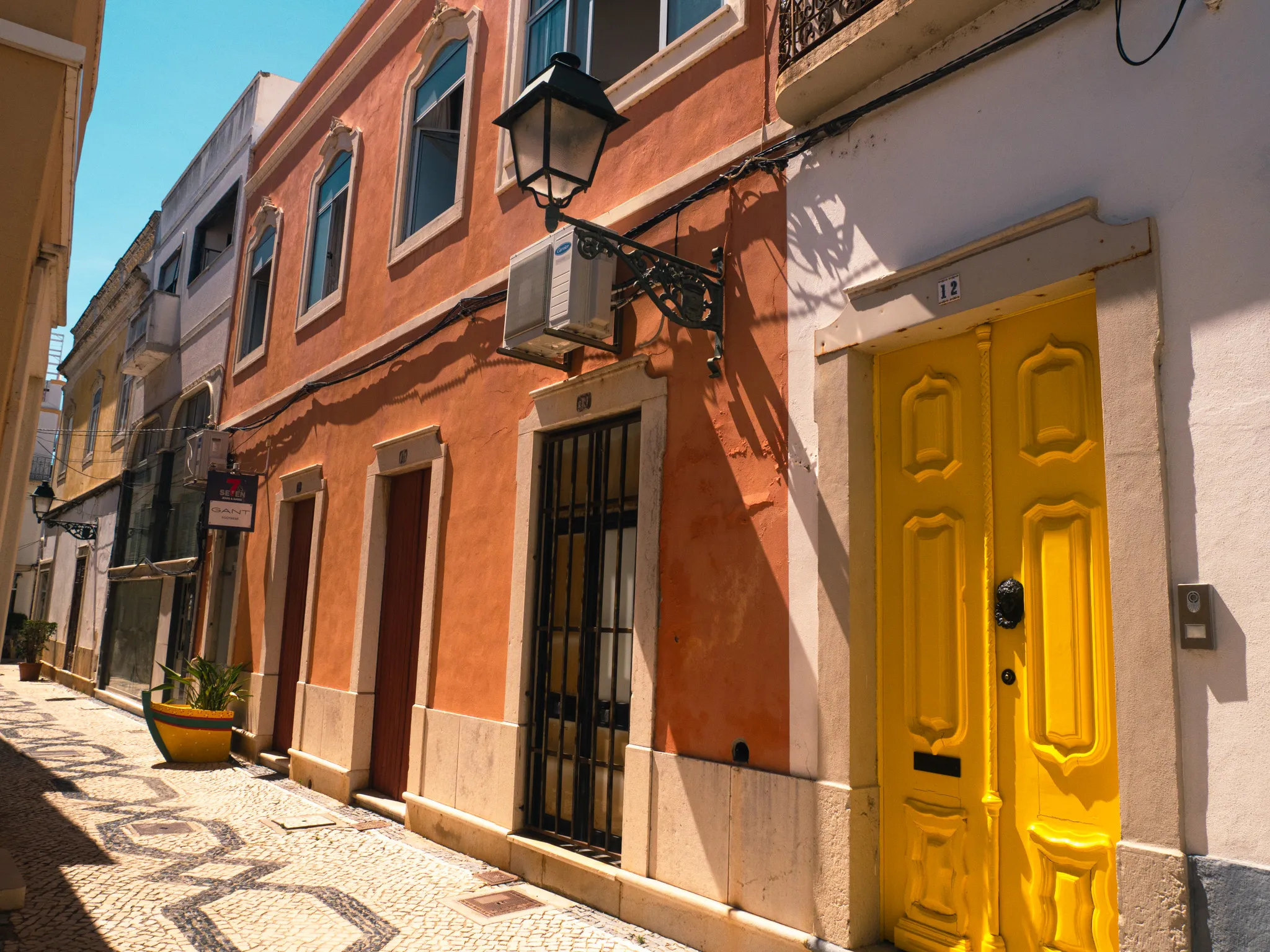
We were driving east toward Cacela Velha when a road sign pointed to Olhão, and on a whim we followed it. The town was a lovely surprise. A grand red-brick market sits on the waterfront, the Mercado de Olhão, home to the largest fish market in the Algarve. Have lunch across from it, where the street is lively and the produce is fresh.
What struck me most is that parts of Olhão do not feel entirely European. The white cubic houses with their rooftop terraces belong more to North Africa than to Portugal, and that is no accident: for centuries Olhão's fishermen traded across the sea with Morocco and built their homes in the image of the towns on the other shore. Locals call it the Cubist City. A pink chapel, the Chapel of Senhor dos Aflitos, is where fishermen's families once prayed for a safe return from the sea.
Light, water and timeCacela Velha
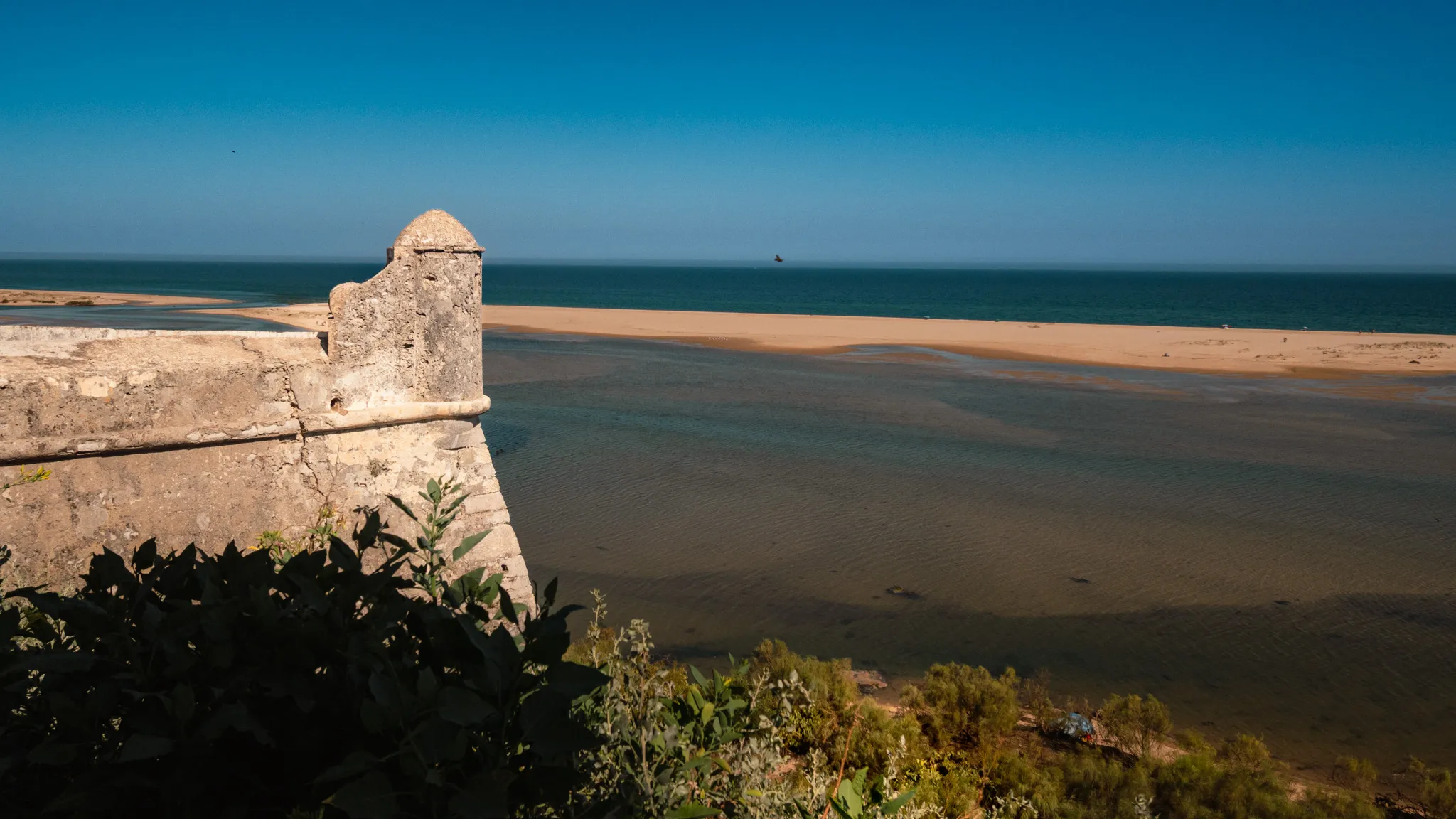
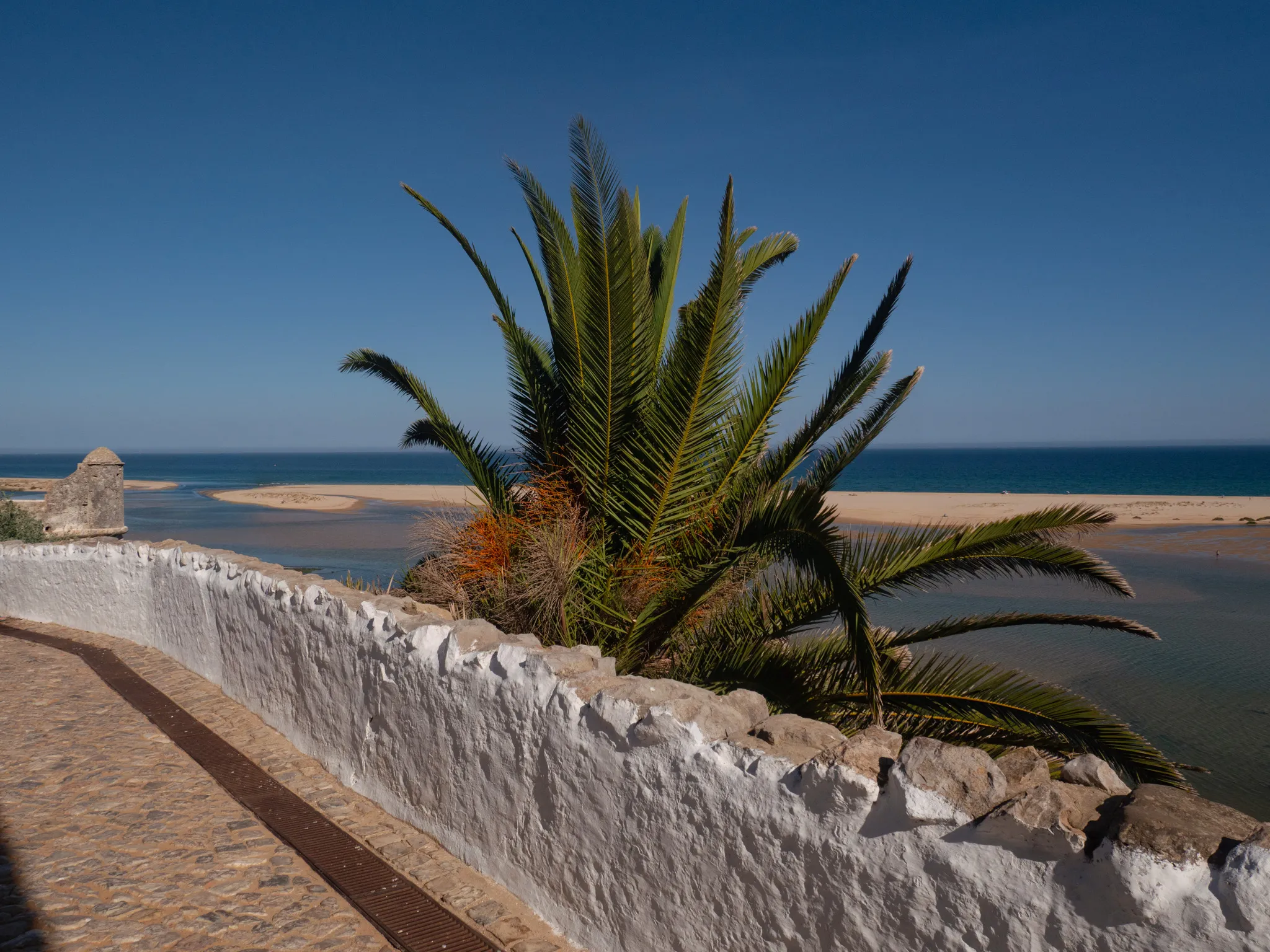
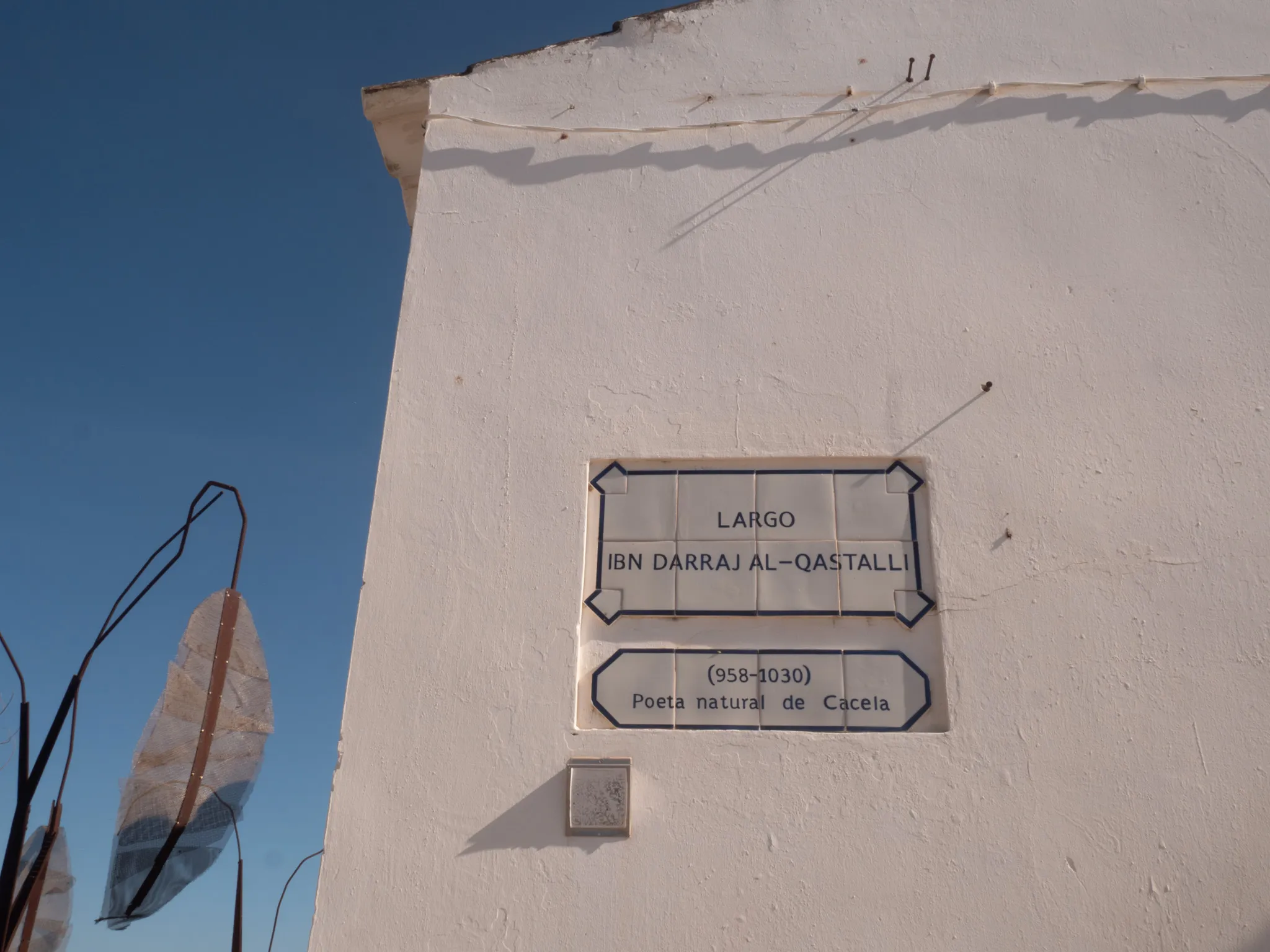
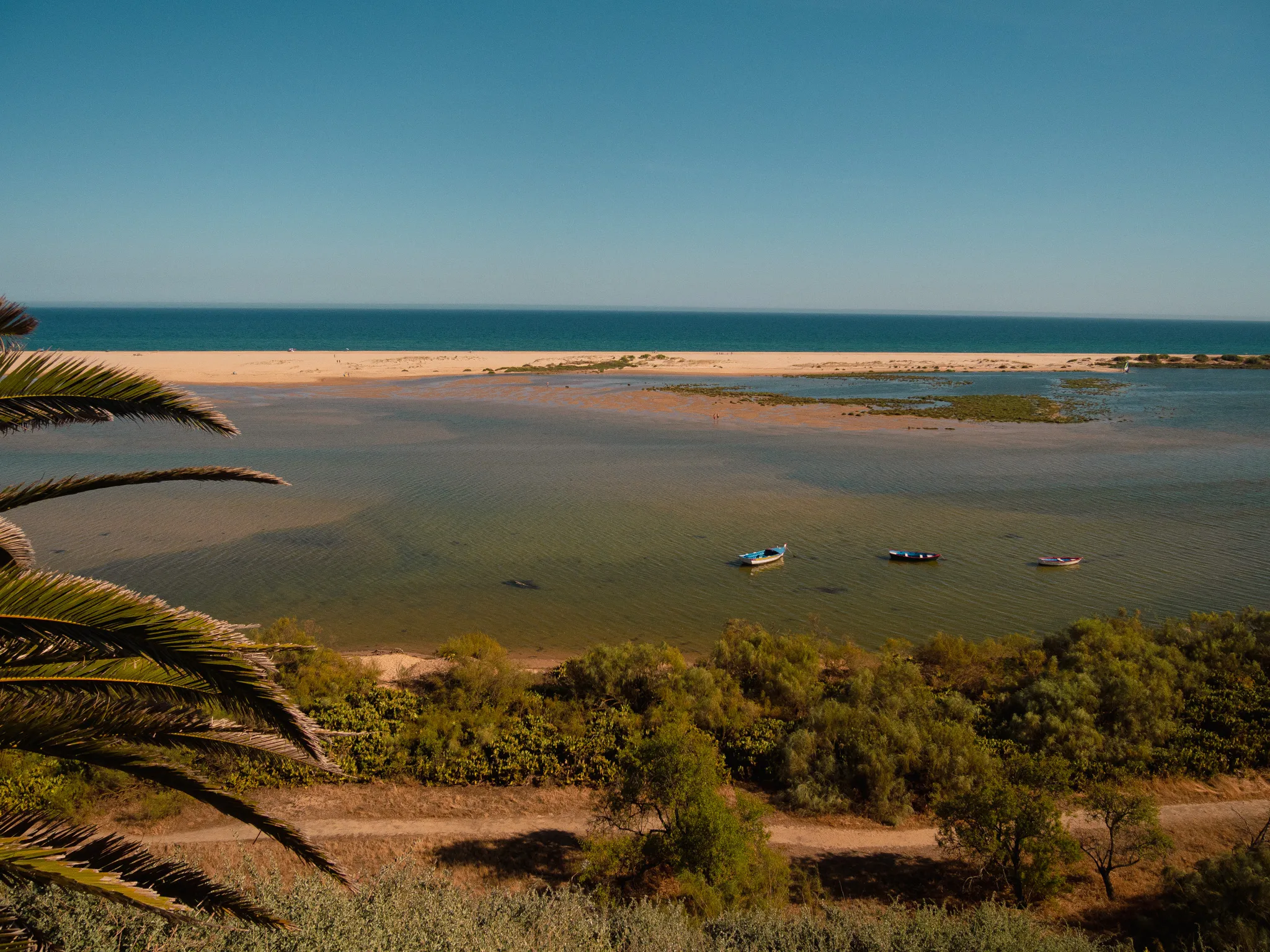
Cacela Velha is a tiny village perched on a hill above a wide, shallow bay, and the view reminded me at once of the Bay of Arguin back in Mauritania. At low tide, dozens of people wade across to the far sandbanks, the water barely at their knees, and the whole landscape rearranges itself with the tide as sandbanks surface and the water shifts between blue and green. There are no dramatic cliffs here and no famous monuments, only light and water and time, which is exactly the point. Fittingly, the village is dotted with plaques and fragments of verse: some places ask to be photographed, and this one asks to be described. A staircase lined with cacti, and a few signs warning of snakes, leads down to the beach.
Culture · identityAn unexpected family reunion
Driving through the Algarve, I kept meeting my own history. For centuries, Berber and Arab dynasties from North Africa ruled much of the Iberian Peninsula, and their words are still everywhere. Algarve itself comes from the Arabic Al-Gharb, meaning the West, which for medieval Arab geographers was the edge of the known world. Albufeira most likely comes from Al-Buhayra, the little lake. Borders vanish and kingdoms fall, but the words remain, on hillsides and road signs, pronounced by millions of visitors who never notice. For me it felt less like a history lesson than an unexpected family reunion.
The real PortugalTavira, the Venice of the Algarve
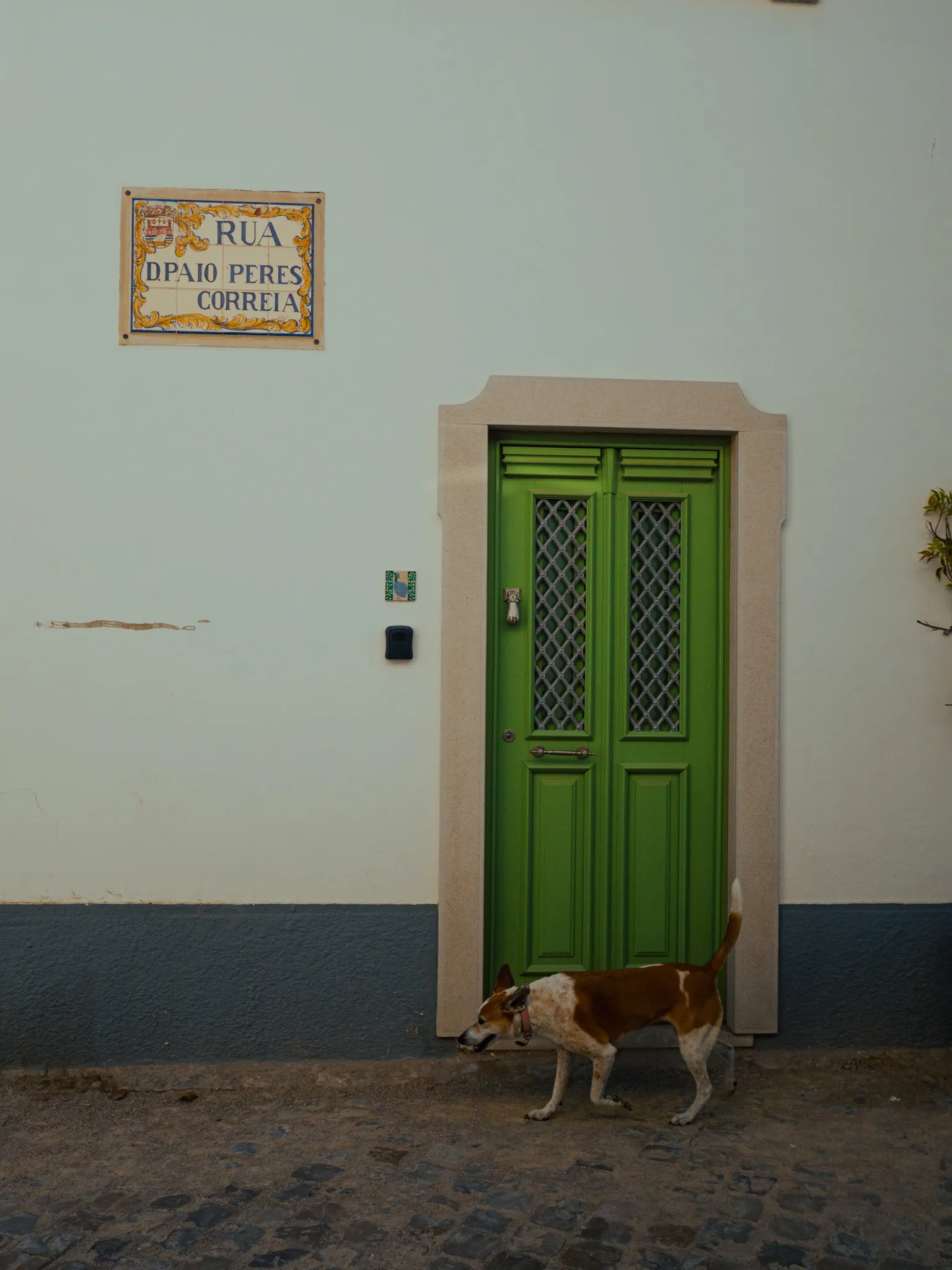
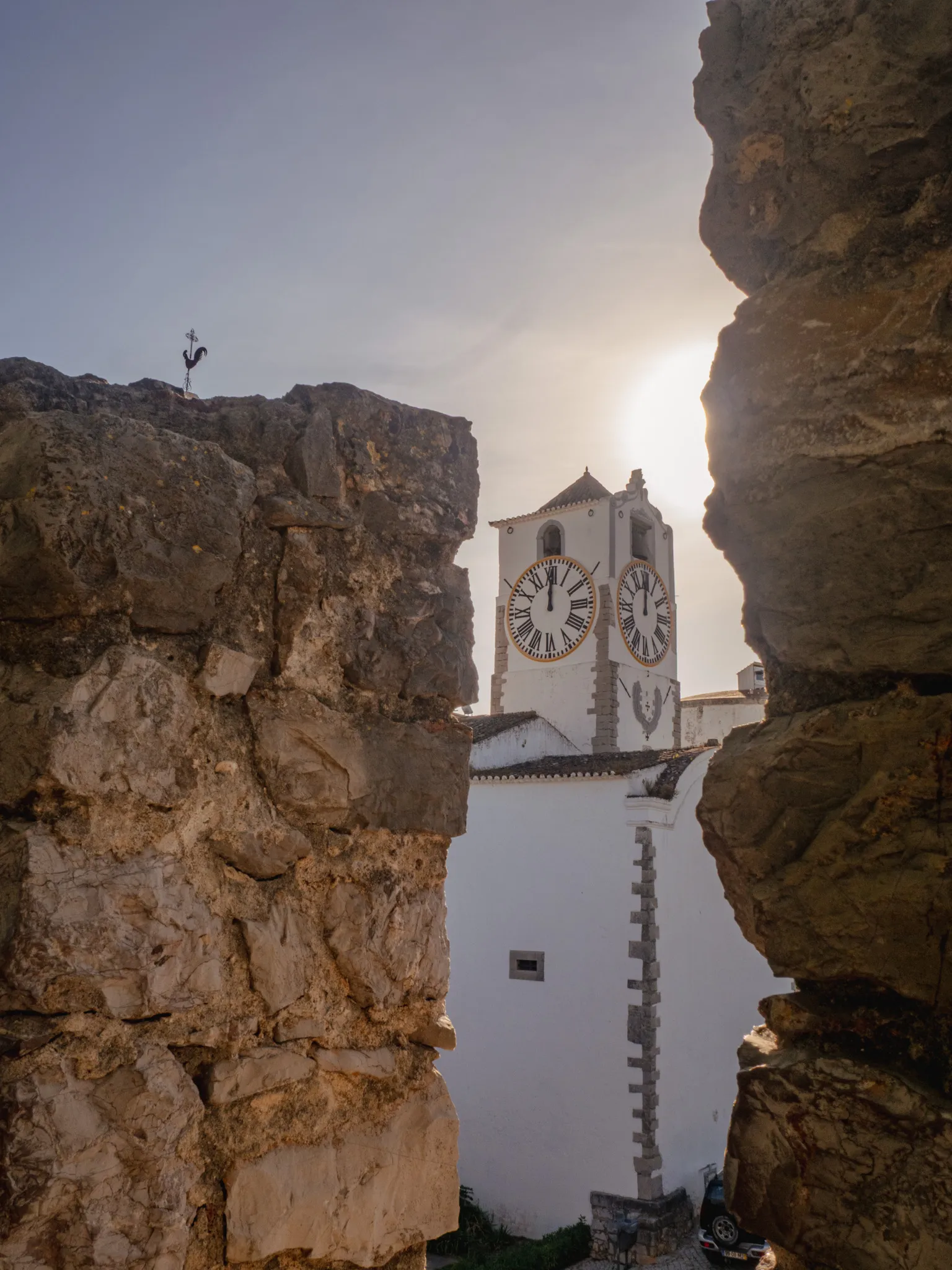
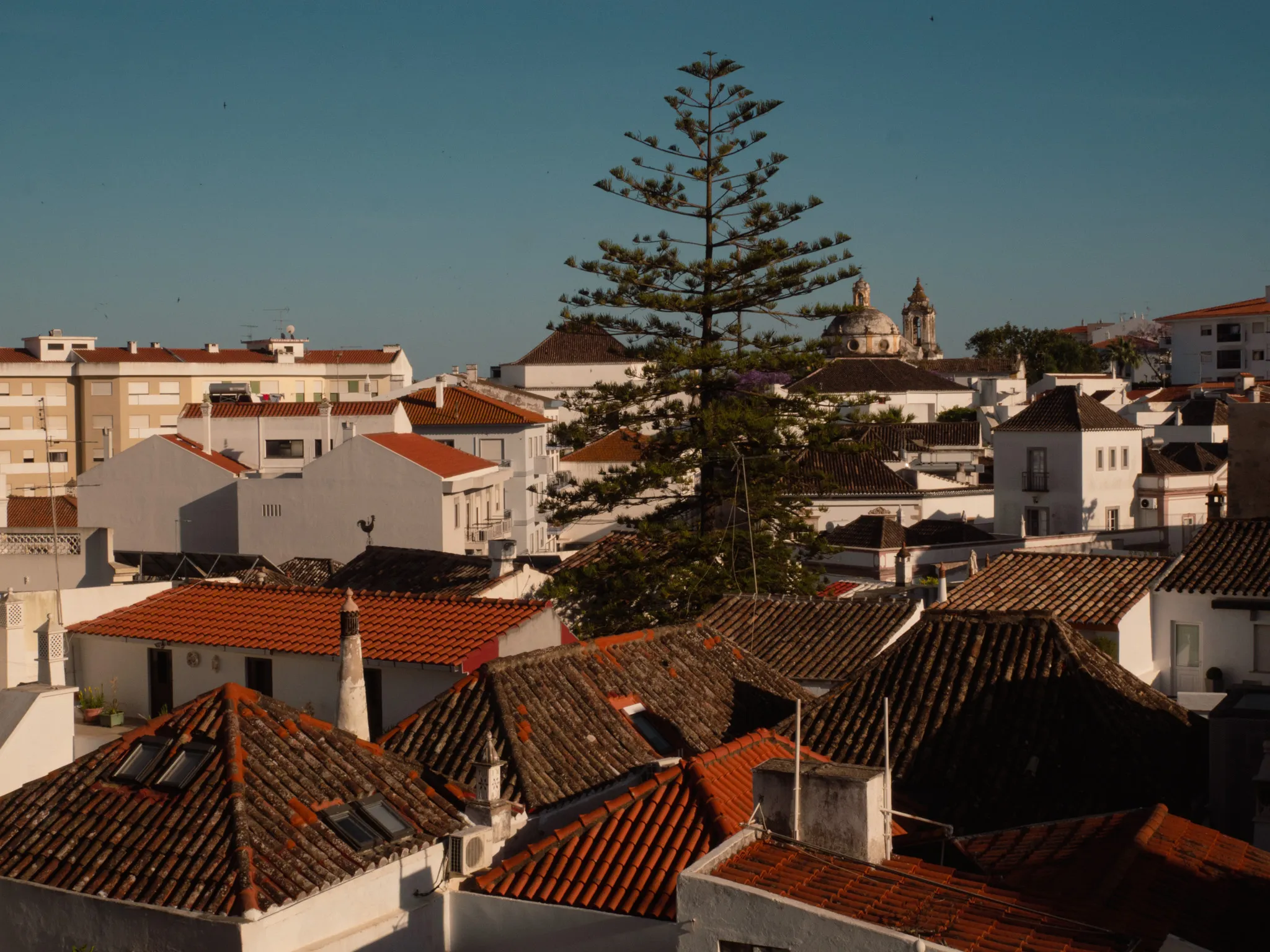
After Cacela Velha we stopped in Tavira, and it was a beautiful surprise. This is the Algarve people mean when they talk about the real Portugal: unhurried and authentic, a tangle of cobbled streets and whitewashed houses and azulejos, with so many church towers that I began to suspect there were more churches than residents. Thirty-seven, I later read. A seven-arched Roman bridge crosses the slow Gilão River in the centre.
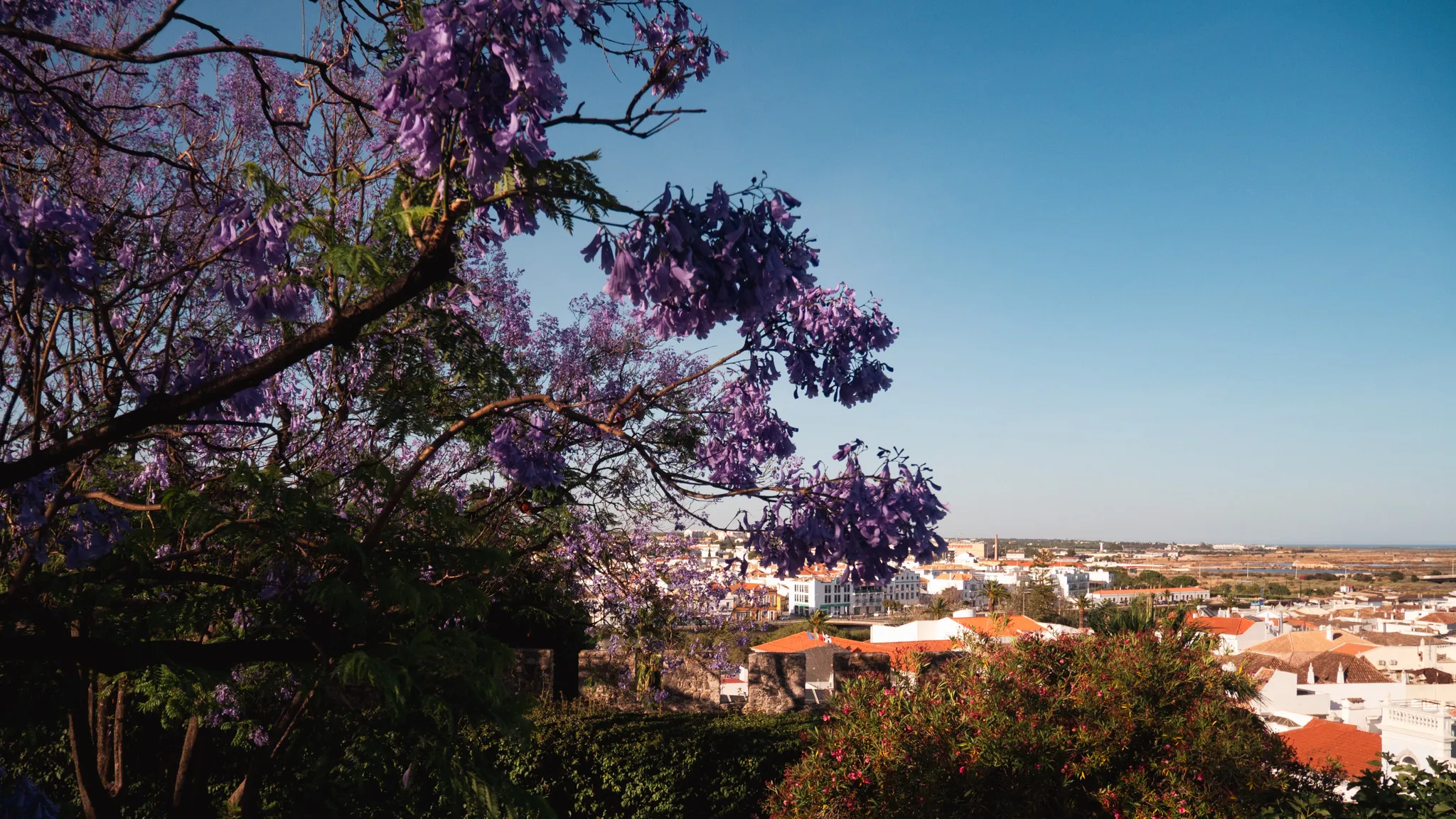
Around six in the evening I climbed up to the Castelo de Tavira, the old castle that crowns the highest point of the town. Entry is free, and little remains today beyond the outer walls, a few towers and a quiet garden, but the view is reason enough to climb: terracotta rooftops stepping down to the river, bell towers breaking the skyline, and the lagoon stretching south to the sea. The castle was raised in Moorish times and rebuilt after the thirteenth-century reconquest, and beside it stands a church built on the site of a former mosque.
In the rose garden a class was rehearsing something, singing and then laughing, when the wind rose and the jacarandas let go all at once. It rained violet flowers, and across the square the cathedral bell began to ring. The petals fell on my hair and my shoulders, and for once I simply closed my eyes and let it happen.
The last two nightsPraia da Falésia
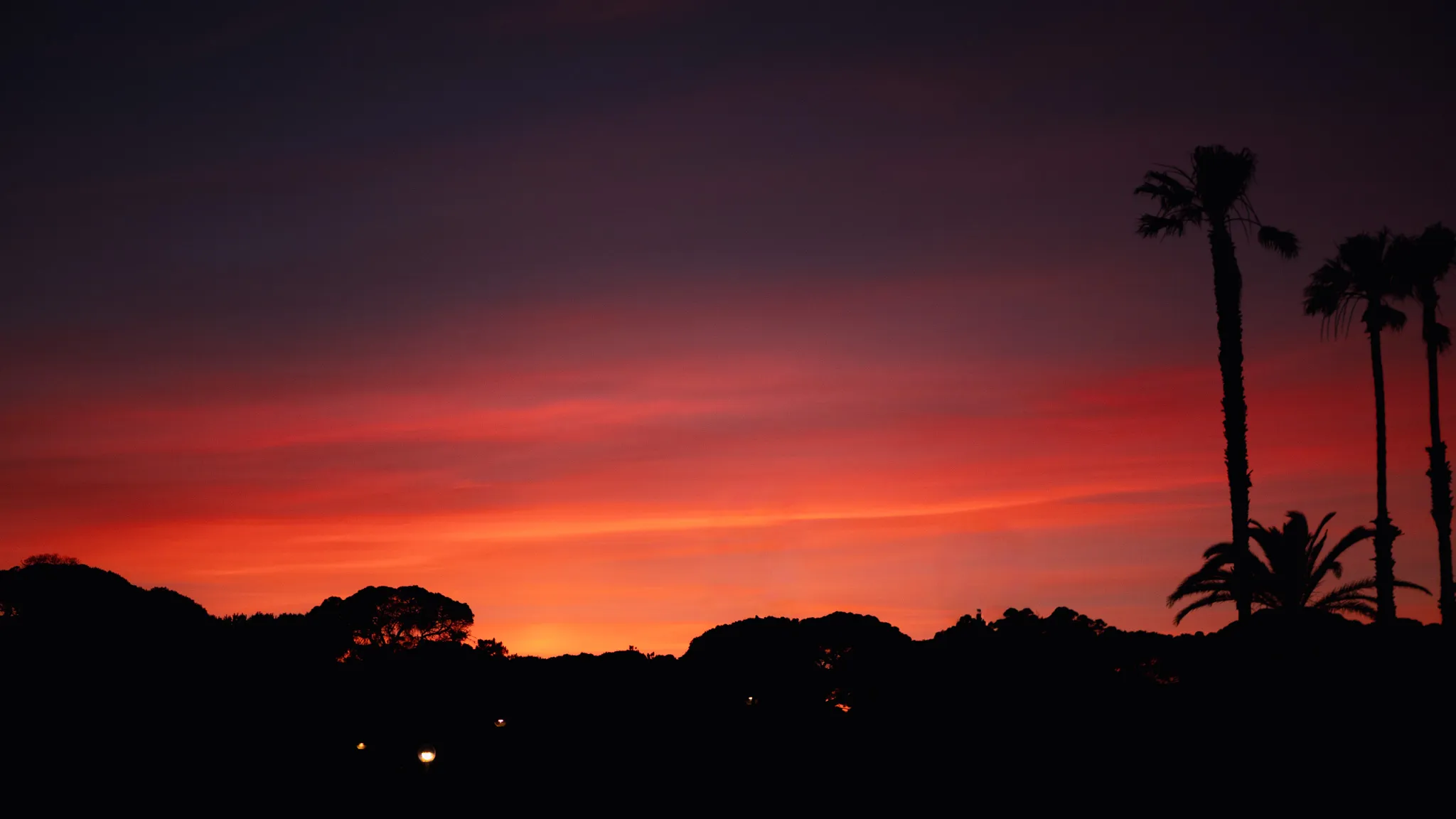
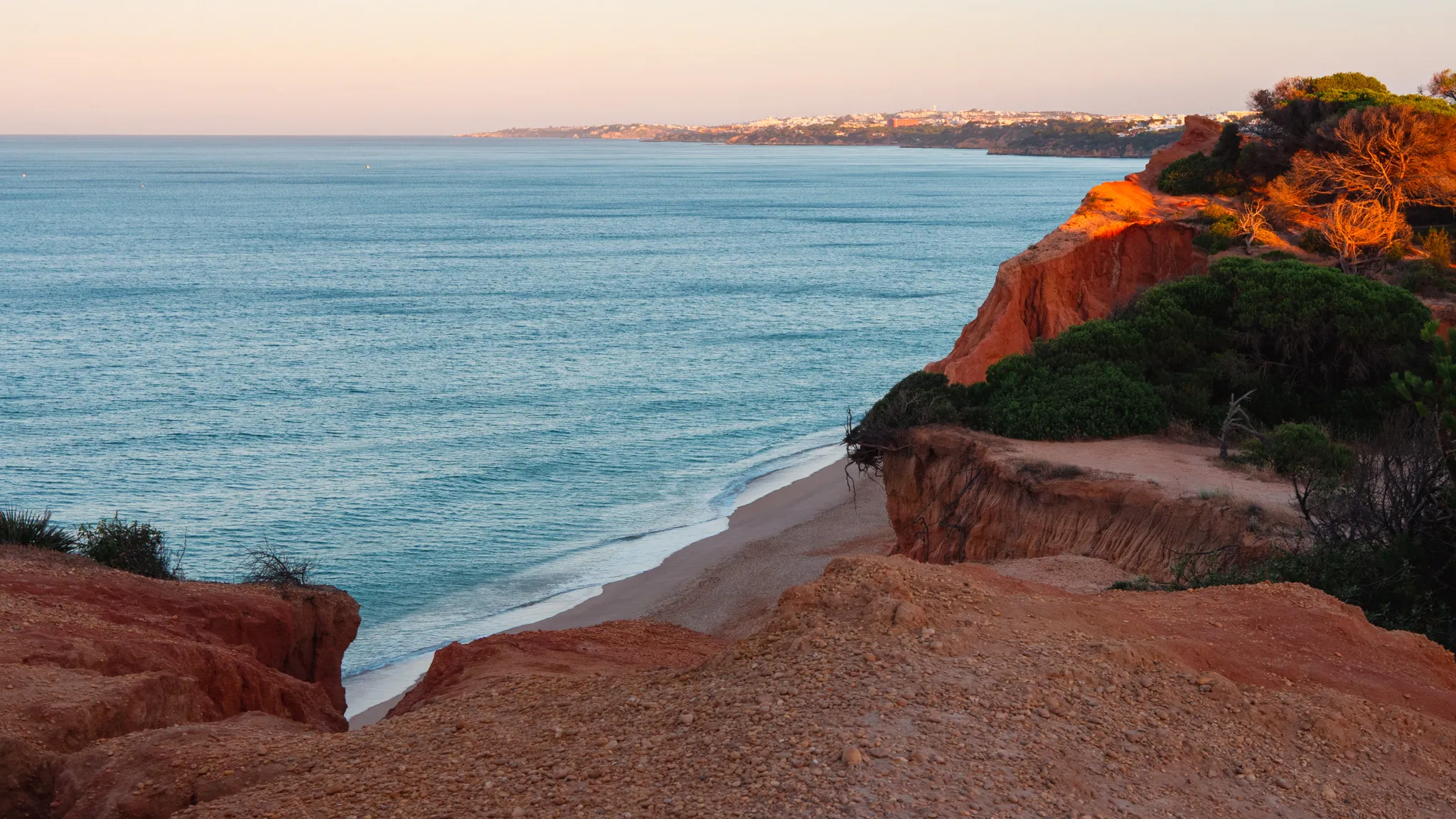
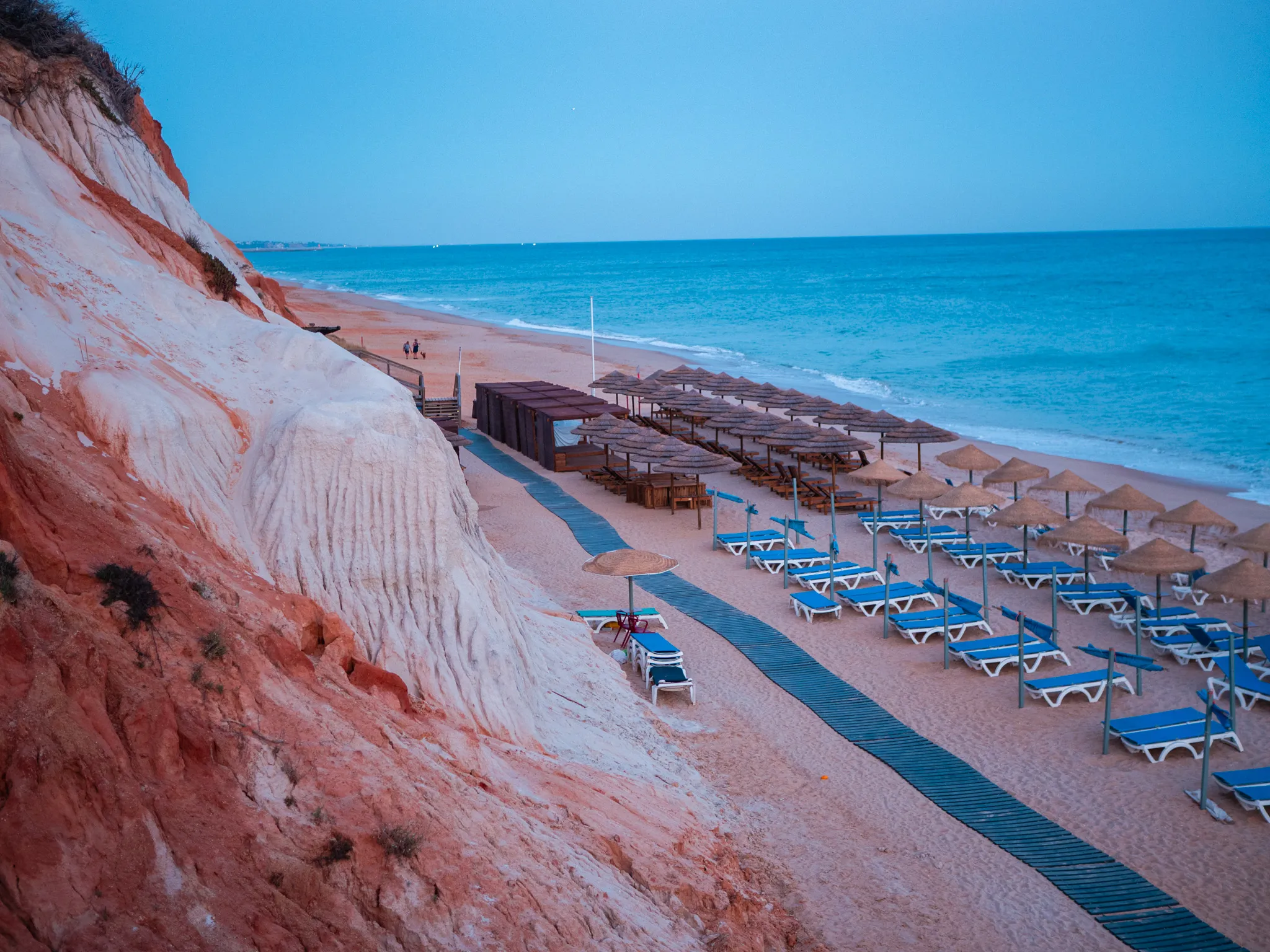
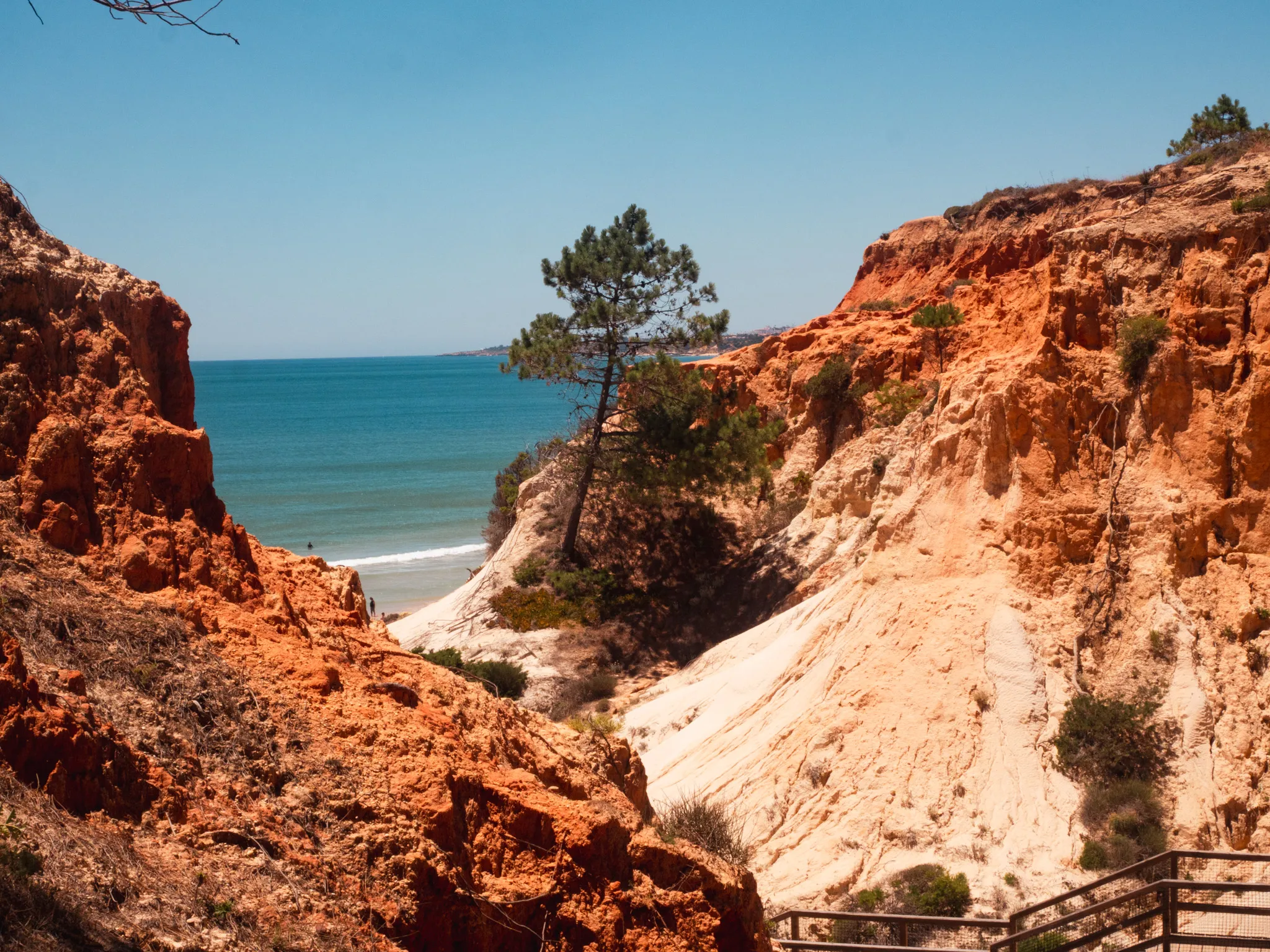
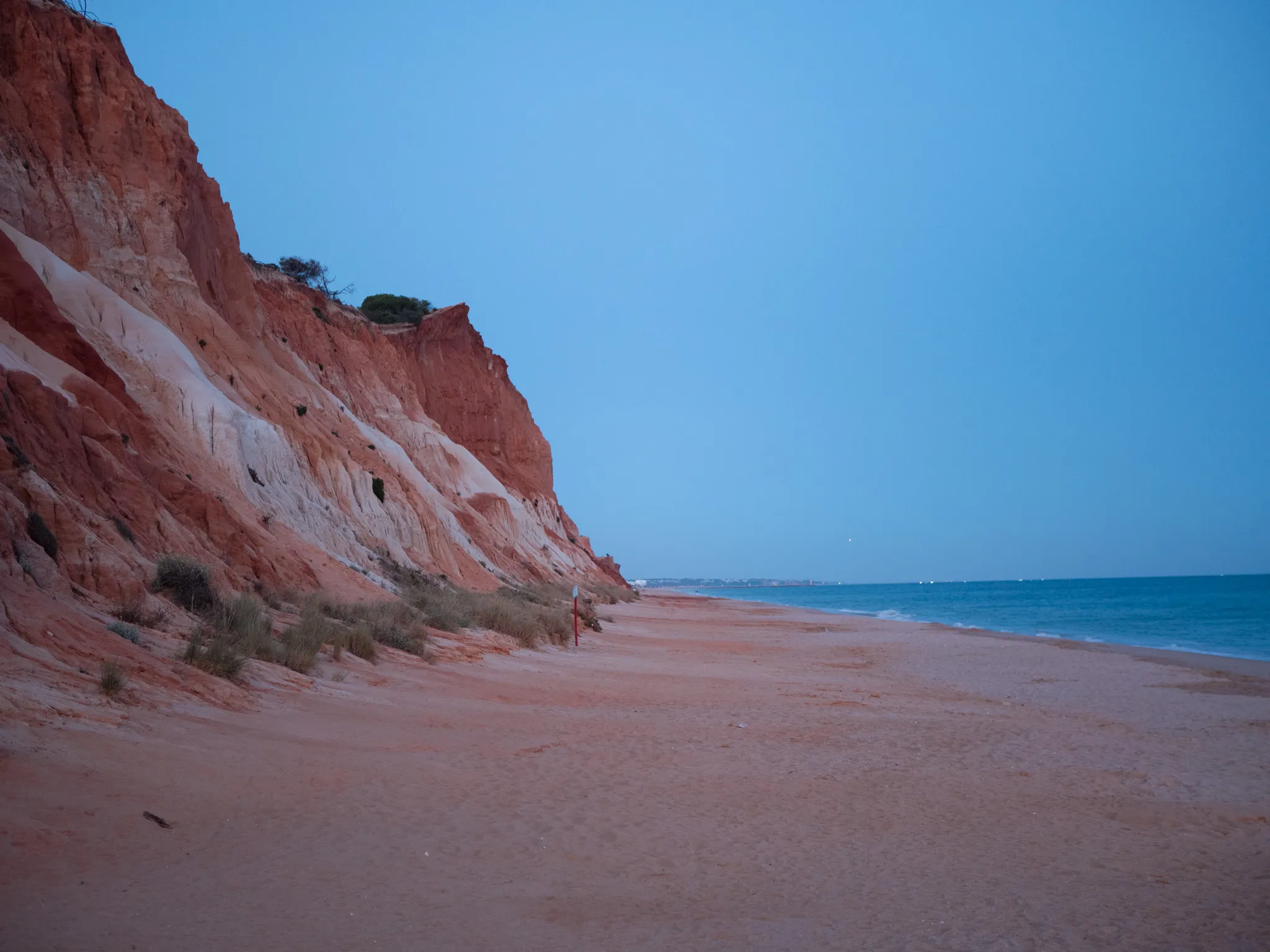
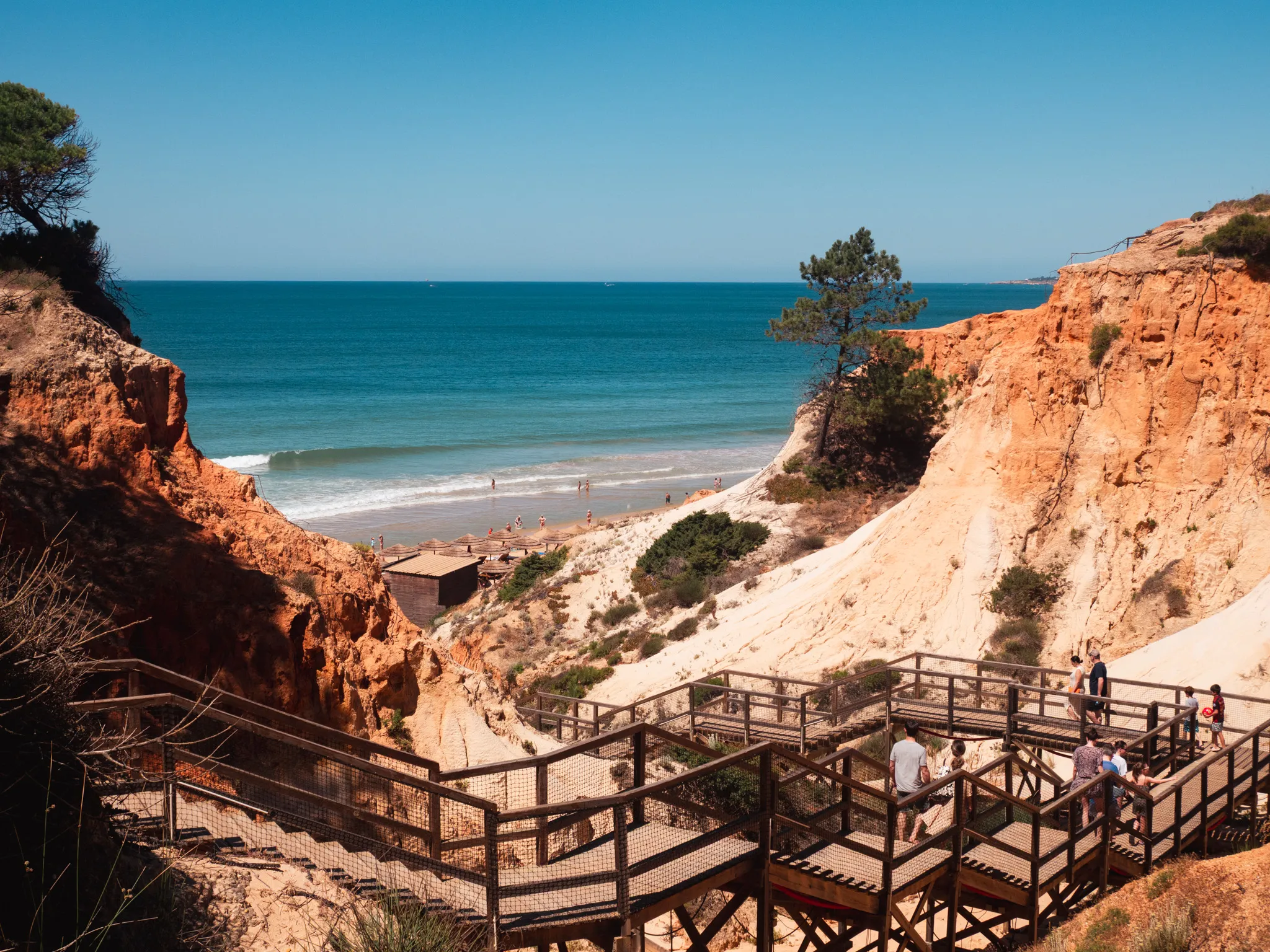
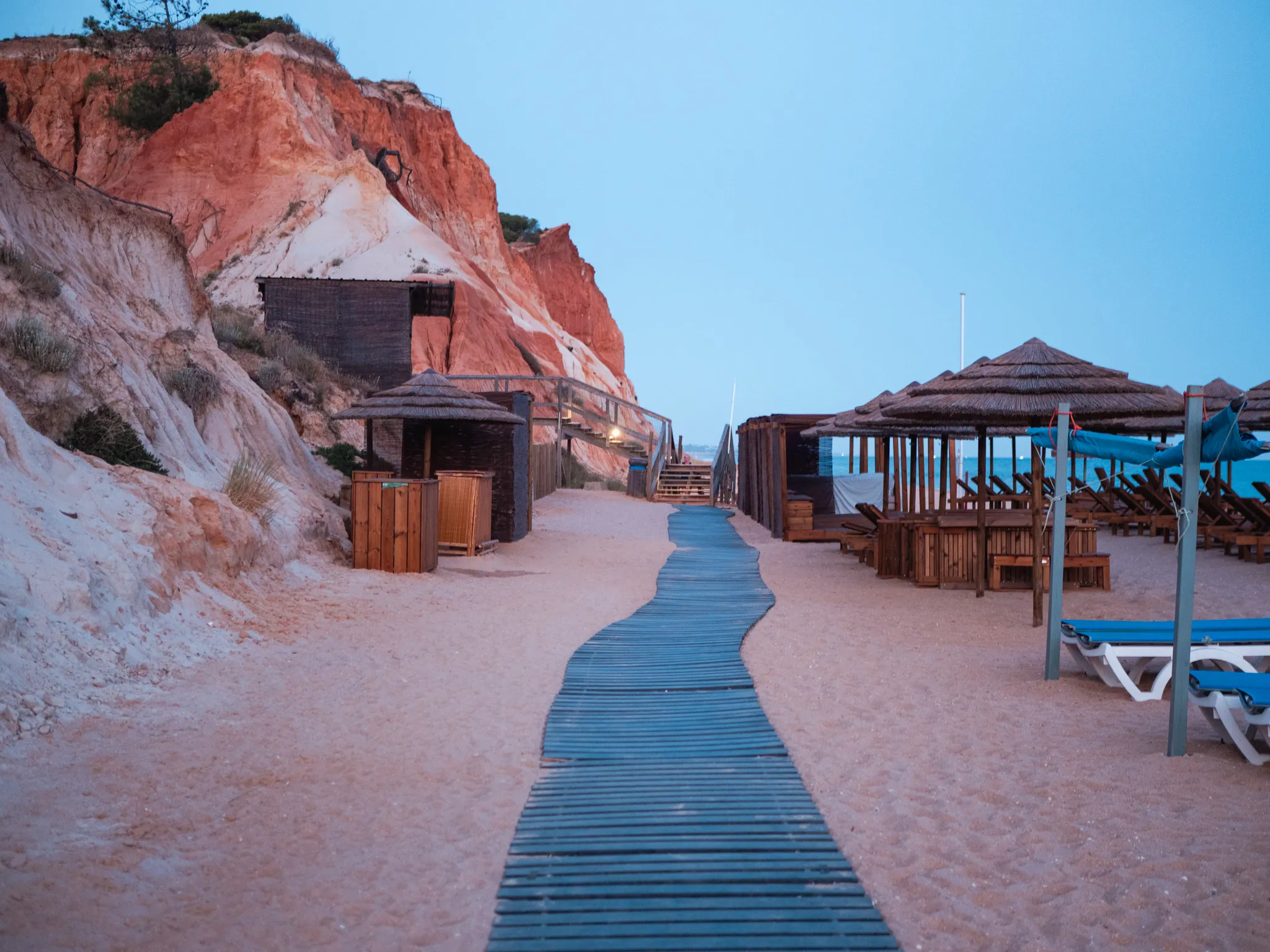
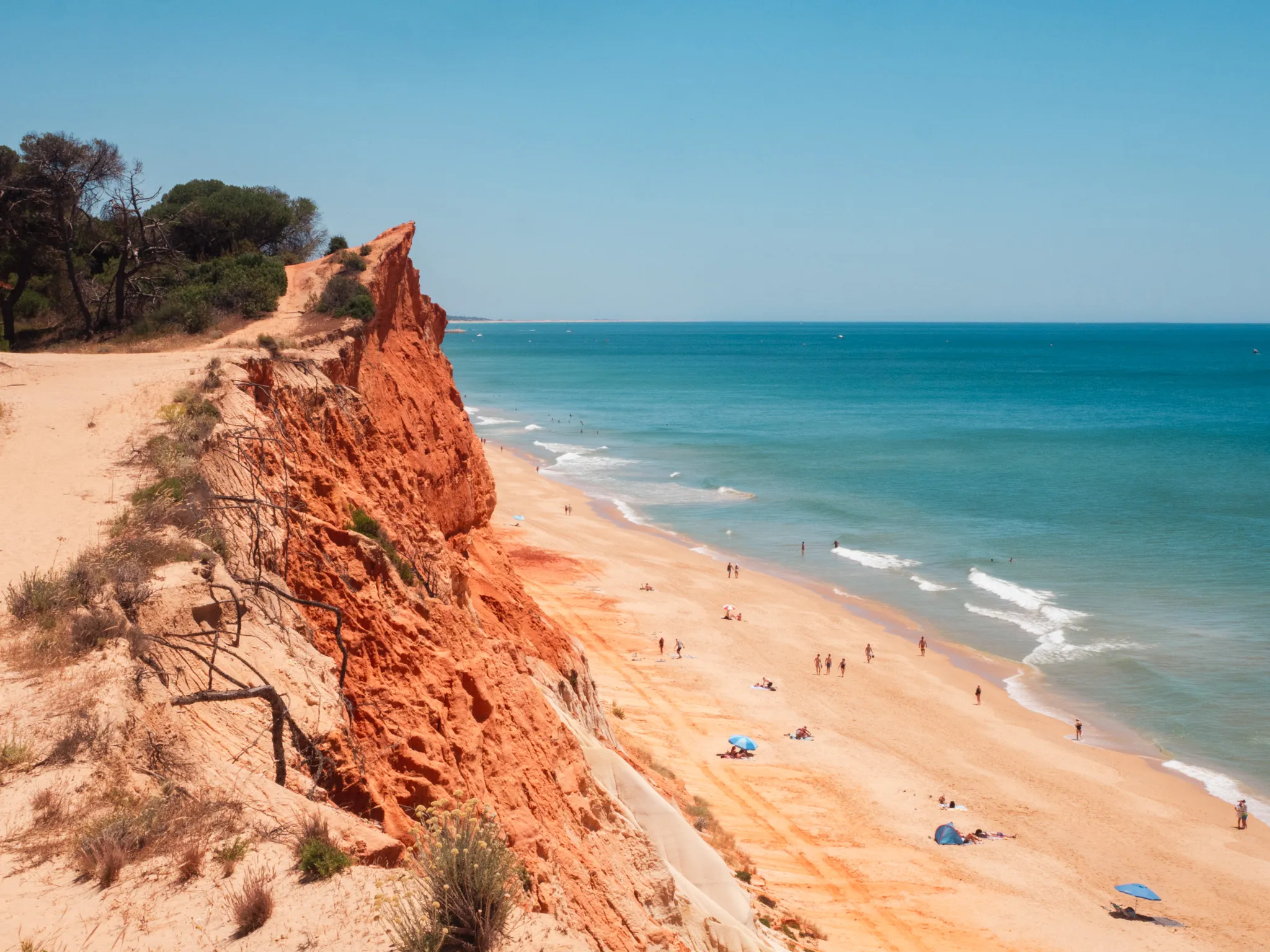
For the final stretch we moved to the EPIC SANA on Praia da Falésia, and it was love at first sight. The hotel sits inside a pine forest, all quiet luxury and the smell of resin, with a wooden walkway that carries you out over the trees and down the face of an ochre cliff to the beach. The rock is striped in every shade of rust and gold, and, absurdly, it made me think of Antelope Canyon.
That evening we ate at the hotel's Japanese restaurant, UDDO, where the waitresses moved in kimono, a drum sounded across the room, and a bonsai sat on every table. The next morning I set an alarm, on holiday of all things, and walked out through the pines at a quarter to six to catch the sunrise. There was no one: only the enormous beach below, the ochre walls, and the sun pushing its first light over the water. Later I went down to the sea itself, which is a luminous turquoise and so shallow you can wade out for what feels like forever. The loungers are not free, because this is not a private beach, and I was glad of it. A beach this beautiful should not be fenced off.
One thing I did not doThe end of the world
I never reached Cabo de São Vicente, the wind-blown cape at the far southwest that medieval sailors once called the end of the world. I simply ran out of days. It is reason enough to come back, and there are worse things than leaving a place with something still unseen.
"The Algarve is not a checklist. Drive it slowly, follow the road signs, give an afternoon to the sea, and let the tide decide the rest."