Oman — Bandar Al Khayran
Middle East

Oman

14
Days
7
Stops
Oct–Apr
Best season
4×4
Recommended
Solo ✓
Women-friendly

I drove a loop from Muscat — 1,500 km in 12 days, averaging one to two hours of driving a day. The same loop works in 7 to 10 days if you skip the stops that interest you least, but I'd recommend a minimum of 7 days to actually breathe and not spend your trip in the car. Worth noting: the visa is free for any stay under 14 days.

Route notes Muscat → Jebel Shams loop Middle East · 2026
14 days · 7 stops
For the road
Music
Fairuz — Li Beirut
The voice that belongs to the Arab world. Melancholy and grace in the same breath.
Also try
Ash — Live for Beirut · electro rework, hits differently at night.
Listen on YouTube
Book
Paulo Coelho — The Alchemist
A story about following your path across the desert. Read it here, in the actual desert. The sand scenes land differently when you've slept in the dunes.
01
Days 1–4 · 3 nights

Muscat

The Switzerland of the Middle East. Dubai after therapy. A capital that grows on you quietly.

People call Muscat the Switzerland of the Middle East — and honestly, I get it. Calm, safe, wrapped in raw natural beauty, with mountains, sea and desert meeting in the same frame. But be upfront with yourself from the start: it's expensive, especially once you start pricing hotels and rental cars. What struck me at the airport was how present Omanis are in everyday life — taxis, hotels, service jobs — giving the city a grounded, human feel you don't always find in this region. It's the opposite of Dubai's polished detachment. Dubai after therapy, really.

What to expect
White and beige buildings between mountains and sea. Strict design rules, capped heights, quiet luxury without performance.
Where to sleep
The Chedi for the final flourish. Radisson Collection Hormuz Grand for solid value on arrival.
Budget
Pricier than you'd guess. Book hotels and the rental car well in advance — last-minute Oman is brutal.
What to see & do
  • Mutrah Corniche & Souk

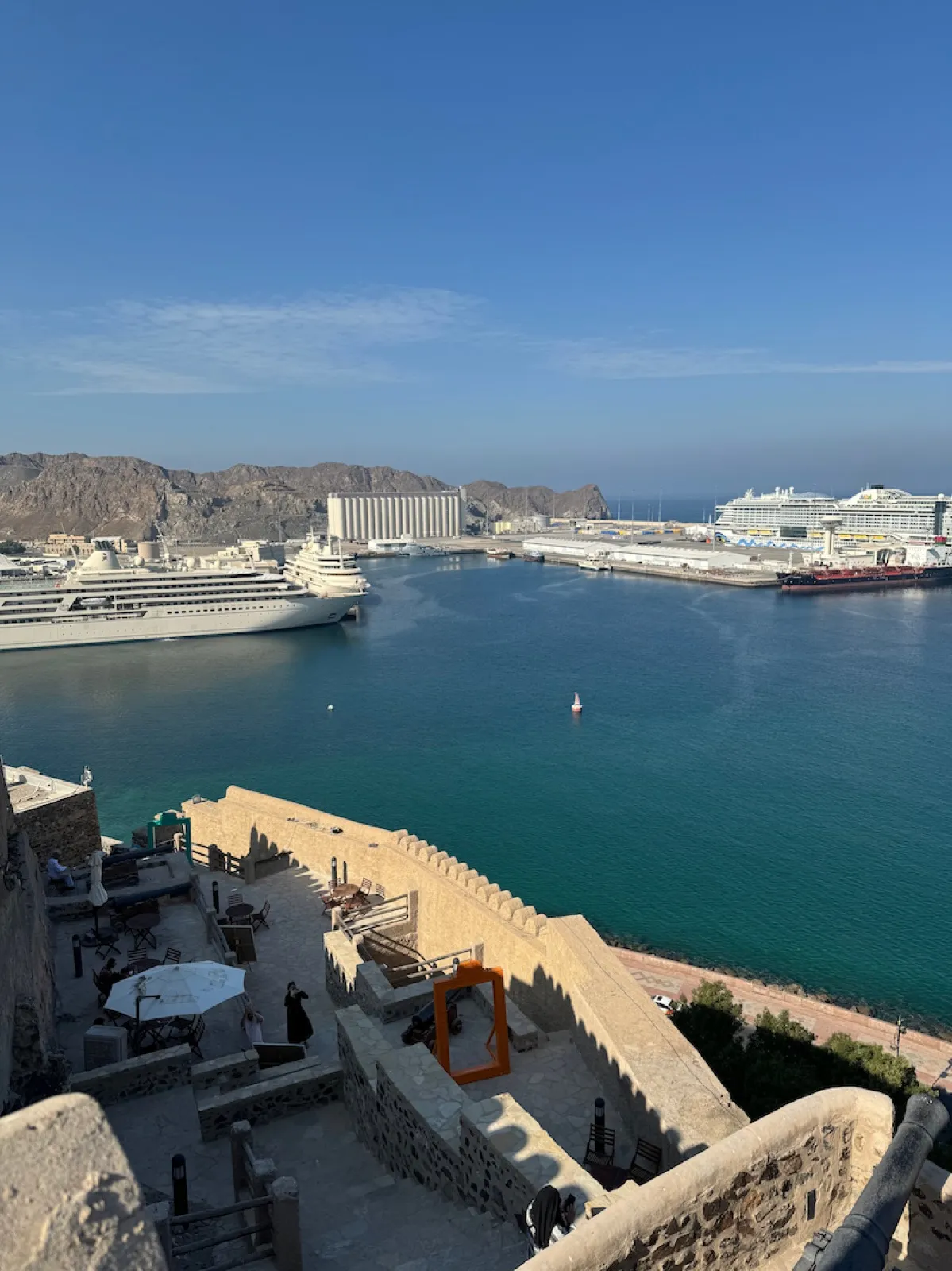
    This is where Muscat really starts to show its history. You've got the old souk, the fish market, and forts overlooking the sea — sea on one side, mountains on the other, and old stone architecture holding it all together. The forts here were originally built by the Portuguese in the 16th century to control trade routes in the Indian Ocean, and walking through them you really feel that strategic past layered over the coastline. About the souk: I'd read that gold is "cheap" in Oman, but not a bargain. I didn't end up buying anything; the designs felt a bit too traditional for my taste. Still worth a wander.

  • The mashrabiya balconies

    One detail I fell in love with: the wooden balconies everywhere. I later learned they're called mashrabiya — traditional carved wood structures designed to let air flow while keeping privacy inside. Functional, beautiful, and very "climate-smart" long before that was a trend.

  • Al Bustan Palace, a Ritz-Carlton property

    Even if you're not staying there, it's worth walking into the lobby. It feels almost unreal: huge ceilings, dramatic design, and a kind of quiet, theatrical luxury that's hard to describe.

  • Al Alam Palace gardens

    Surrounded by mountains, the setting feels almost staged — like a film set that happens to be real. The architecture in this area surprised me, too. It's not what I had pictured for Oman — there's a slight Art Deco influence woven into the traditional Islamic style. Clean, elegant, and very distinctive.

  • Royal Opera House

    We didn't make it, and it's now at the top of my list for next time. It's famous for both its architecture and its role as the cultural heart of the city. The late Sultan Qaboos, who ruled Oman for nearly 50 years, had a deep passion for music and culture, and you feel that influence everywhere here. His legacy is still very present — not just politically, but culturally. Muscat feels shaped by someone who genuinely cared about art, architecture, and identity.

  • A sunset by the sea

    One of my strongest memories of the whole trip. Soft light, mountains fading into silhouette, and a calm that's almost impossible to put into words. If there's one thing I'll say clearly: Oman has some of the most beautiful sunsets I've ever seen. Plan an evening just for this — no activities, no rushing. Just a spot by the water.
Day trip · ~30 min from Muscat
Bandar Al Khayran
Ochre islets · intense blue water · hidden coves
Don't skip

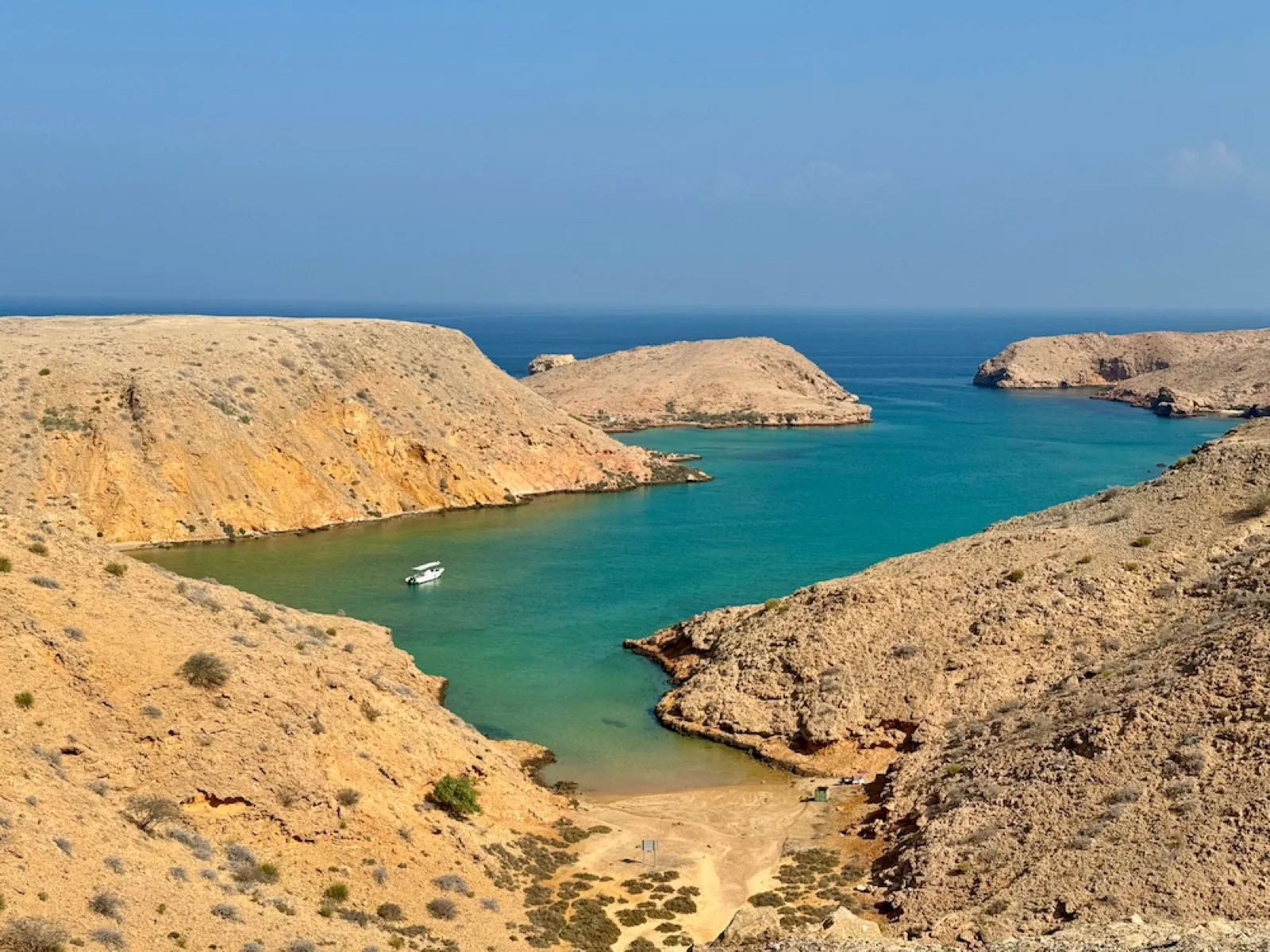
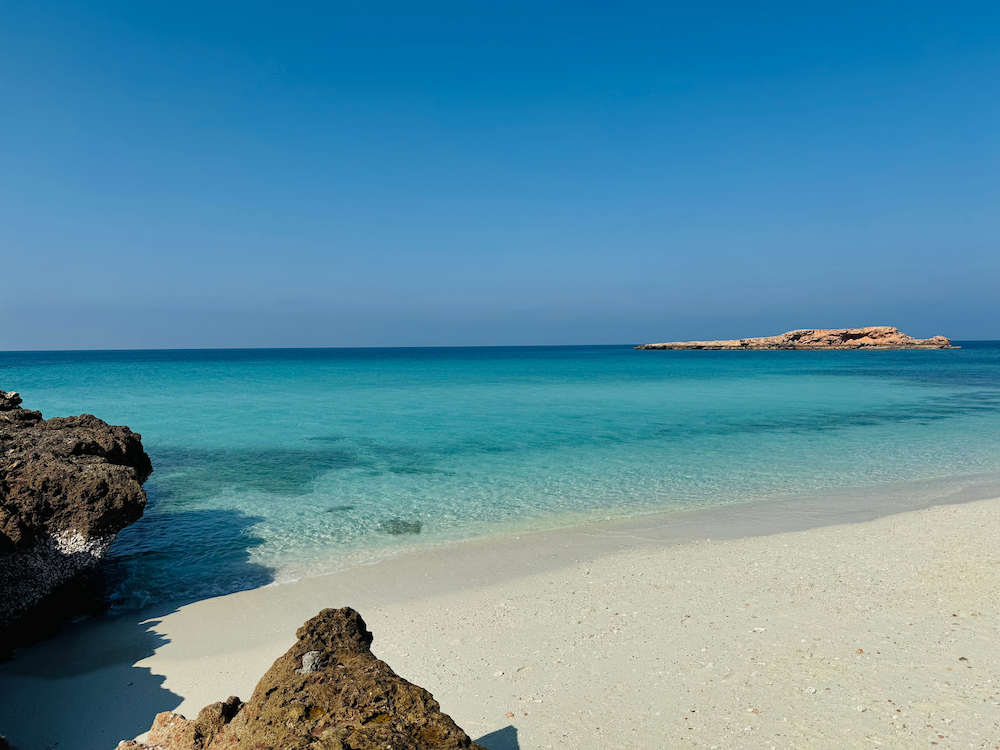
After the Mosque, we drove about 30 minutes from Muscat straight to Bandar Al Khayran. It's a stunning nature reserve made of ochre-coloured islets that contrast with the deep blue of the sea, scattered with little coves you can tuck into. It's best known for snorkeling, and you can also rent paddleboards and jet skis on the spot — just remember to bring cash (unlike us, who forgot).

💡

Practical: Bring cash — no ATMs on site. Pack water and snacks, no restaurant nearby. Boat hire ≈ 15–25 OMR/hr if you want to explore further between the islets.

4-day plan

Day 1 — Arrival day, on purpose slow.

Day 2 — We went to Nabu Cafe, a small local spot for Breakfast , nothing touristy, just the kind of place I always look for. Then straight to Mutrah for the morning: corniche, souk, the forts overlooking the sea. In the afternoon we drove to Al Bustan Palace (walk into the lobby even if you're not staying — it's almost unreal) and then the Al Alam Palace gardens. We ended the day by the sea for sunset, and honestly, that's a memory I'll carry for a long time. Soft light, mountains fading into silhouette, total calm.

Day 3 — Day trip to the Daymaniyat Islands — full section on that just below, because they really do deserve their own chapter. We came back in the evening and headed to Al Mouj Marina, the modern side of Muscat: a lively waterfront with plenty of restaurants and cafés. A nice contrast to the slowness of the morning.

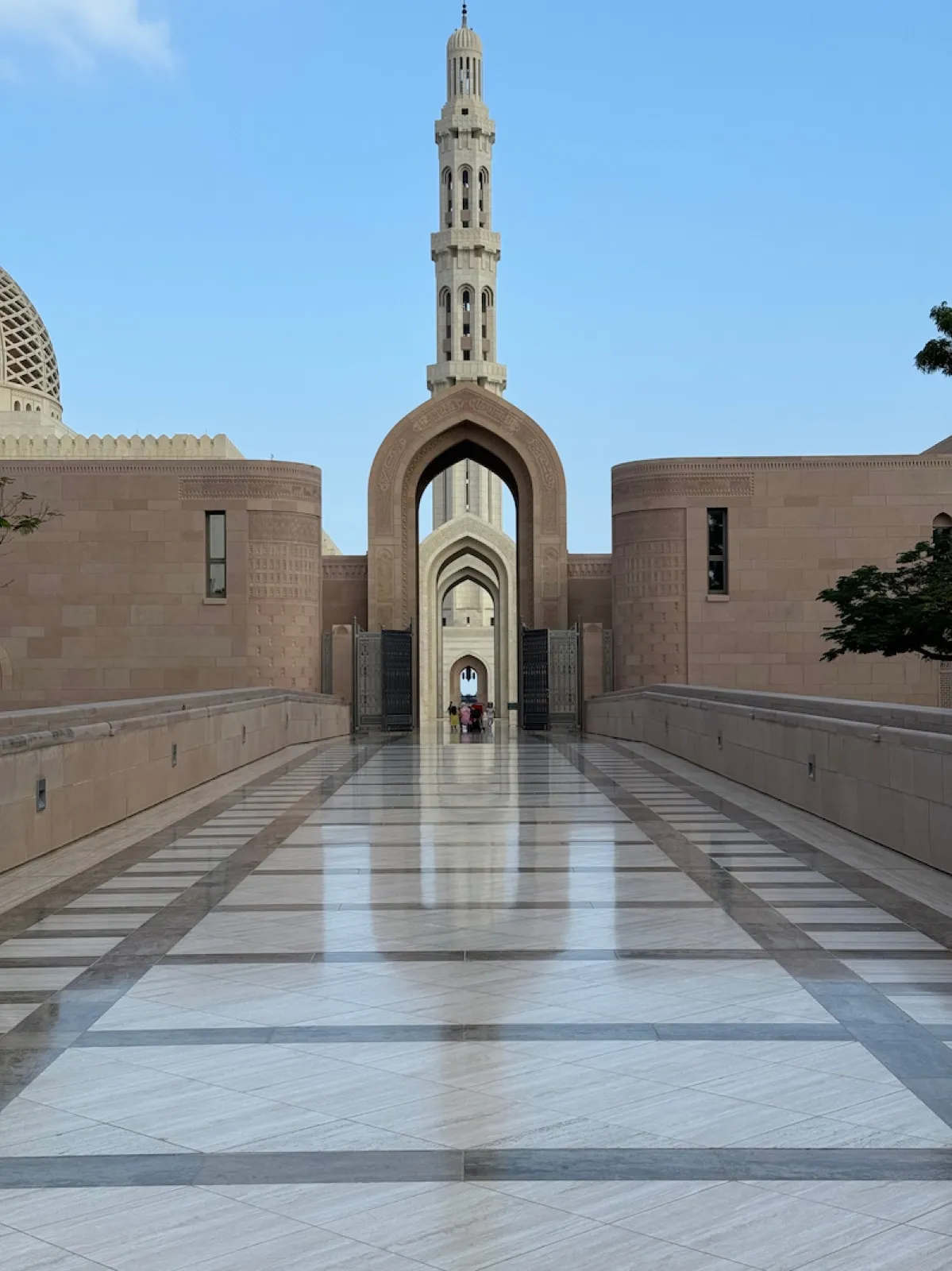
Day 4 — Morning at the Sultan Qaboos Grand Mosque — the courtyard alone is worth the trip, and dressing modestly from your hotel is easier than wrestling with the pile at the entrance. From there, we made our way to Bandar Al Khayran for the rest of the day. The water is unreal.

Chiva's note

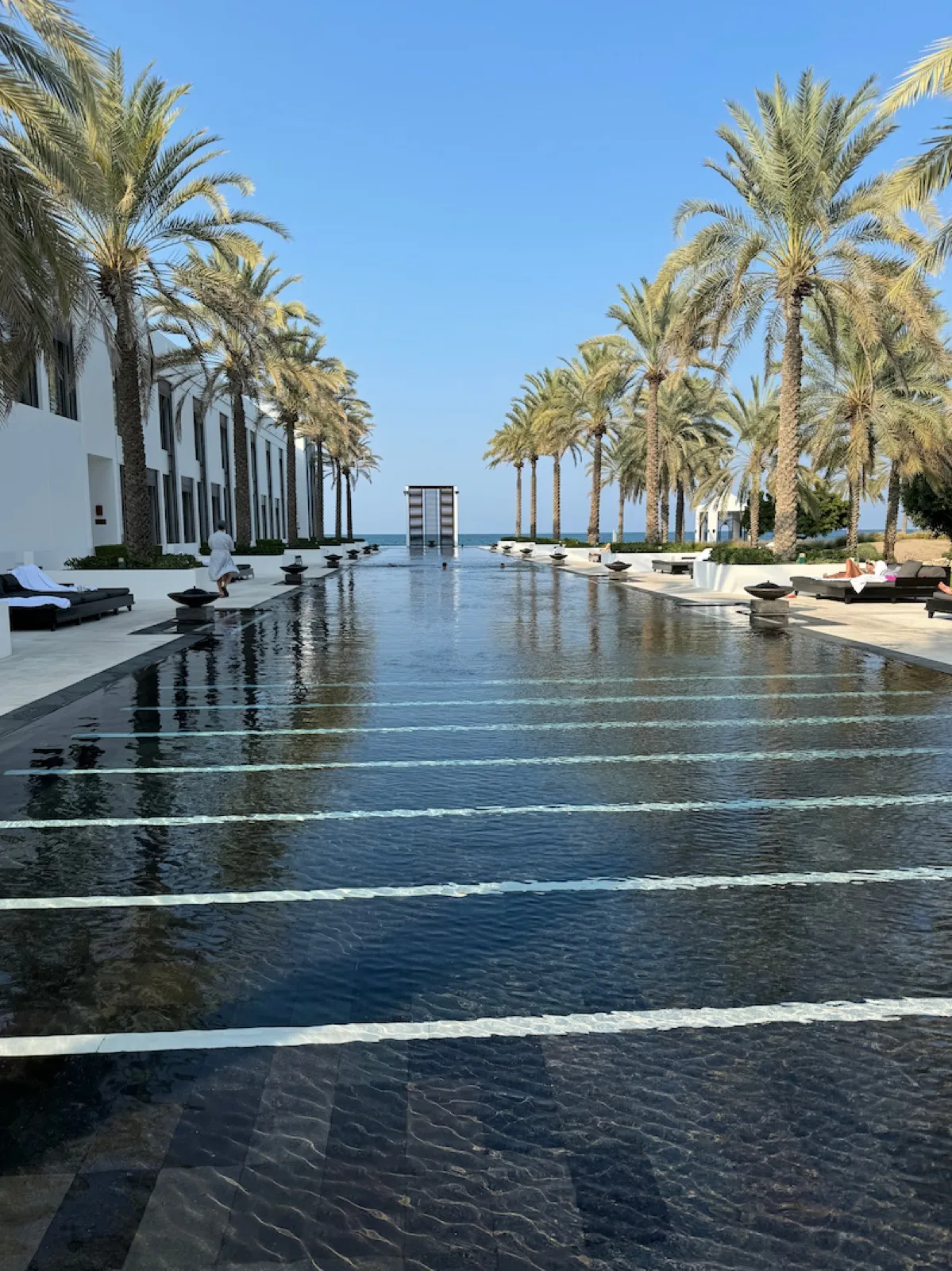
I always like doing road trips that start and end in the same city — there's something about coming back that makes the end of a trip feel sweeter, like a slow landing instead of a sudden stop. So we did a full loop from Muscat back to Muscat, and I kept the last nights for one thing: resting in a really beautiful hotel. And honestly, it was worth it. We stayed at The Chedi Muscat, and the highlight (for me at least) was the pool — well, pools, plural. They have three, and the famous one is a 103-metre Long Pool, said to be the longest in the Middle East. Roughly twice the length of an Olympic pool, lined with deep black basalt tiles, and lit beautifully at night. Plan a slow afternoon there. You won't want to leave.

Back to top
02
Day 5 · day trip or overnight

Daymaniyat Islands

A protected nature reserve with the best snorkelling in Oman.

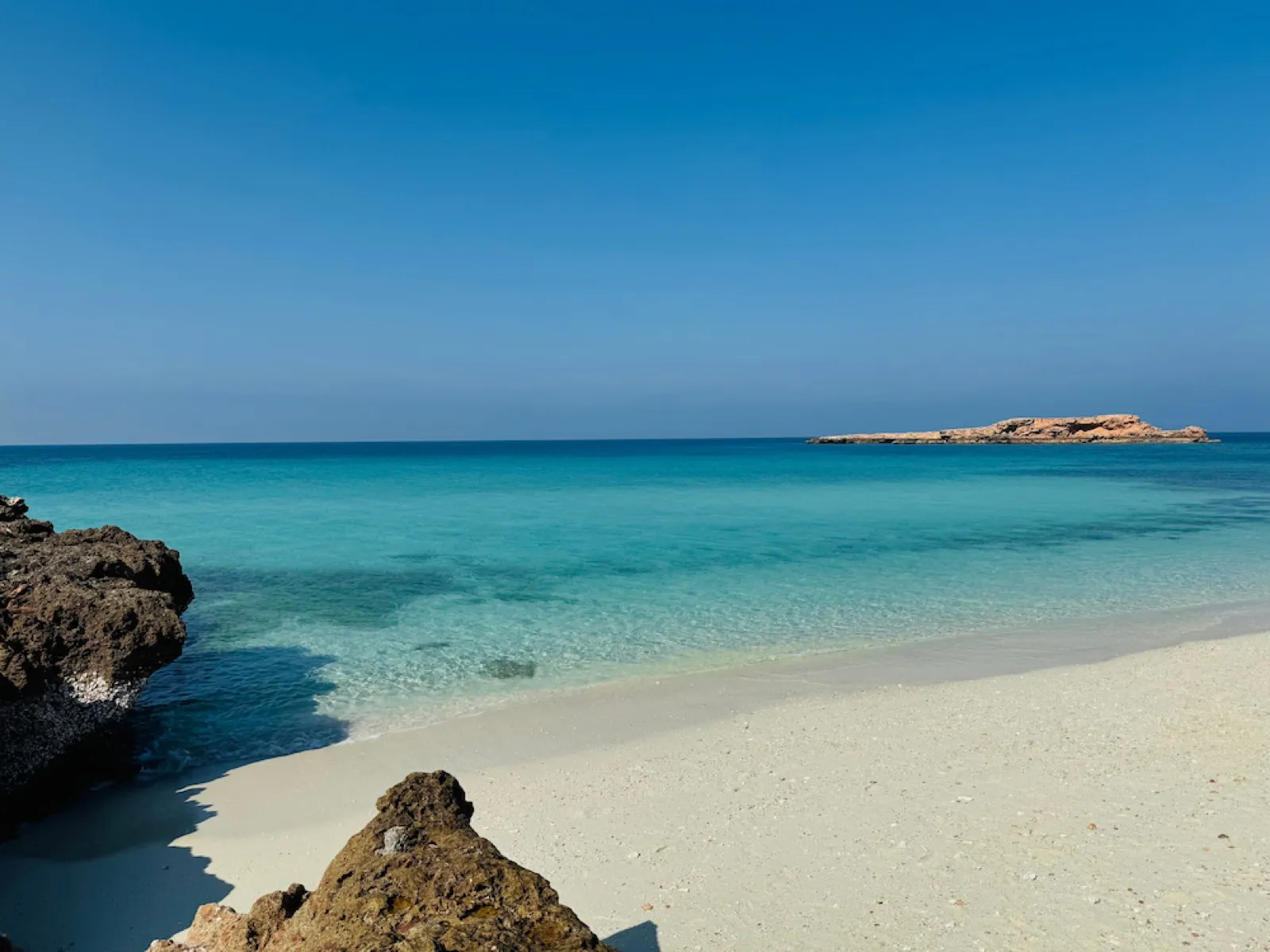
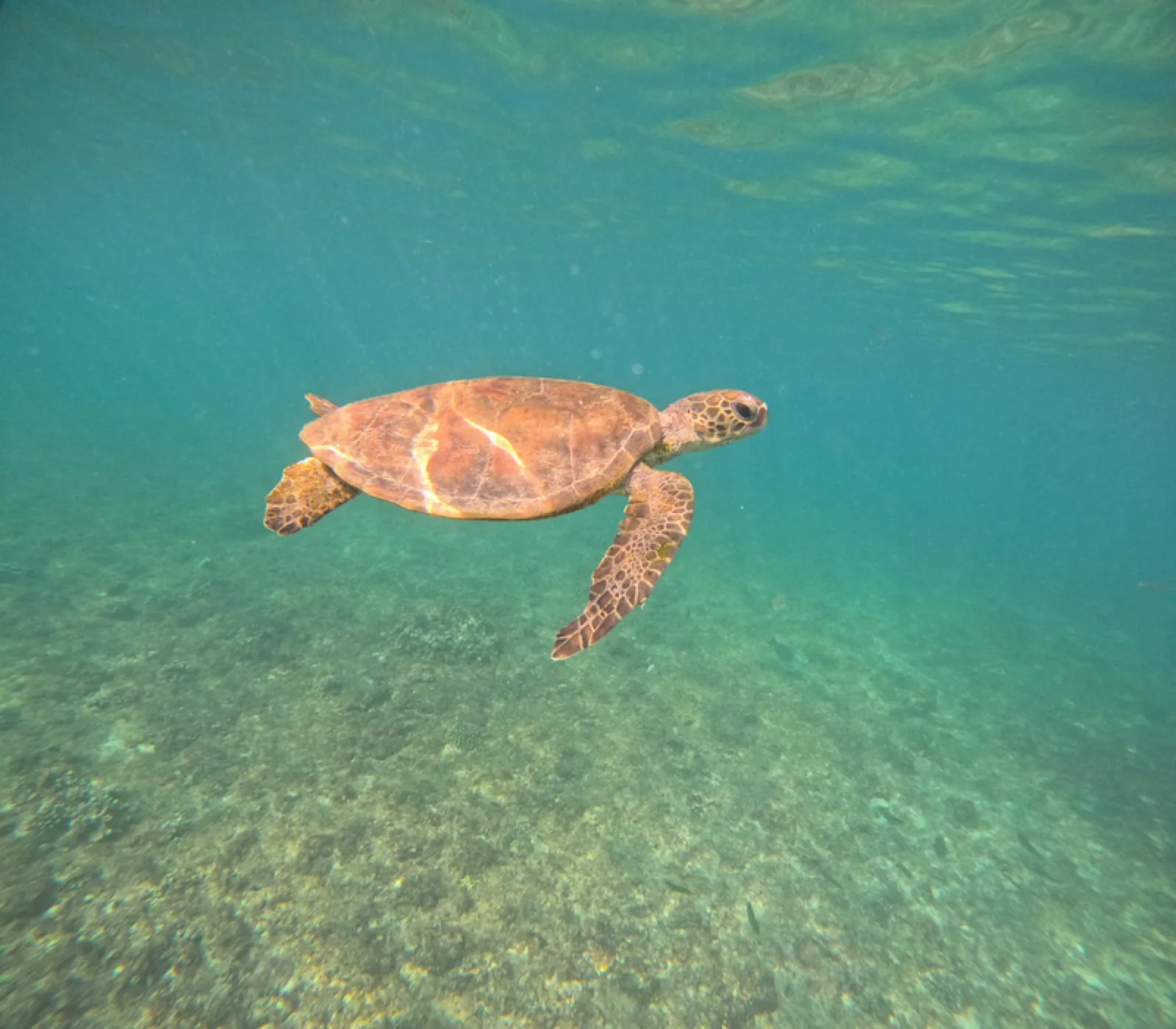
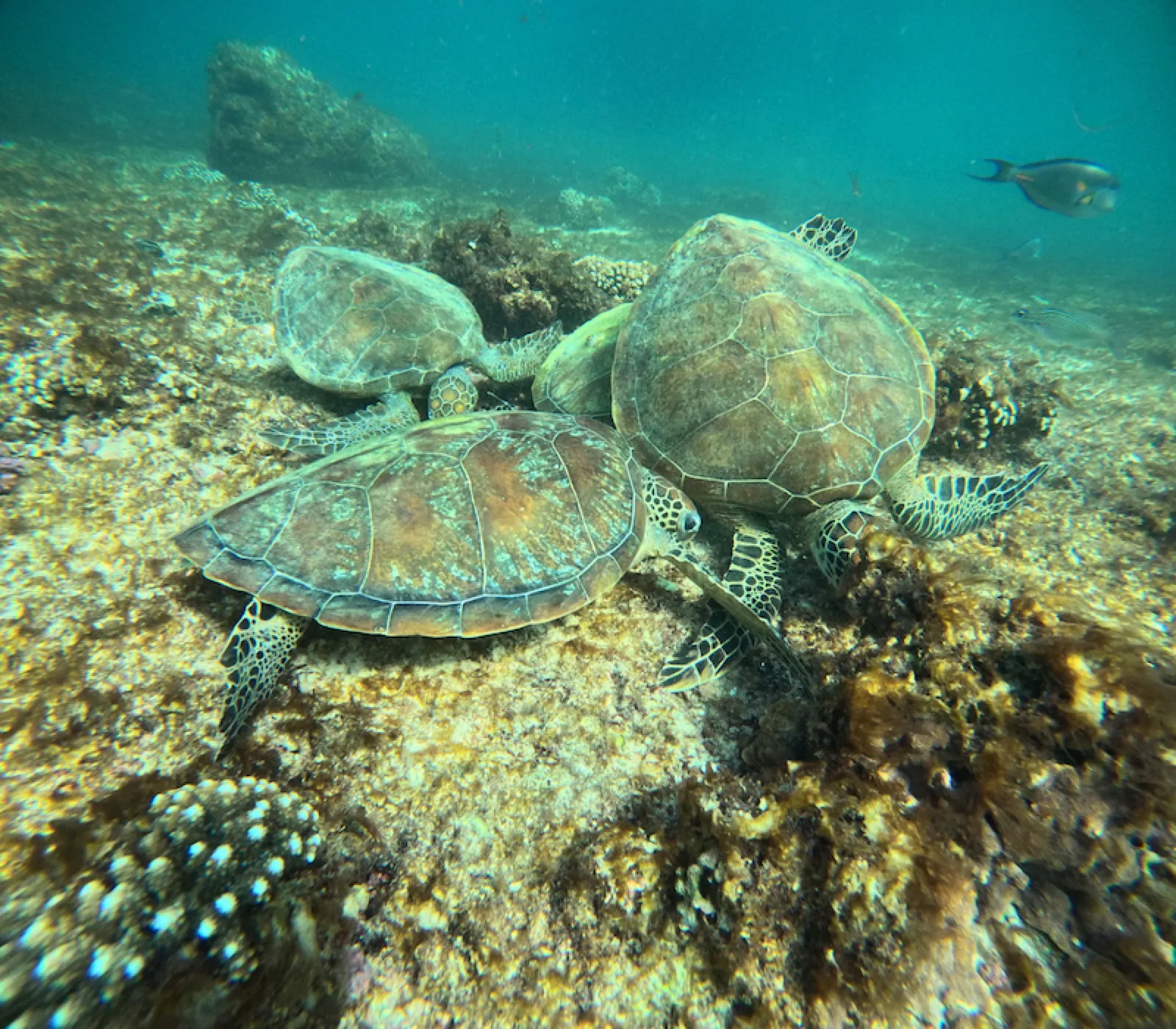
On day 3 we went for a day trip to the Daymaniyat Islands — and honestly, it's an experience you should not miss. It was also my first snorkelling experience, and I completely fell in love with it. We went via a guided boat tour, and everything about it was just right. The sand is so white, the water so crystal clear it genuinely feels like the Maldives. I had never seen so many turtles so easily — right there, effortlessly close. Really one of those days you carry with you.

Getting there
Book a guided tour online — tours generally start from Seeb Marina in Muscat, then around 40 minutes by boat to the islands.
Best for
Snorkelling, diving, watching turtles. Nothing else needed.
What to bring
No facilities on the islands. Bring everything — water, snacks, sunscreen, a rash vest. Start early to beat the midday heat and the tourist boats.
Chiva's note

If you do only one activity in Oman, make it this one. The Daymaniyat Islands are the most beautiful place I visited on the entire trip — and I say this as someone who is not a water person. The turtles, the coral, the visibility, the colour of the water. It resets something in you. Non-negotiable.

Back to top
03
Days 6–7 · 2 days

Between Turquoise Canyons & Hidden Mountain Escapes

Two days inside Oman's wadis — turquoise pools, hidden caves, and a valley so quiet you can hear the canyon breathe.

Exploring the wadis was without question one of the highlights of this trip. Beyond the landscapes themselves, each wadi offered a completely different atmosphere — some dramatic and adventurous, others quiet and almost untouched. Over the course of two days, we moved between canyons, mountain villages, natural pools, and isolated valleys, discovering a side of Oman that felt both raw and deeply peaceful.

Wadi Shab — Oman's most iconic wadi

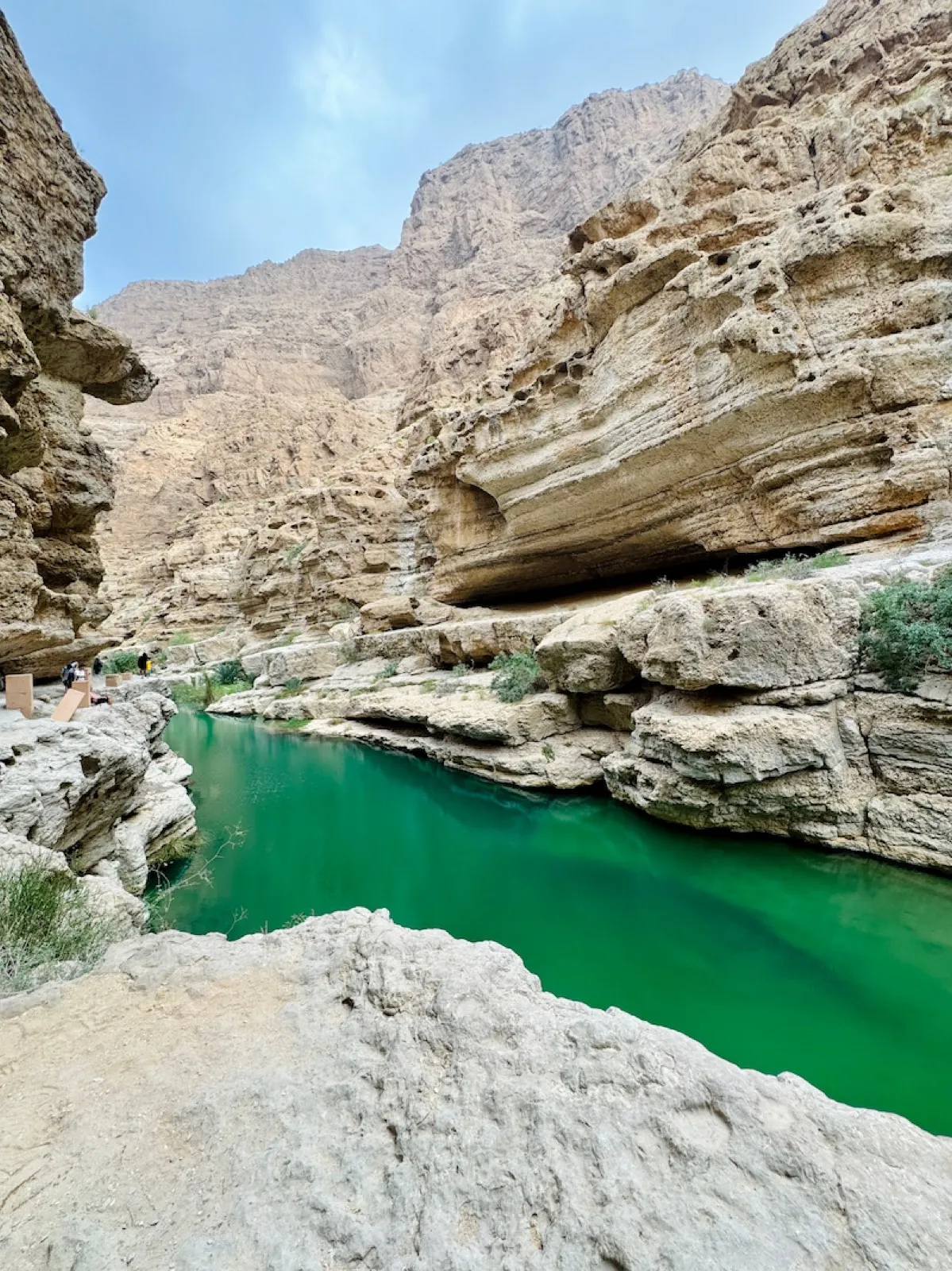
Our journey began at Wadi Shab, probably the most famous wadi in Oman and one of the country's most photographed natural sites. The experience starts with a short boat crossing before reaching the hiking trail that follows the canyon for nearly 45 minutes. The path winds between steep rocky walls, palm groves, and a succession of turquoise pools that seem almost unreal against the dry mountain landscape.

Unlike many natural sites that lose their charm once they become popular, Wadi Shab still manages to feel spectacular. The combination of hiking, swimming, and climbing creates a real sense of adventure, especially as the canyon progressively narrows toward its hidden cave.

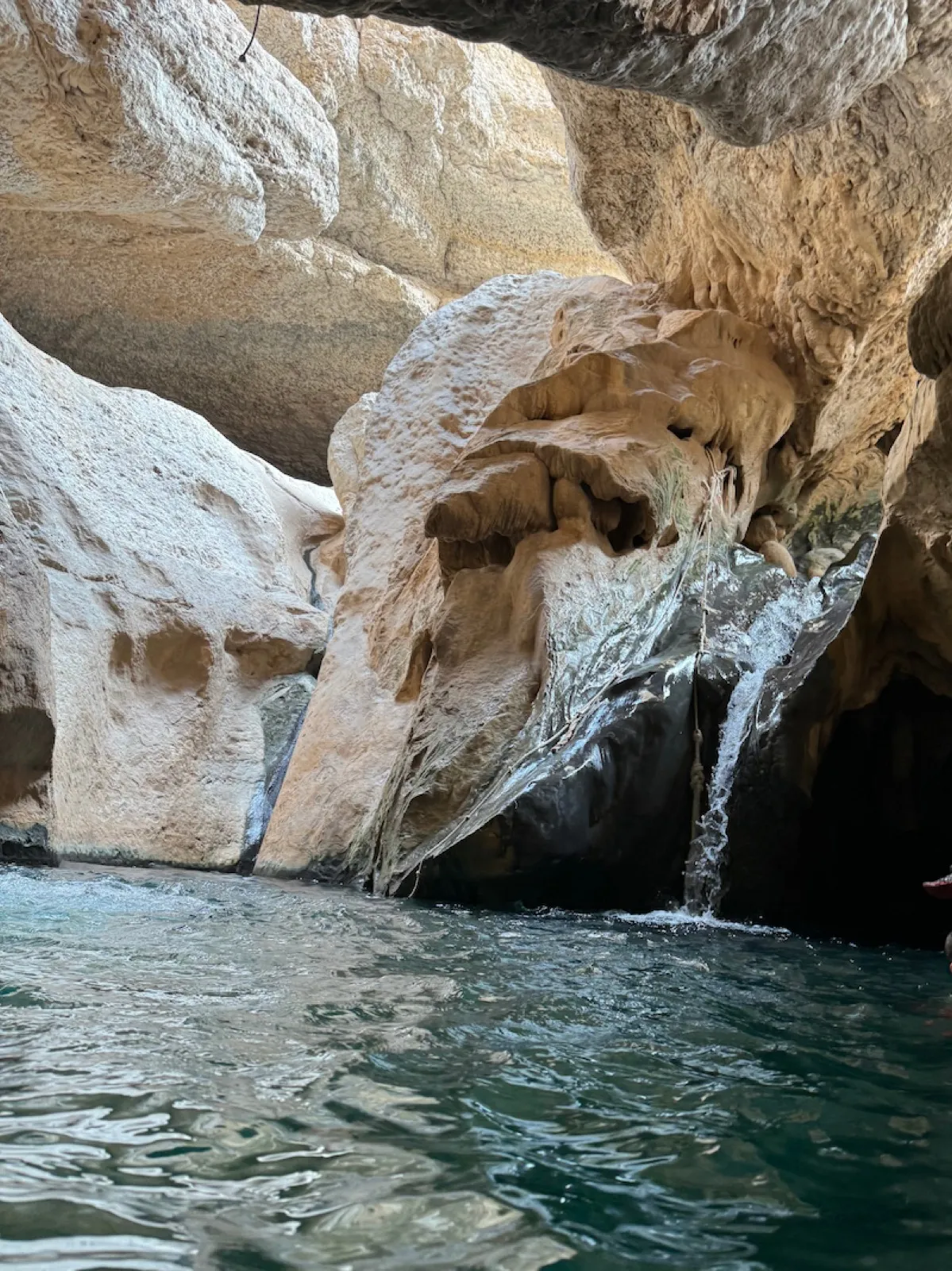
The final section is what makes the experience unforgettable. After swimming through a narrow opening between the rocks, you reach a hidden cavern with a waterfall inside. Dark, enclosed, and echoing with the sound of water, the atmosphere feels almost surreal.

Getting there
~2 hrs from Muscat along the coastal road. Boat crossing at the entrance, then a 45-min hike to the pools.
Difficulty
Moderate hike, plus swimming through narrow passages to reach the hidden cave. Travel light.
Best time
Start early in the morning — beats both the crowds and the heat.
Chiva's note — wadi essentials

Water shoes are highly recommended for slippery rocks and the swimming sections. A waterproof bag is essential for phones, cameras, and valuables. Travel light — several sections require swimming. Start early to avoid both the crowds and the heat.

Bimmah Sinkhole — beautiful, but overdeveloped

After Wadi Shab, we stopped at Bimmah Sinkhole, another well-known attraction along Oman's coastal road. To be honest, this was probably the only site during the trip that felt slightly disappointing. Online photographs often create the impression of a dramatic natural formation similar to the cenotes of Mexico, but the reality feels less striking once on site.

The sinkhole itself is undeniably beautiful — clear turquoise water set inside a limestone crater — but much of its atmosphere has been altered by the surrounding infrastructure. Concrete staircases, viewing platforms, and the heavy tourist presence make the site feel more developed than natural. We stayed only briefly before continuing toward the mountains.

💡

Practical: Easy to combine with Wadi Shab — both sit on the same coastal road. Worth a 30-minute stop if you're passing, but not a destination on its own.

Wadi Al Arbeieen — the unexpected highlight

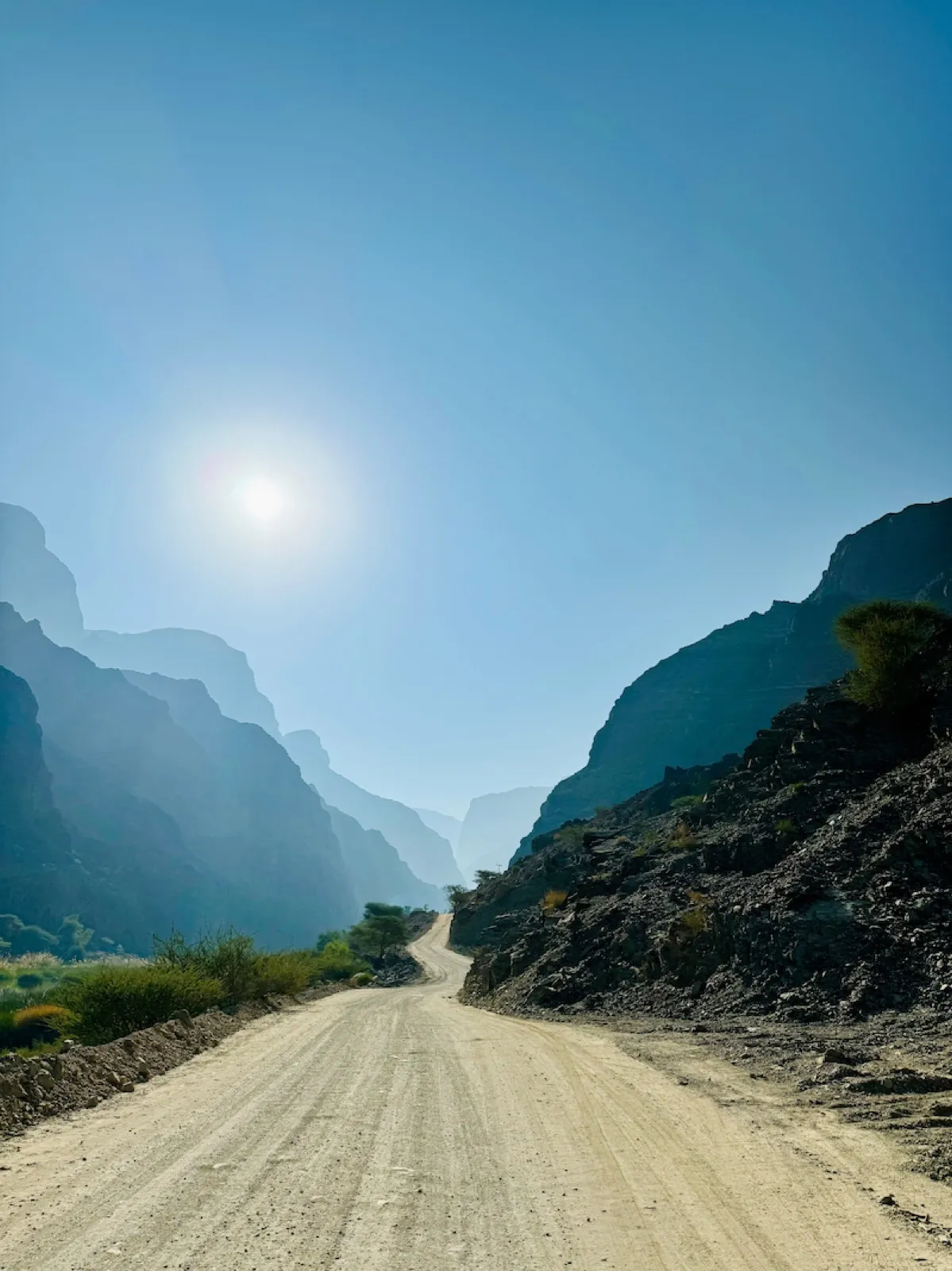
If Wadi Shab was the most famous stop of the trip, Wadi Al Arbeieen was undoubtedly the biggest surprise. Far less visited and much more isolated, the valley feels entirely different from the country's more touristic wadis. Reaching it is already part of the adventure — the road becomes increasingly rugged as it winds deeper into the mountains, crossing rocky terrain and narrow passages. A 4×4 is highly recommended, not only for comfort but because some sections can be difficult with a regular car.

What made the experience memorable was the setting itself: complete silence, almost no tourists, and the feeling of being immersed inside the mountains. We spent the night at Wadi Arbeieen Resort (full details below) and woke before sunrise to watch the first light slowly reach the canyon walls — one of the calmest moments of the entire trip.

Where to stay · hidden gem
Wadi Arbeieen Resort
White houses by the water · majlis dinners · kayak rentals
Don't skip

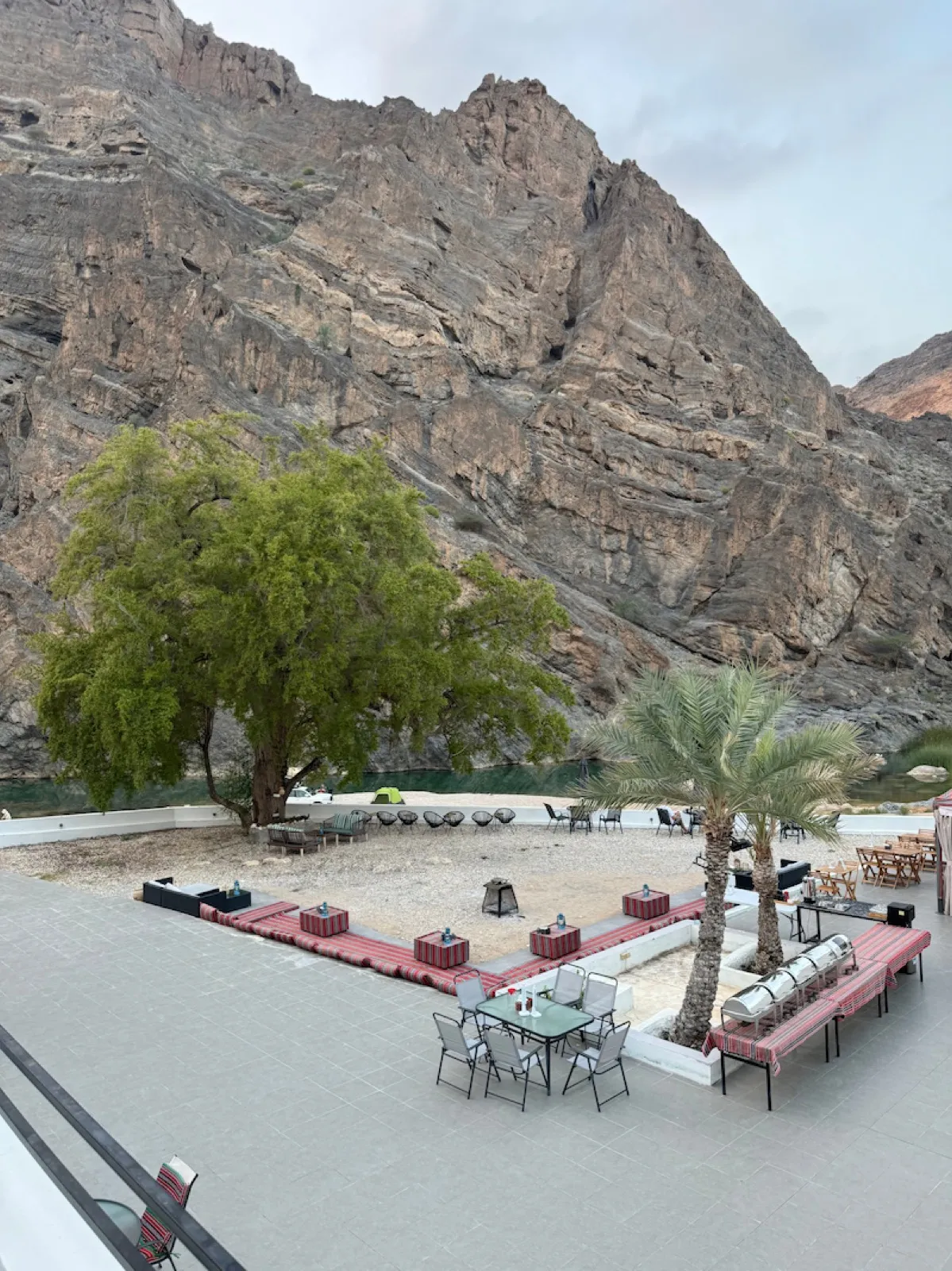
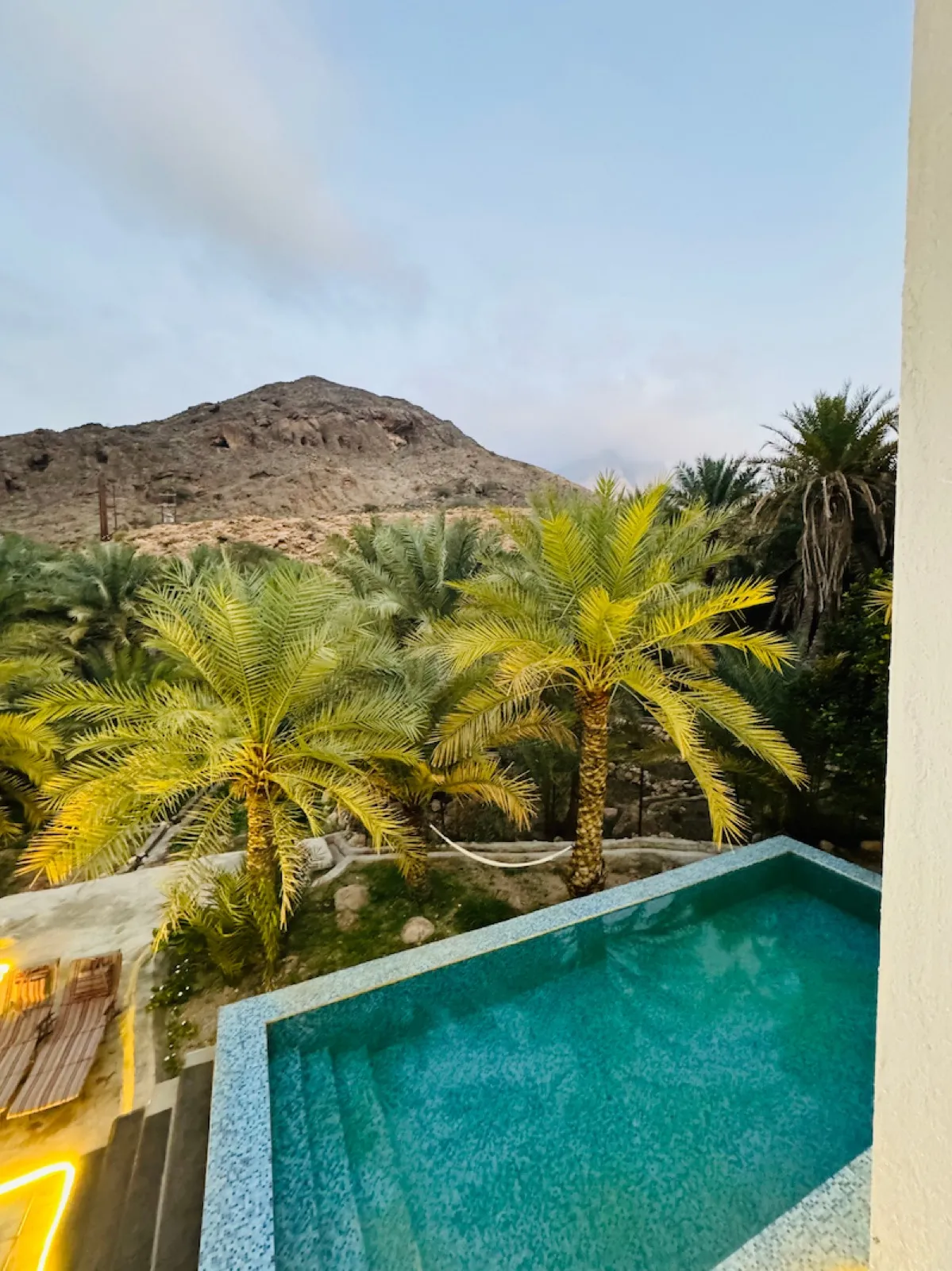
Hidden within the valley, Wadi Arbeieen Resort is a small isolated complex set right beside the water. It consists of simple white houses scattered naturally through the wadi, surrounded by cliffs and palm trees. The appeal isn't grandeur — it's the silence, the setting, and the feeling of being completely immersed inside the mountains.

In the evening, dinner was served in a traditional Arabian majlis — a style of seating common across the Gulf where guests sit together on carpets and cushions placed on the floor, designed for long conversations and shared meals. Facing the mountains and the water, the atmosphere felt deeply peaceful and authentic. The resort also rents small kayaks, so you can explore the valley directly from the water.

💡

Practical: 4×4 strongly recommended — the final stretch is rough. Book ahead in high season (Oct–Mar). Bring cash. Wake before sunrise — it's the best moment in the canyon.

Wadi Bani Khalid — easy access, heavy crowds

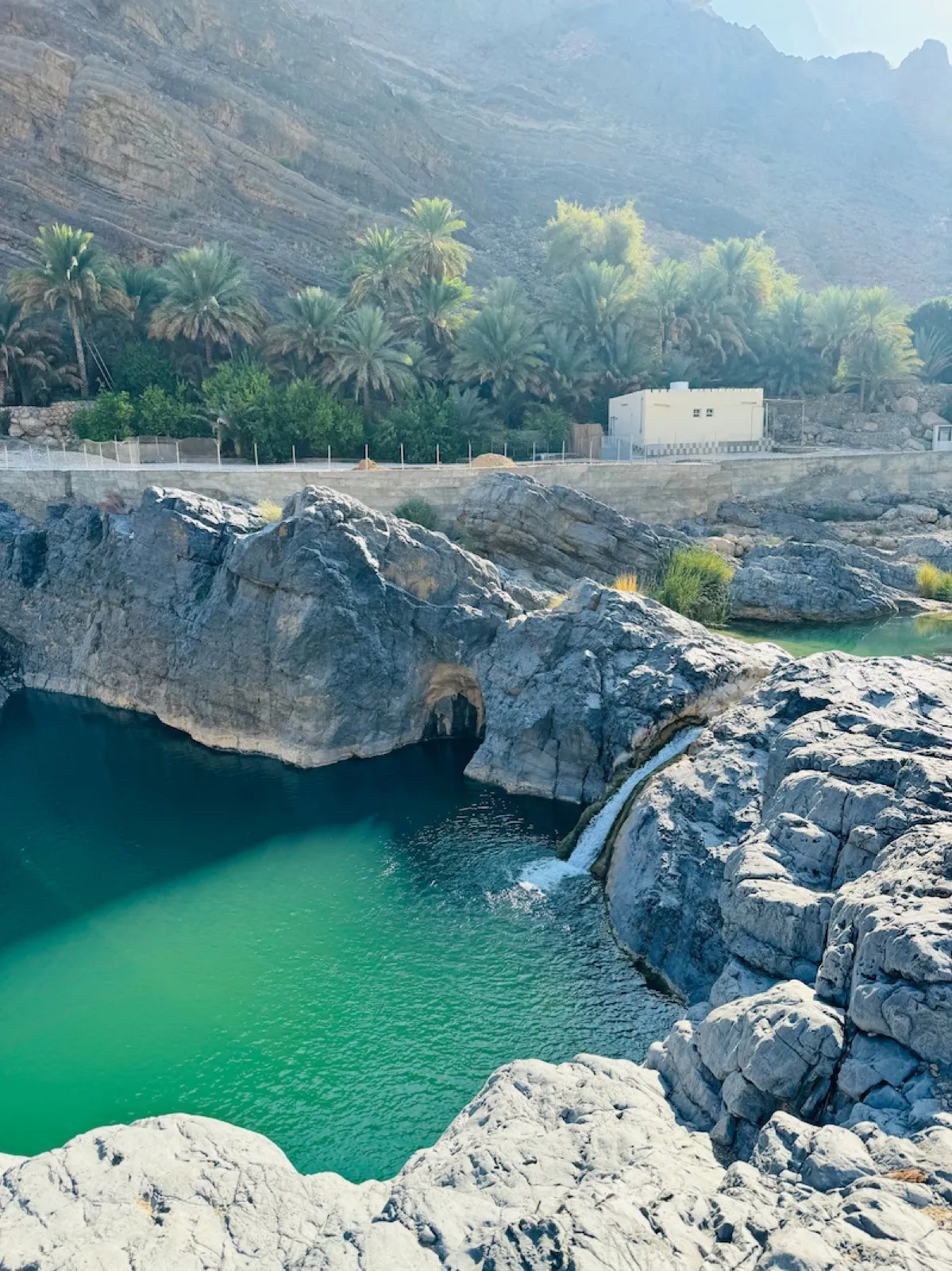
Our final stop was Wadi Bani Khalid, one of the country's most accessible wadis. Unlike Wadi Shab or Wadi Al Arbeieen, reaching the pools requires almost no hiking, which explains its popularity among both tourists and local families. The water is beautiful, the setting pleasant, and the experience undeniably enjoyable.

That said, compared to the dramatic scenery of Wadi Shab or the untouched atmosphere of Wadi Al Arbeieen, it felt less memorable. The accessibility that makes it convenient also removes part of the sense of discovery that defined the previous wadis. For travellers with limited time in Oman, this is probably the easiest stop to skip.

2-day plan

Day 1 — Leave Muscat early and drive to Wadi Shab. Take the short boat crossing, then the 45-minute hike through the canyon to the pools and the hidden waterfall cave — plan a full half-day here. On the way back, a quick stop at Bimmah Sinkhole (30 minutes is plenty). From there, drive inland toward Wadi Al Arbeieen — the road gets rough toward the end, so allow time. Overnight at Wadi Arbeieen Resort, with dinner in the majlis.

Day 2 — Wake before sunrise to watch the first light reach the canyon walls. Slow morning at the resort — coffee by the water, maybe a kayak. Drive on to Wadi Bani Khalid for a swim in the main pools (easy access, no hiking needed). From there, continue toward the Wahiba Sands — the desert is roughly 1.5 hours further, so aim to arrive at camp before sunset.

Chiva's note — if you have limited time

Prioritise Wadi Shab for the adventure and the landscapes. Choose Wadi Al Arbeieen for a quieter and more authentic experience. Bimmah Sinkhole can easily be skipped, and Wadi Bani Khalid is beautiful but considerably more touristy and less unique than the others. A 4×4 is strongly recommended for reaching Wadi Al Arbeieen comfortably.

Back to top
04
Days 7–8 · 1–2 nights

Wahiba Sands

The quietest desert I have ever sat in. Orange dunes, stars, and absolute silence.

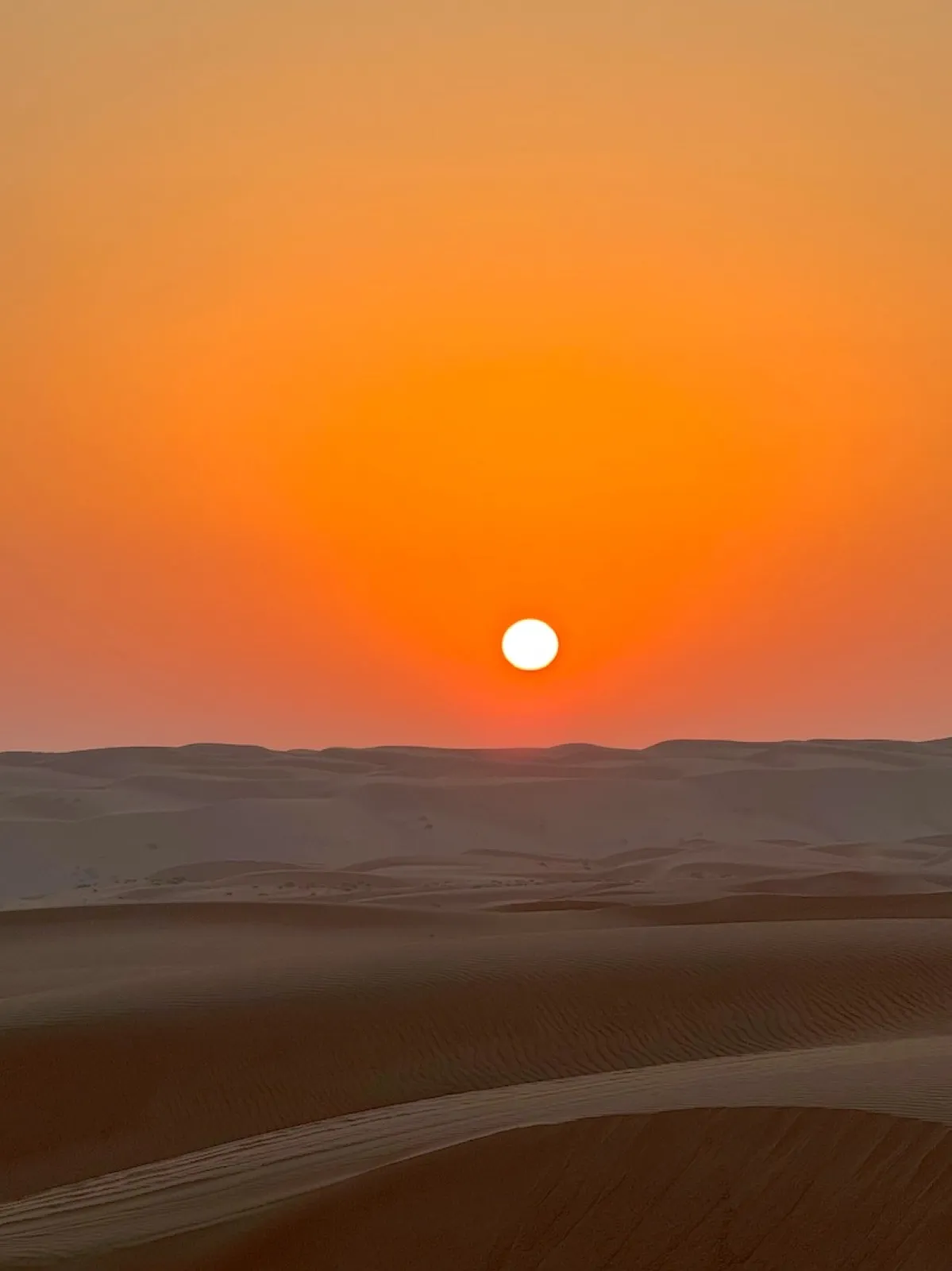
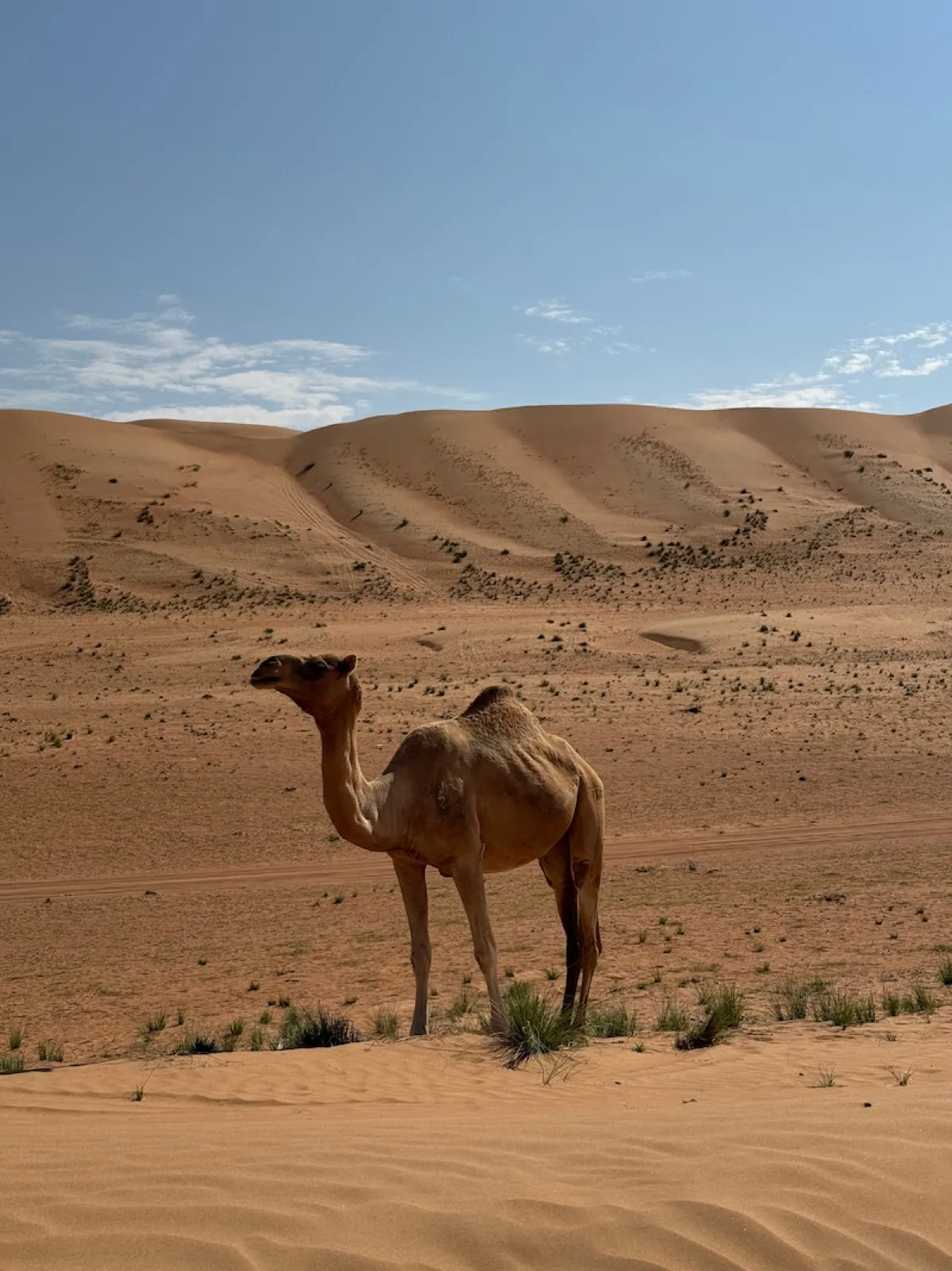
The Wahiba Sands is a sea of deep red and burnt-orange dunes that shift and reshape with the wind each day. Spending a night here, far from any road, with nothing between you and the stars, feels completely removed from the rest of the world.

We planned our trip so we could spend two nights in the desert, including the final night of the year under the open desert sky. It turned into one of the most memorable experiences of the journey. I've written a full article about it here.

Getting there
4×4 essential. Enter via Al Wasil from the north. Deflate tyres at the edge.
Where to sleep
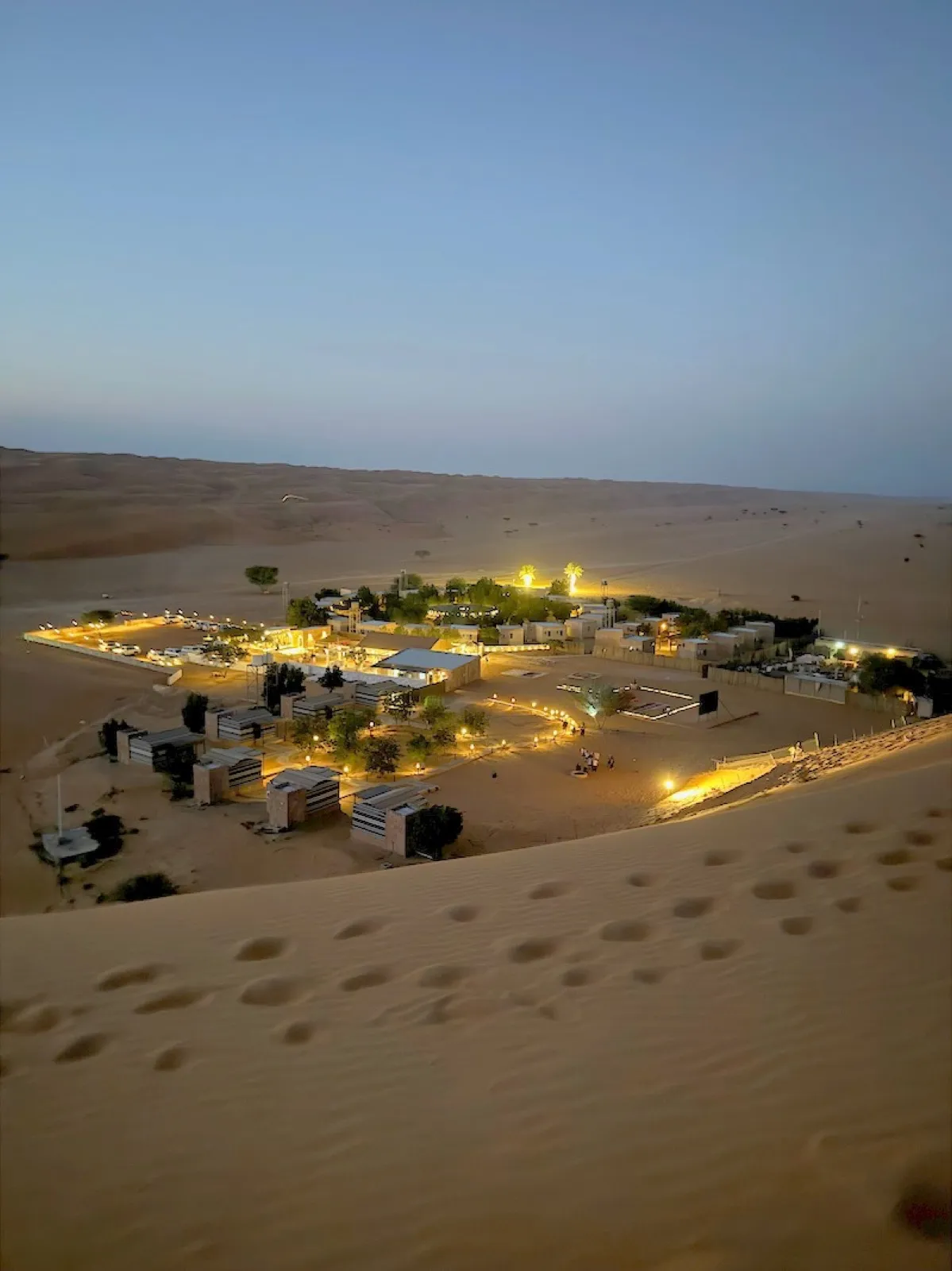
Desert Nights Camp or 1000 Nights Camp — both excellent. Book ahead Oct–Mar.
Don't miss
Sunrise from the top of a high dune. Bring a light jumper — desert nights are cold.
Highlights
  • Dune bashing

    An adrenaline-filled drive across the dunes, organised by the camp, and one of the best ways to experience the scale of the desert.

  • Camel rides

    Best done at dawn or dusk, when the changing light turns the dunes shades of deep red and orange.

  • Arabic night music & outdoor cinema

    Traditional music under the stars, followed by an open-air cinema experience in the middle of the desert — surreal and unexpectedly atmospheric.

Chiva's note

I woke before sunrise and climbed the nearest towering dune alone. Watching the first light slowly spill across the desert was one of the most breathtaking moments of the trip. The silence, the shifting colours, and the sheer scale of the landscape made it unforgettable.

Back to top
05
Day 9 · 1 night

Al Hamra & Misfat Al Abriyeen

A 400-year-old mudbrick town and a mountain village at 1,000 metres. Two of the most beautiful places in Oman.

We decided to spend a night up in Misfat Al Abriyeen — a small mountain village that, in my opinion, is one of the most beautiful in all of Oman. On the way there, we stopped at Old Al Hamra, a 400-year-old town built on a tilted rock slab where some of the oldest preserved houses in the country still stand. Two very different villages, less than 30 minutes apart, that together capture everything I love about Oman's interior — old stone, falaj water, and time slowing down.

Getting there
~30 min from Nizwa to Al Hamra, then another 10–15 min up the mountain to Misfat. Paved roads, no 4×4 needed.
Where to sleep
Harat Al Misfah Inn — a traditional Omani house turned guesthouse inside Misfat itself. Highly recommended.
Etiquette
Real people live in both villages. Walk quietly, dress modestly, don't photograph homes without asking.
Old Al Hamra — a step back in time

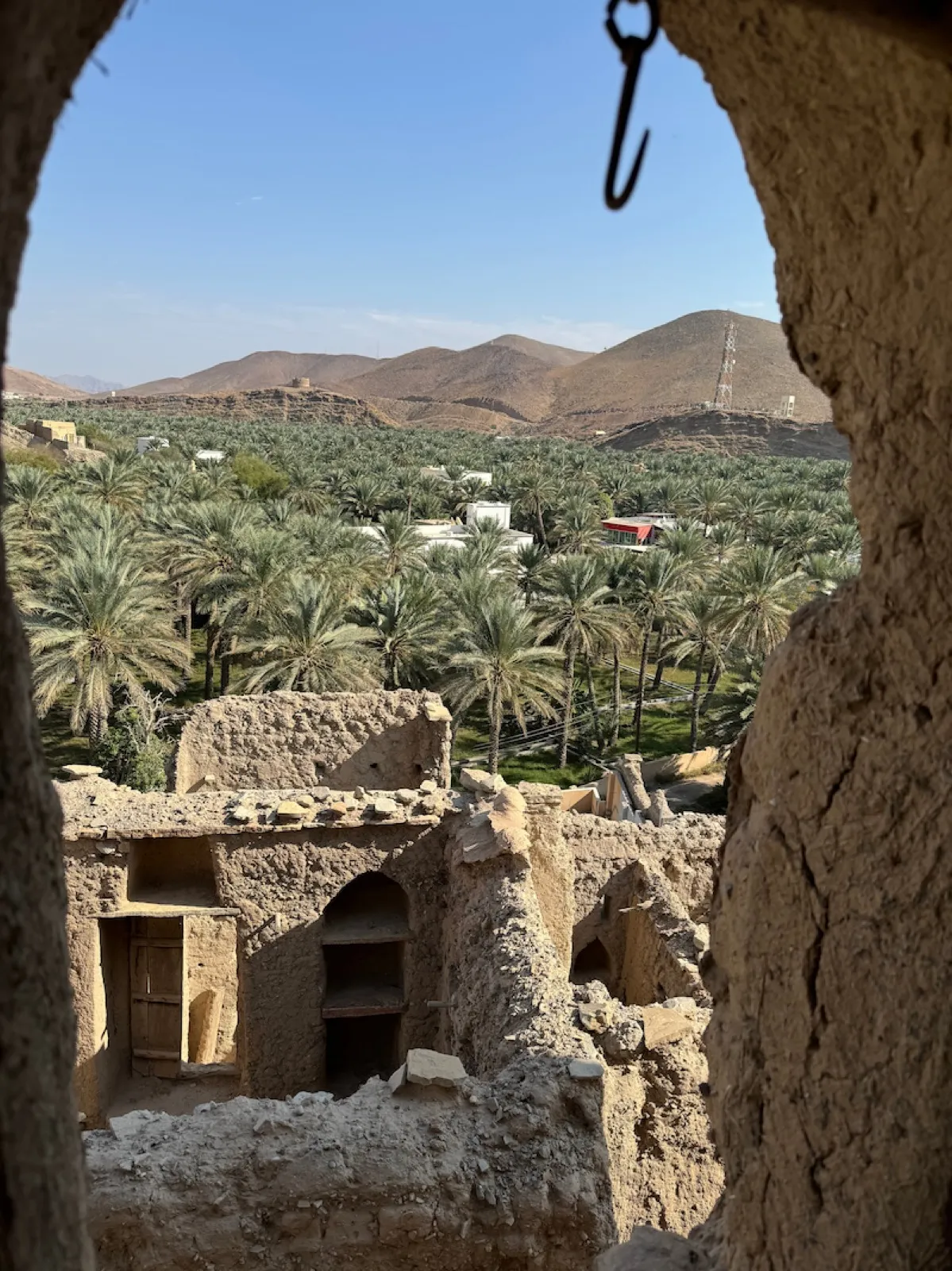
Before heading up the mountain to Misfat, we stopped at Old Al Hamra Village — and walking through it genuinely feels like stepping back in time. The town is around 400 years old and sits on the southern slopes of the Akhdar Mountains, built on a tilted rock slab so that the houses themselves rise in layers up the hillside. Some of the oldest preserved houses in Oman are here, two, three, even four storeys tall, with ceilings made of palm beams and fronds topped by mud and straw.

Many of the old houses are now empty — the families having moved to the newer part of town — which gives the lanes a slightly haunted, suspended-in-amber quality. Near the centre there's a small plaza and the old souq, where you can still watch a halwa maker at work in the only halwa shop still operating there. Allow an hour or so to wander; it pairs perfectly with the drive up to Misfat afterwards.

Misfat — a village at 1,000 metres

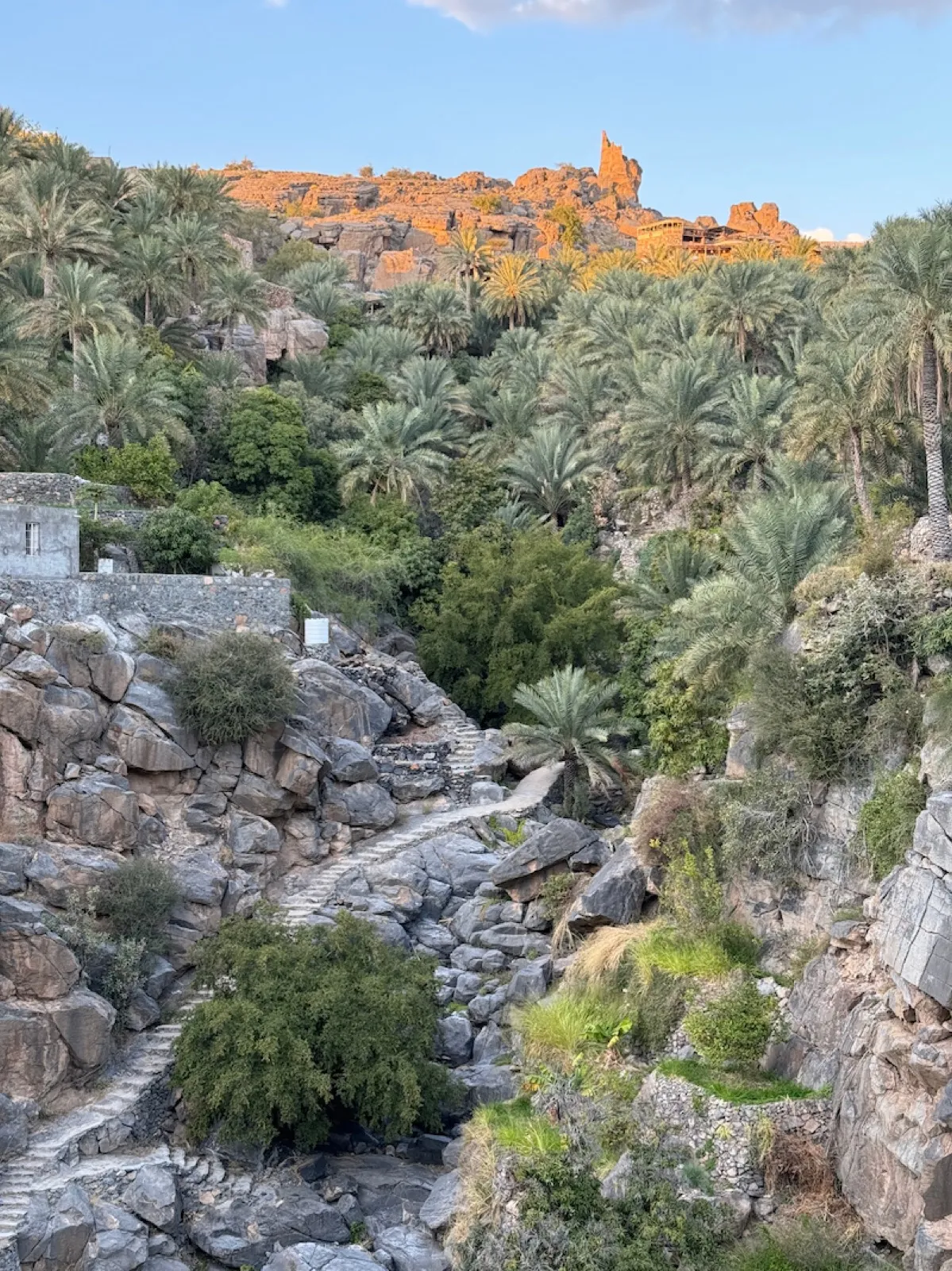
Perched on the side of the mountain at around 1,000 metres altitude, Misfat Al Abriyeen is, to my eyes, one of the most beautiful villages in Oman. You find terraced plantations watered by old falaj irrigation channels, small paved lanes climbing steeply between the houses, a huge palm grove spilling down into the wadi, and a few small modern cafés tucked into restored stone buildings.

It is one of those rare places where the old village is still alive — people still live here, the falaj is still running, the date palms are still farmed — and yet there is just enough of a welcome for travellers to feel they can stop and stay. Arriving in the late afternoon, with the light raking across the terraces, is the right way to do it.

The W9 — the plantations walk

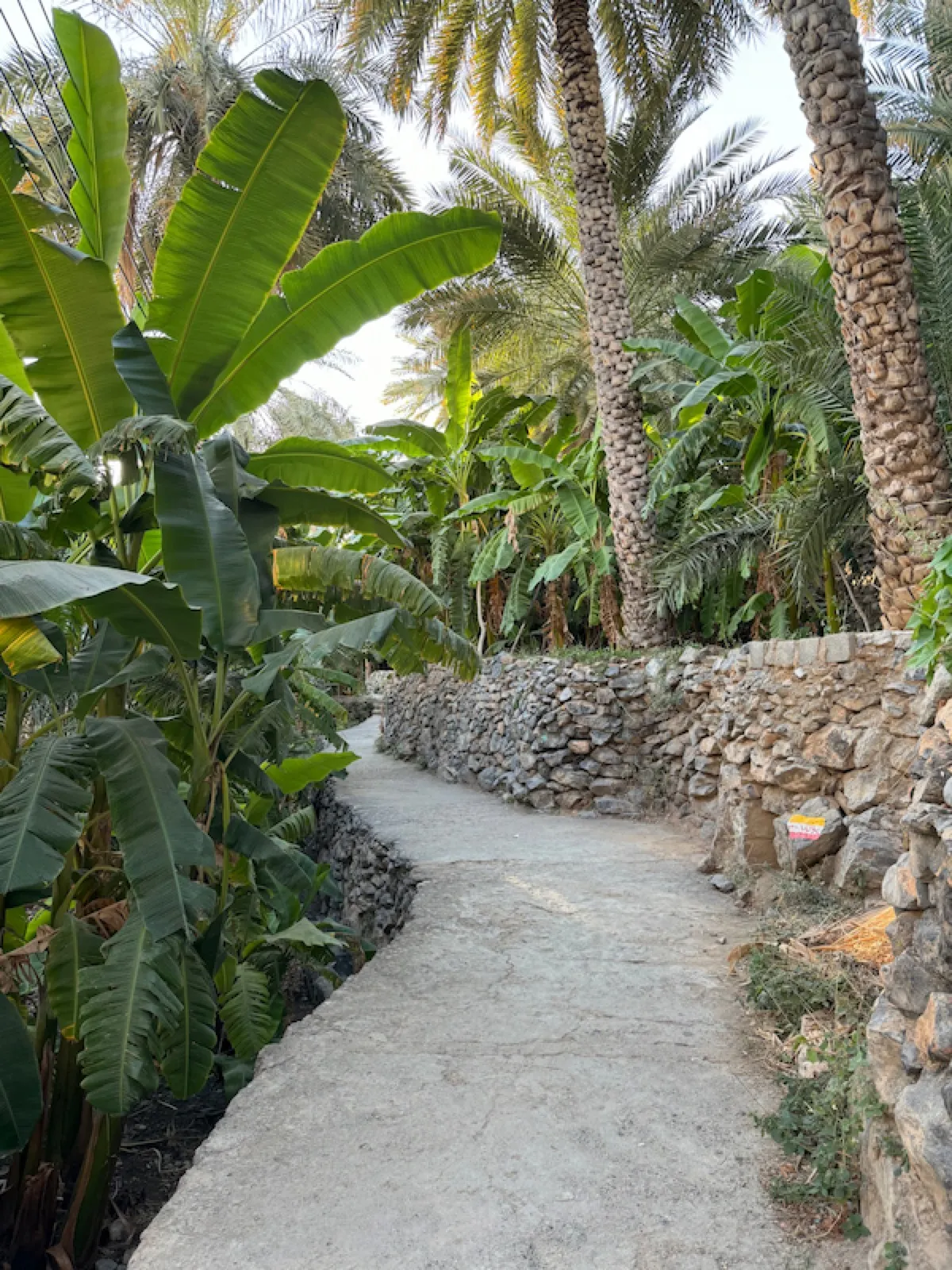
We started with the W9 trail, the village's plantation circuit — a short loop of around an hour that runs through the terraced gardens below the houses. It's the gentlest possible introduction to the place: you walk alongside the falaj channels, under the date palms, past banana and mango trees, and back up into the village from the other side.

It is not a hike so much as a slow guided wander through someone's working farmland. Wear proper shoes — the stones get slick where the water runs — and try to do it either early morning or late afternoon when the light is on the terraces.

Where to sleep · highly recommended
Harat Al Misfah Inn
Inside the old village · traditional Omani house · stone walls and wooden doors
Don't skip

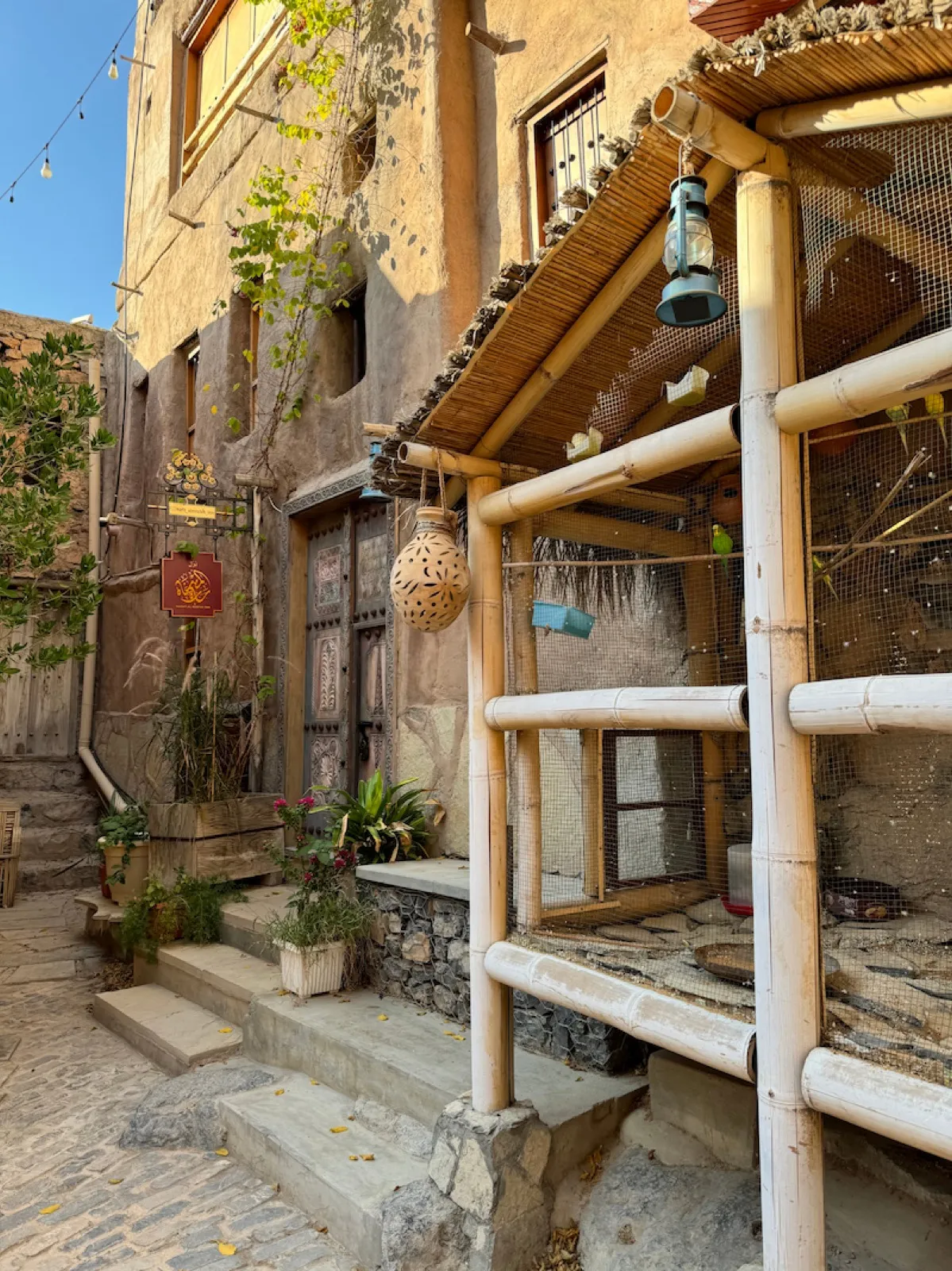
We spent the night at Harat Al Misfah Inn — a small guesthouse set inside a restored traditional Omani house right in the heart of Misfat. The rooms are genuinely traditional: thick stone walls, low wooden doorways, simple furnishings, no attempt at hotel polish. You sleep inside the village itself, surrounded by the lanes and the falaj, not in a resort built next to it. I really recommend it.

Breakfast is served on a shaded terrace looking down over the palm grove, and the staff will happily point you towards the start of the W9 and the viewpoints above the village. It's the kind of place where the building is part of the experience.

💡

Practical: Book directly with the inn well ahead in high season (Oct–Mar). Pack light — the car park is below the village and you'll walk the last stretch on foot up the lanes.

Back to top
06
Day 10 · 1 night

Nizwa and Wadi Damm

The old capital, the country's most famous fort — and an emerald wadi we almost missed.

Oman's old capital and cultural heartland. Nizwa is where the country keeps its traditions — the Friday livestock souk is one of the most genuinely alive markets I've seen anywhere, and the fort is the best-preserved example of Omani military architecture.

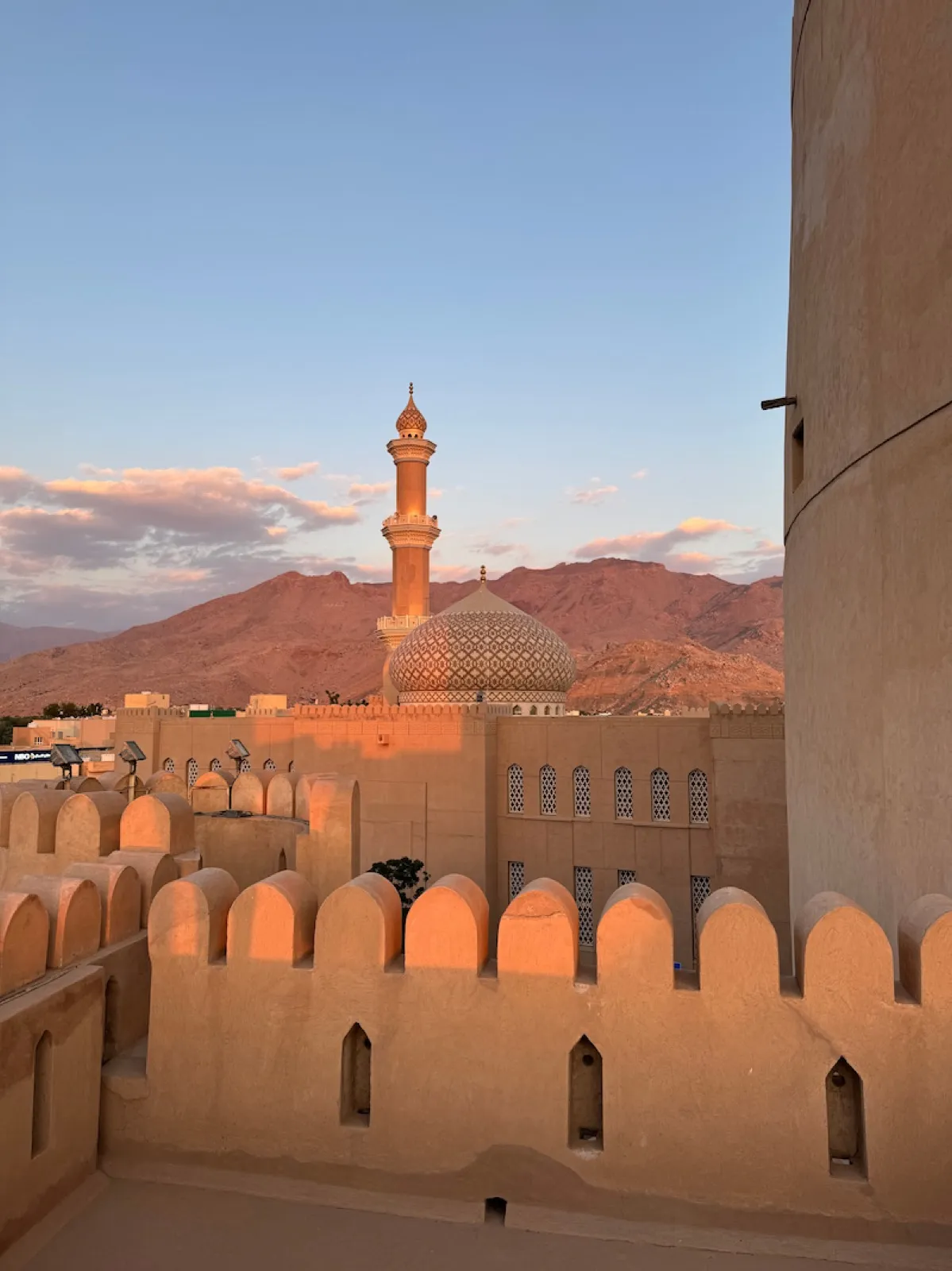
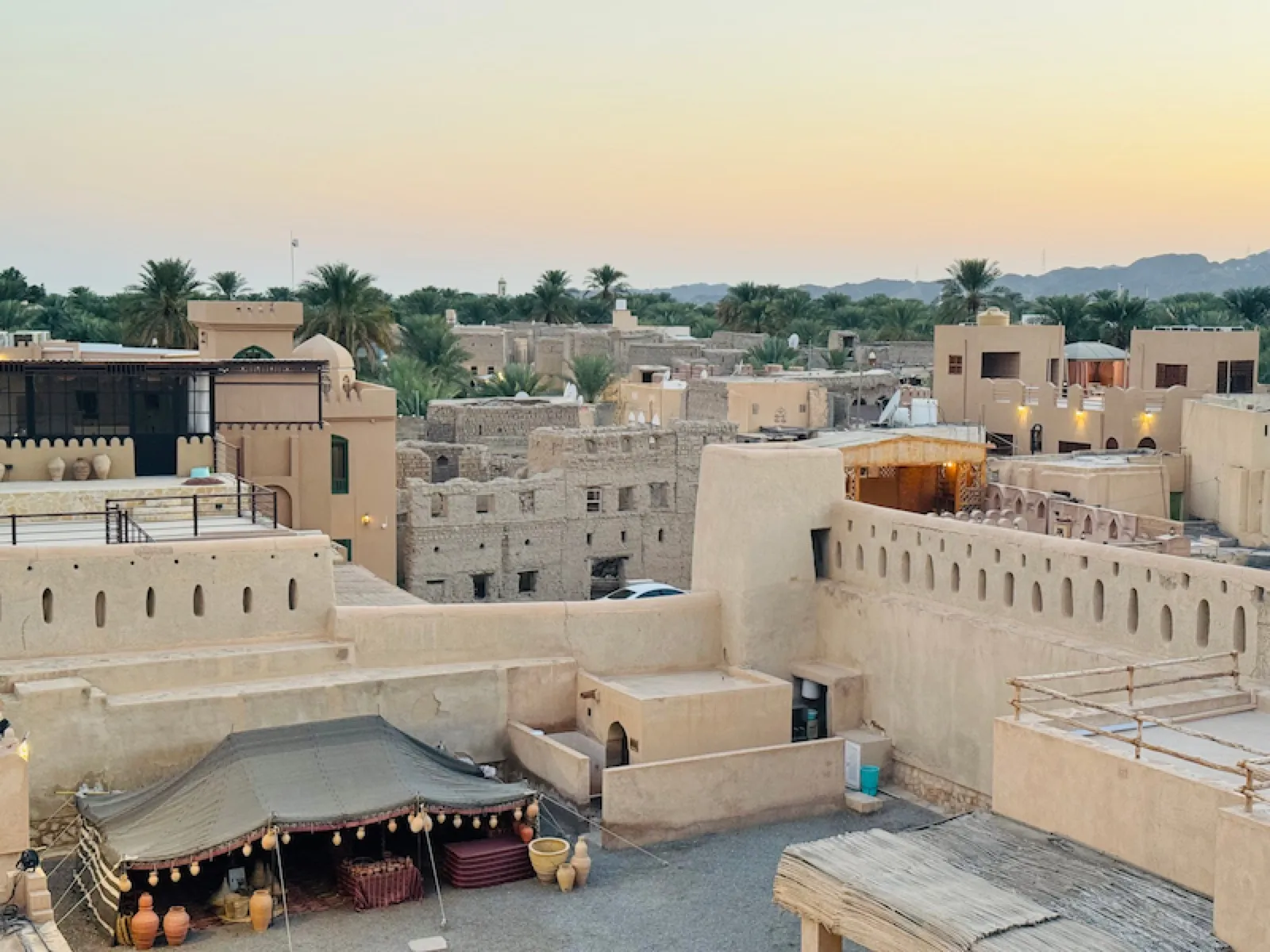
The town is best known for its majestic ochre fort. Built in the 17th century and beautifully restored, it remains one of the country's most important architectural treasures — a vestige of the region's rich military and trading past. The visit is genuinely instructive: an interactive exhibition walks you through Omani history and traditions room by room. Don't miss climbing to the top of the main tower — at 34 metres high, it gives a superb 360° panorama over the mosque dome, the green oasis below, and the Jebel Akhdar mountains rising behind.

Getting there
~1.5 hrs from Muscat on the expressway. Easy, well-signed.
Where to sleep
Antique Inn — a restored heritage house a short walk from the fort. Rooftop terrace, small pool, full of character.
Don't miss
Friday morning souk. Arrive by 7am before the heat and tour buses.
What to see & do
  • Nizwa Fort

    The enormous round tower we wrote about above is the centrepiece, but the fort is much bigger than that one tower. Inside, twenty galleries walk you through Omani history, traditional crafts, and weaponry. Plan a full two hours.

  • Nizwa Souk

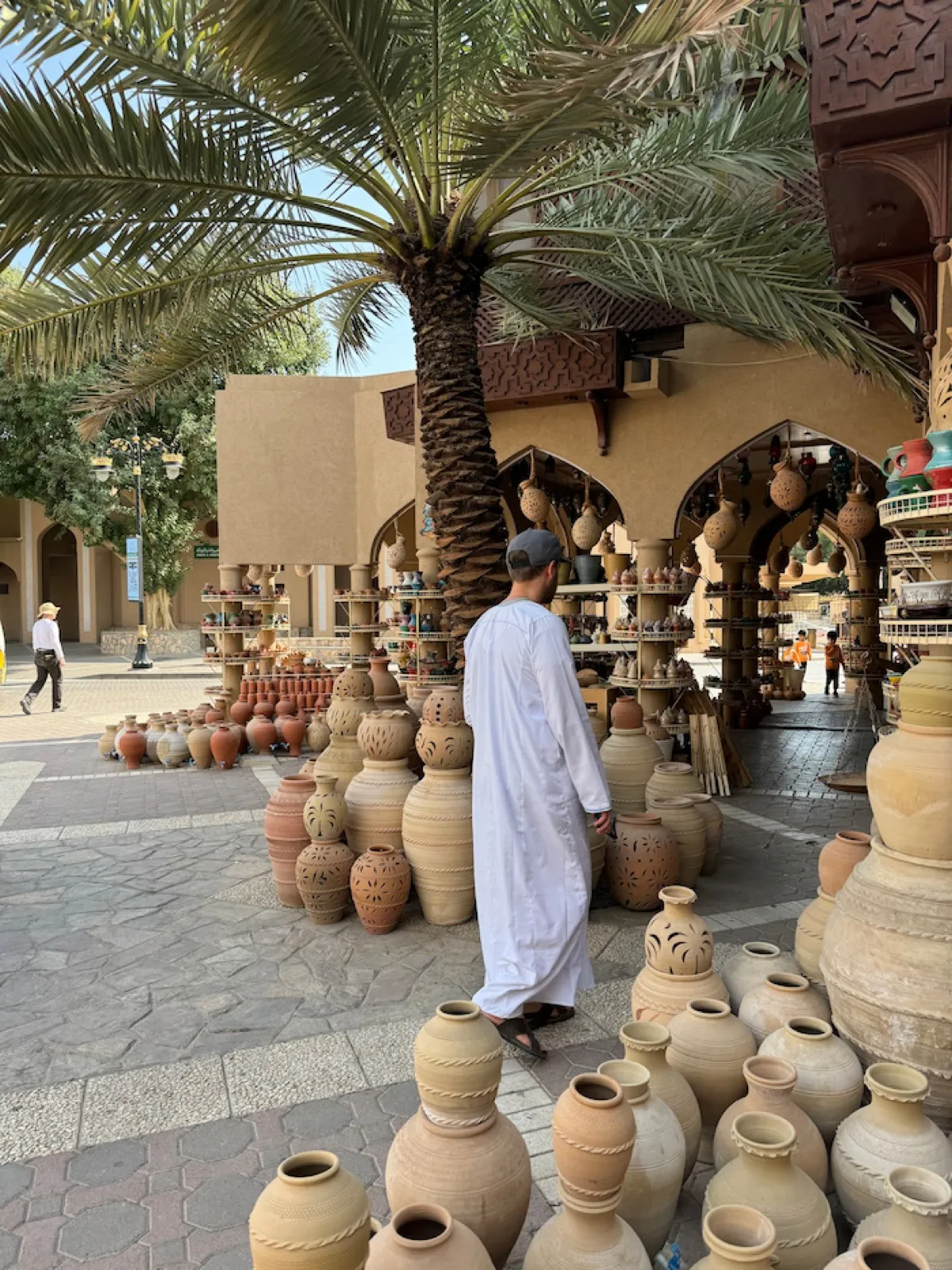
    A maze of small shops selling silver jewellery, khanjars (curved daggers), frankincense, pottery, and dates. Friday mornings include a full livestock market that has been running on the same spot for hundreds of years.

  • Bahla Fort

    A 30-minute drive west. UNESCO-listed, older and more atmospheric than Nizwa Fort itself, built out of mud-brick that has been weathered into something almost organic. Less polished than Nizwa, which is precisely the point.

  • Jabrin Castle

    45 minutes from Nizwa, often combined with Bahla. The interior is the reason to come: hand-painted ceilings, intricate Quranic inscriptions, and beautifully restored period rooms. The most decorative of the Omani forts.

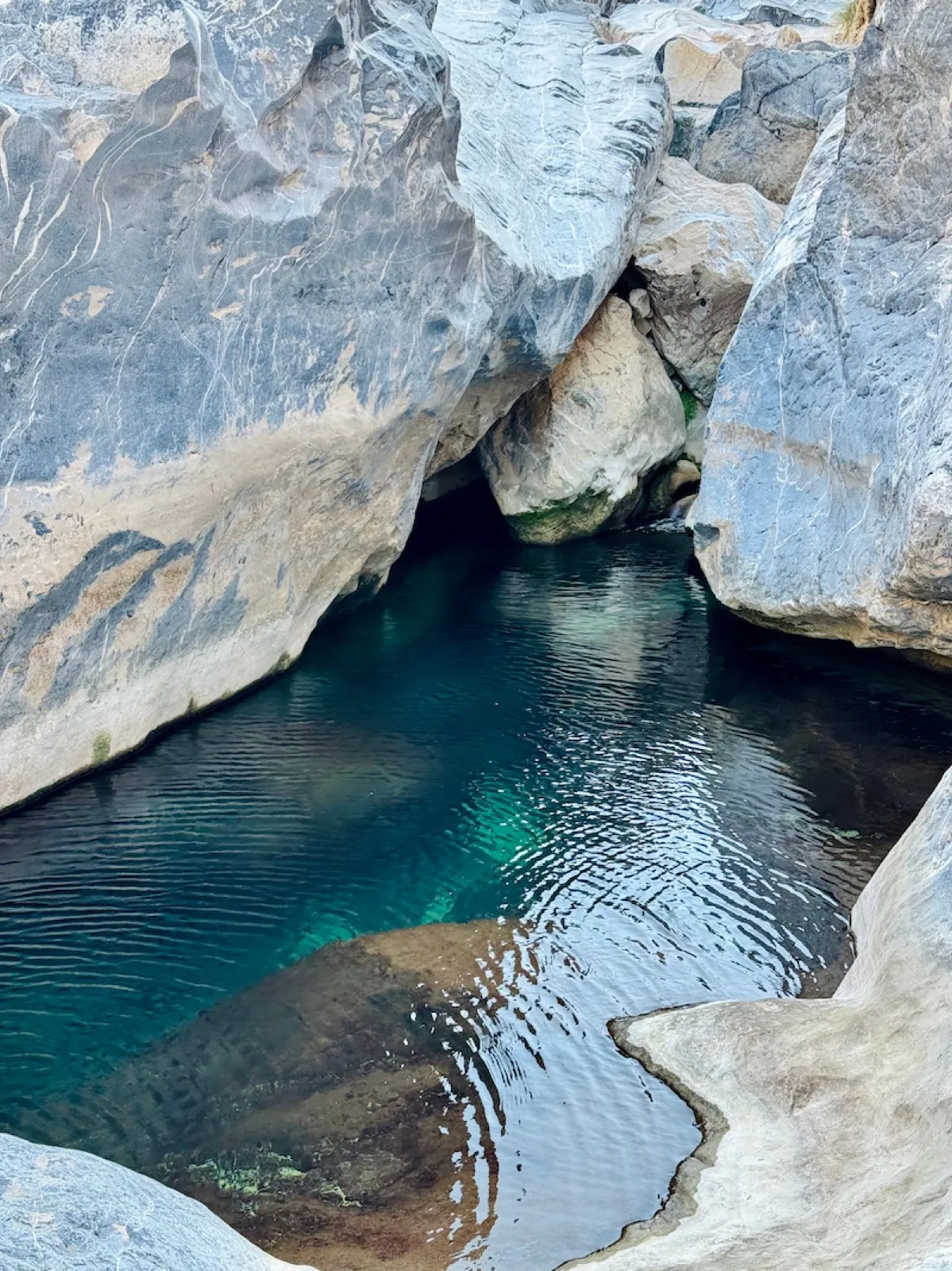
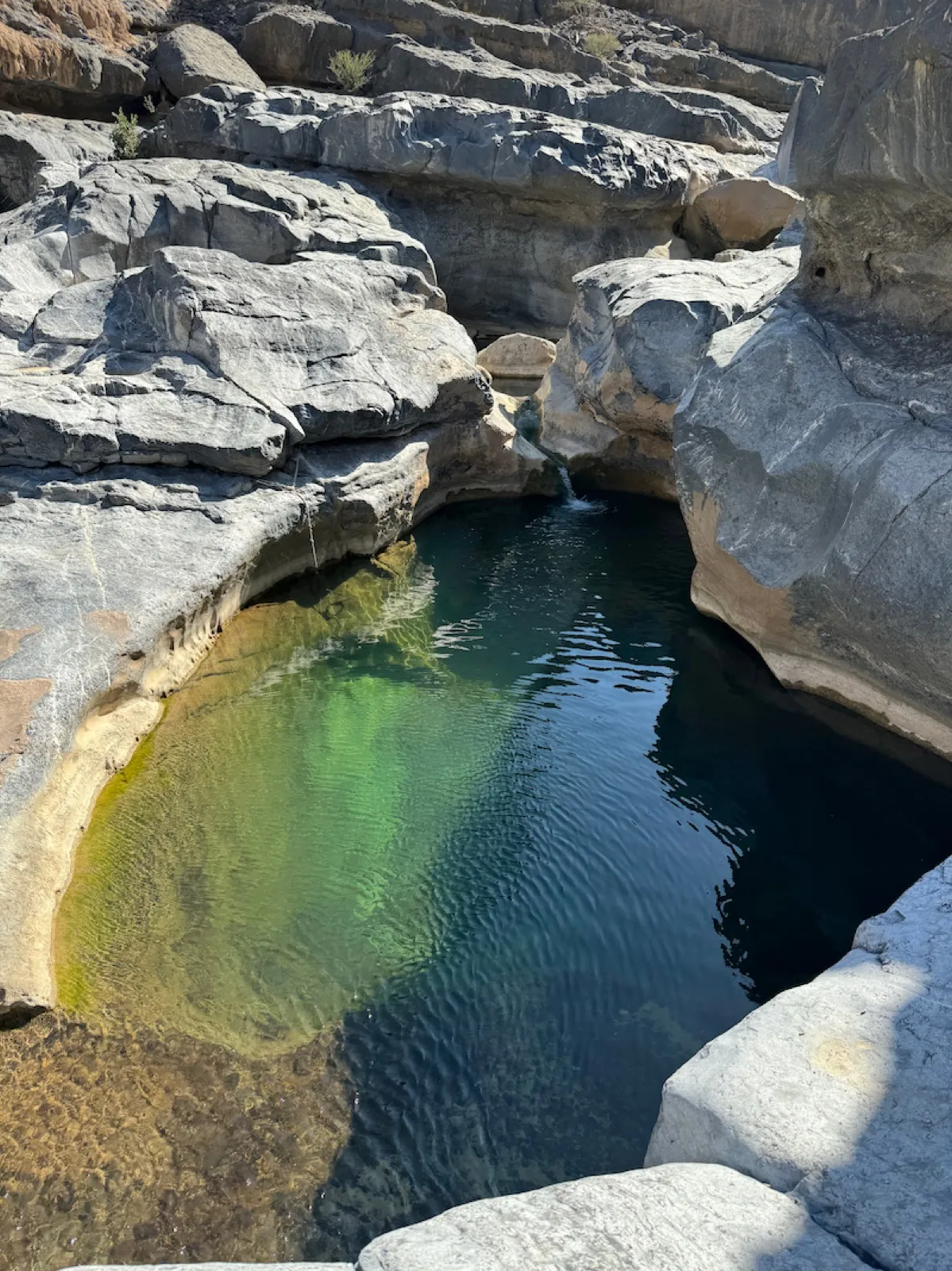
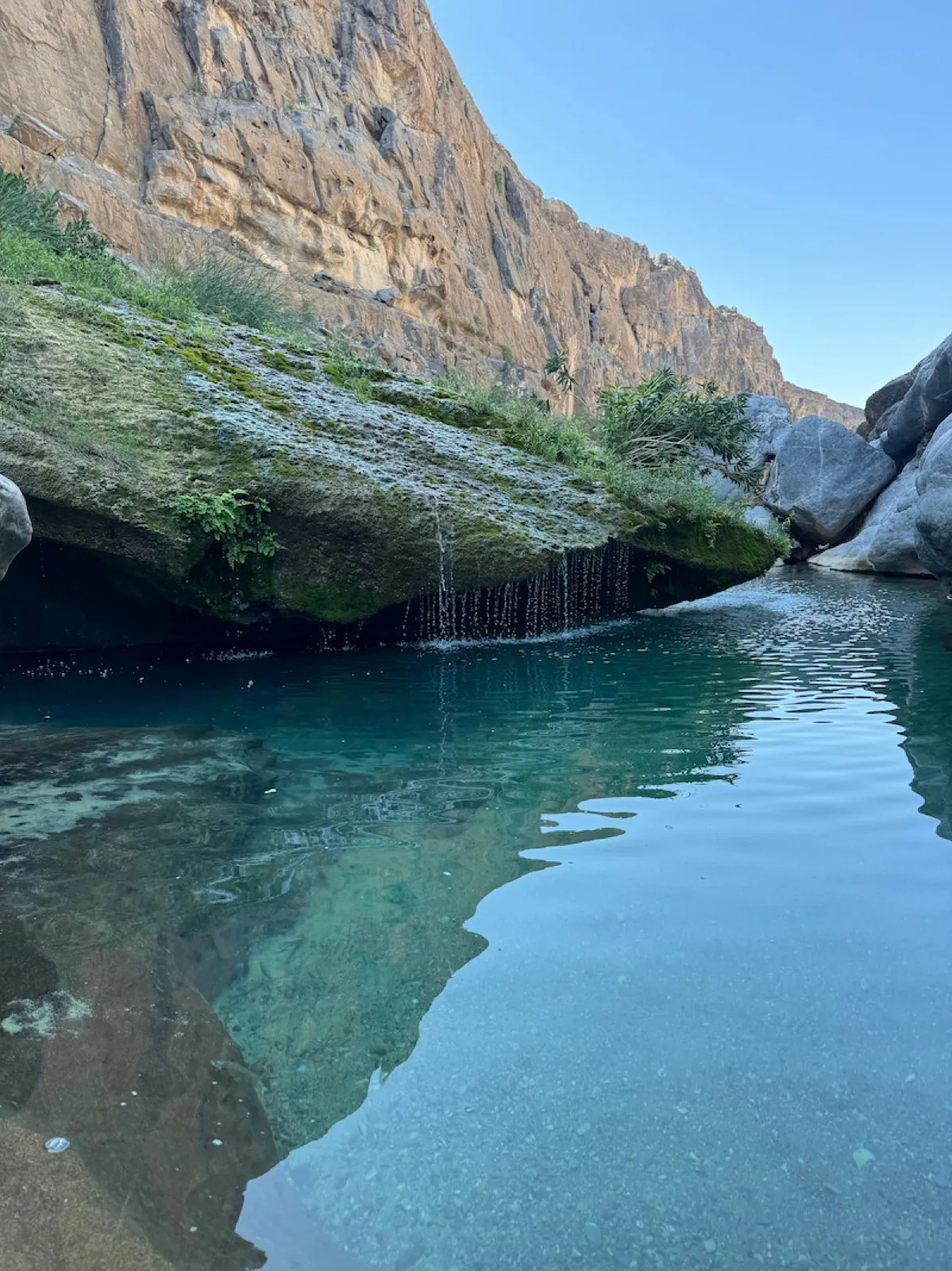
Wadi Damm was one of our most beautiful discoveries. Unlike Wadi Bani Khalid or Wadi Shab, it's barely on the tourist map — and you feel it the moment you arrive. We didn't see a single other person the whole day. Just us, the canyon, and the turquoise water. The kind of place where you can lay your swimsuit out on the rocks and sunbathe for an hour, completely alone.

The walk in takes about an hour to reach the most beautiful pool, but the path passes plenty of smaller turquoise pools along the way, so you can stop wherever you like. The final one — at the end of the hike — is the one to push for: a deep turquoise basin fed by a small waterfall that drops through a cleft in the rock, framed by moss and tiny wildflowers. You can stand right under it. It's magic.

Getting there
~1h 30 west of Nizwa on the Ibri road. Paved the whole way, no 4×4 needed. In Google Maps, search "Wadi Damm Parking" — not "Wadi Damm" — to avoid a wrong turn.
The hike
From the car park, follow the falaj ~20 min to a dry dam, then ~20 min along the rocks to a big pool, then ~15 min past the rope-climb boulder to the final waterfall pool. About 1 hr each way.
Bring
Proper shoes with grip, swimwear, water, picnic. No café, no shade.
Back to top
07
Days 12–14 · 2–3 nights

Jebel Shams

Oman's Grand Canyon. The highest peak in the country. Nothing could have prepared me.

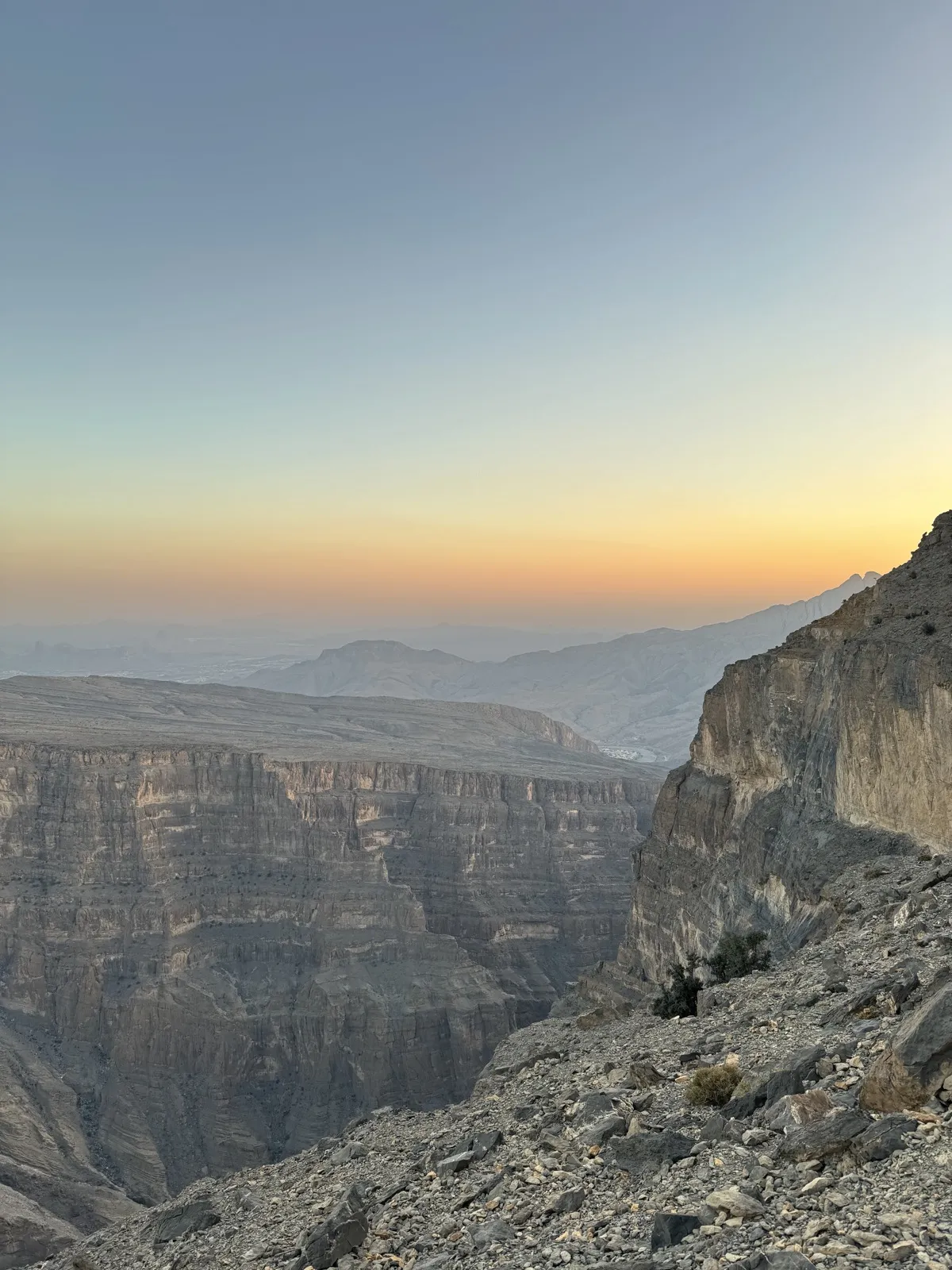
At 3,009 metres, Jebel Shams is the roof of Oman — and the Wadi Ghul canyon beneath it is genuinely comparable to the Grand Canyon in scale. The drop from the rim to the canyon floor is over a kilometre. But unlike the American version, here you can park at the rim, walk to the edge, and find yourself completely alone. There are no railings, no visitor centre, no signs telling you to stand back. Just rock, sky, and altitude. The temperature drops sharply at the top — bring layers even in summer. End the route here. It's the right place to finish.

Getting there
4×4 essential — the road to the summit is steep and rocky. ~1 hr from Nizwa.
Where to sleep
Sama Heritage Home — at the start of the Balcony Walk. See below.
Temperature
10–15°C cooler than the coast at the summit. Bring warm layers.
Highlights
  • Balcony Walk (W6 trail)

    A 4 km out-and-back along the canyon rim at around 1,900 m, passing the abandoned village of As Sab and old watchtowers built into the cliff. The drop to your left is constant and dramatic. About 3–5 hours depending on pace. Moderate fitness, no technical skills needed. Start at sunrise.

  • Summit road at dawn

    A 4×4 drive to the top before sunrise. The canyon fills with shadow and light as the sun moves across it, and the rock walls turn through gold, rose, and amber in the space of about forty minutes. Bring something warm — it can be near freezing at the summit.

  • Wadi Ghul viewpoint

    The main lookout, accessible by paved road. Even if you do nothing else here, stand at the edge for an hour. The silence is what stays with you.

  • Rose gardens

    If you're travelling in spring (April–May), don't miss the rose water harvest on the slopes of Jebel Akhdar. The terraced fields turn pink and the whole mountain smells of damask roses. The water is distilled in small village stills and bottled on the spot.

Where to sleep · highly recommended
Sama Al Khutaim Heritage Home
3 rooms · canyon rim · directly at the W6 trailhead
Don't skip

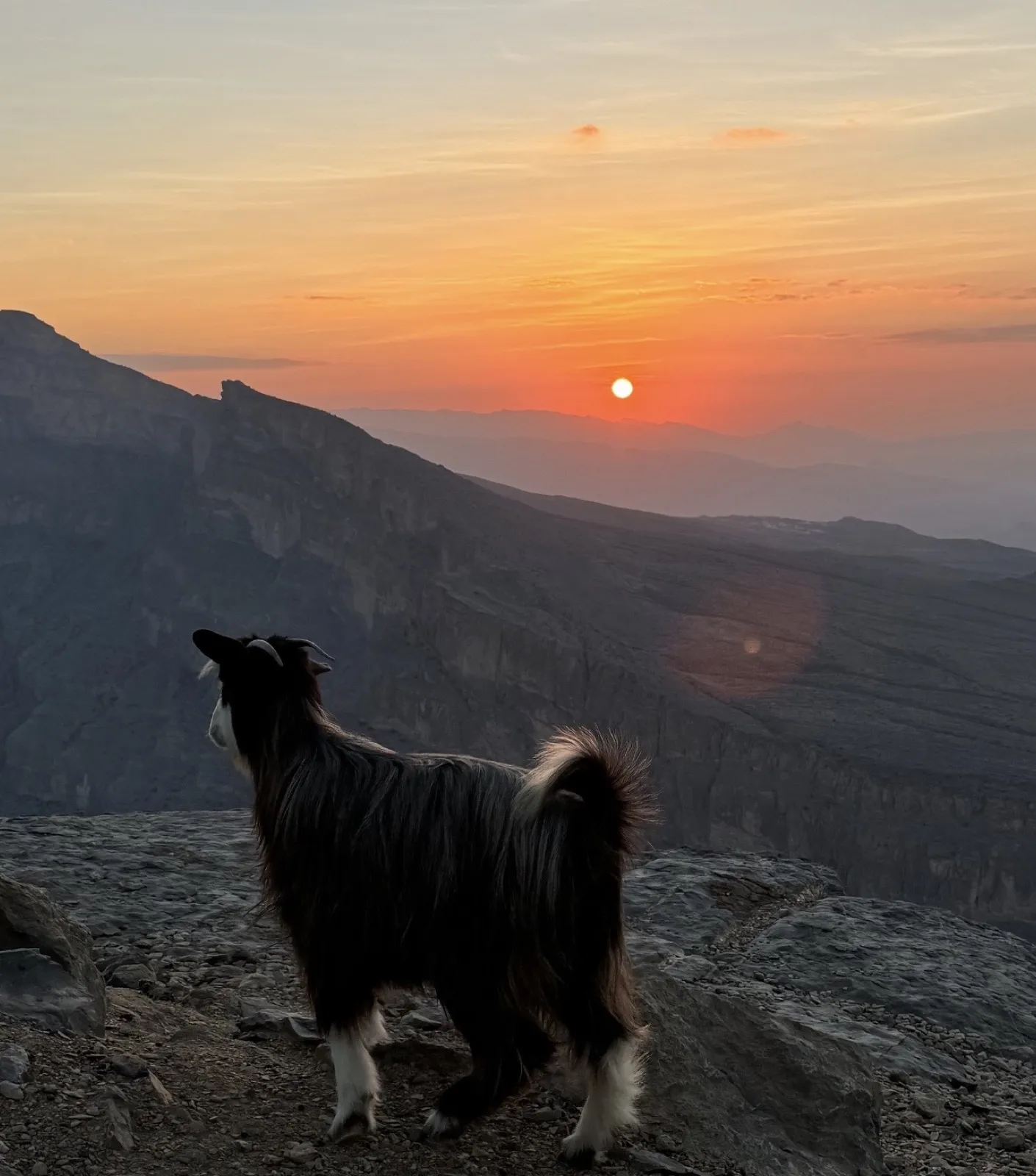
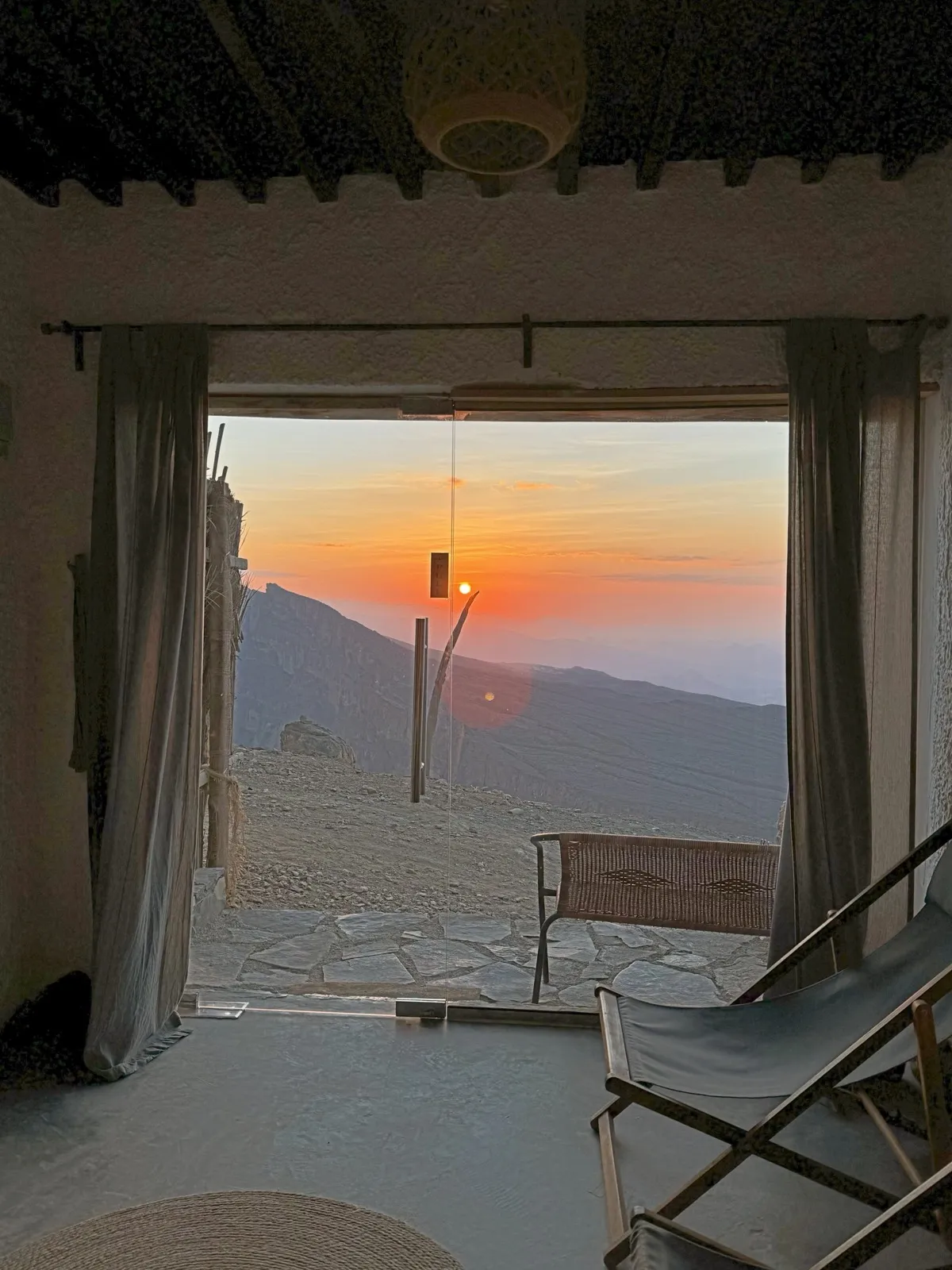
We stayed at Sama Al Khutaim Heritage Home and it was one of the highlights of the whole trip. Only three rooms, perched right on the rim of the canyon, with stone-and-straw walls and traditional Omani interiors. The view from the bed is straight into Wadi Ghul. Mohsen, who runs it, cooks dinner himself — a generous, slow meal of Omani home cooking served at a shared table. Goats wander past your room. There is no other accommodation like it.

But the real reason to stay here is the location: the Balcony Walk starts literally outside your door. You roll out of bed at sunrise and you're on the trail in three minutes. No drive, no parking — just walk straight onto the canyon rim. Highly, highly recommend.

💡

Practical: Book months in advance — only 3 rooms, and word is out. Dinner and breakfast are included. A proper 4×4 is needed for the last stretch of road, and there's no signage — get exact GPS coordinates from the host.

Chiva's note

I ended the route sitting at the canyon rim at dusk, watching the light leave the rock walls in slow bands of gold, rose, and purple. Oman gave me two weeks of exactly this — places that asked nothing of me except to be present. Go. Trust the sequence. Come back.

Back to top
The rating system
Worth knowingGood context for the route.
GoodYou'll remember it positively.
ExcellentYou'll talk about this one.