I live in Zug, a Swiss town with everything except decent coffee shops. I mean the ones with warm lighting and worn wood, where someone weighs the beans and pours with care.
Every time I land in London, I get excited about trying them all. I'm not really a coffee person, but I love the feeling of those places, the ritual built around a cup. Maybe that's what I'm actually chasing in a coffee shop. Not the drink, the ritual. And here in Europe, I miss rituals and codes. Where I grew up, they were everywhere.
In Mauritania, tea is a cultural foundation rich with unspoken codes. We're a society of oral tradition, and tea carries layers of meaning. The whole ritual rests on what we call the three J's.
Tea is served slowly, with preparation a choreography. We pour it into small glasses, stopping when there's foam. Each guest must receive three rounds. The first is strong, the second balanced, and the third sweet. This mirrors how conversations deepen. Reaching the third glass can take hours. In a world rushing toward optimization, tea is a reminder that some things are meant to be savored slowly.
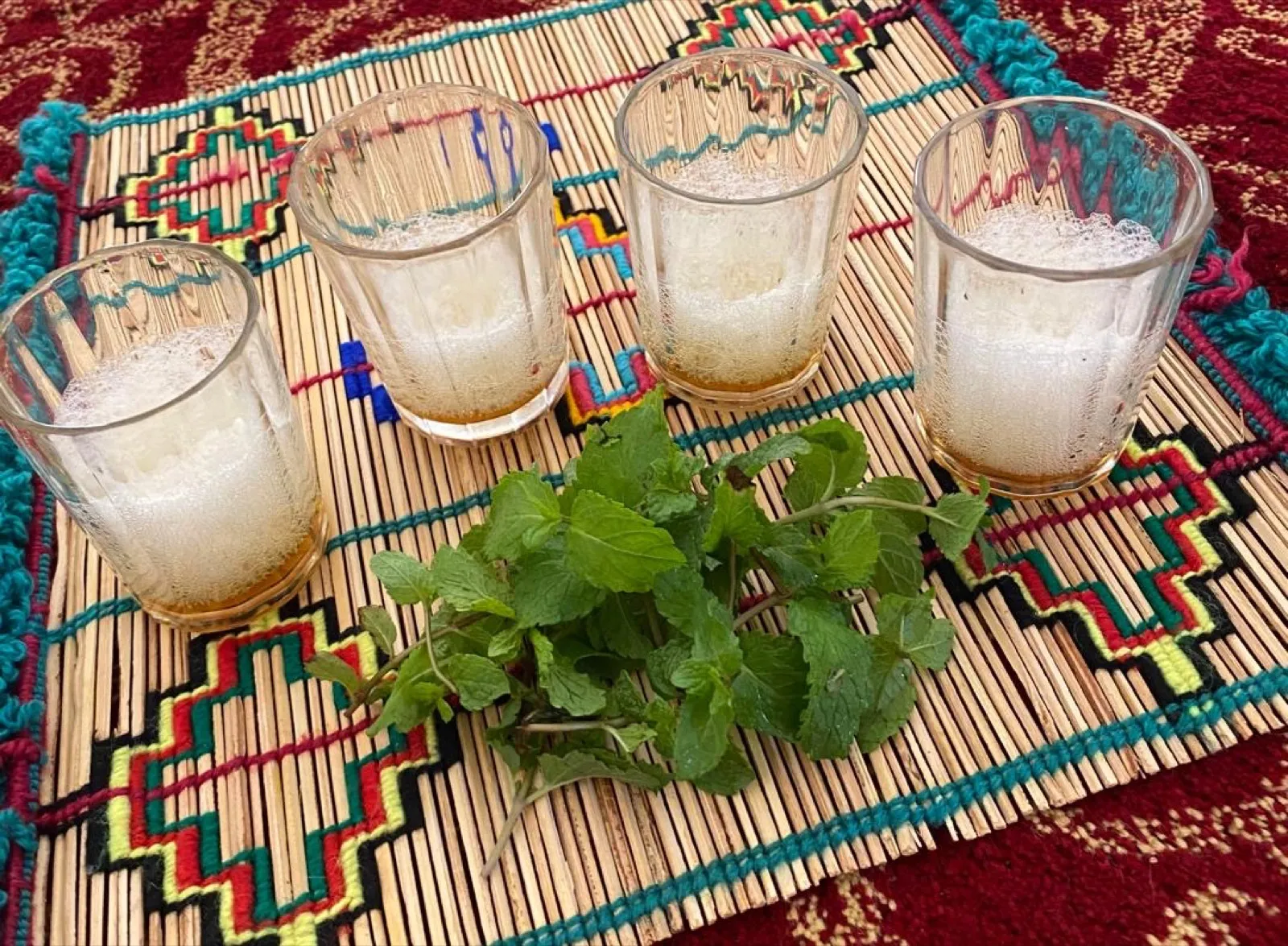
It's unspoken etiquette that you do not leave before all three are served. For women, serving is an art, a graceful expression.
I once watched a documentary about men on the iron ore train crossing the desert, still making tea on top. Even in harsh conditions, the ritual remains: connection, time, and being with others.
The codes run deep. Who receives the first glass? Often the eldest or the most important guest. It's a conservative society, and for women, tea-making is a subtle art of charm. We're covered and modest, but the grace in pouring and serving reveals a hidden elegance. I always felt anxious preparing tea, with so many eyes watching, so many codes to uphold. But that's the beauty of it: tea is where time slows down, and connection is made. Even on the iron ore train, the ritual holds.
Tea is a moment of presence in a world that often forgets to pause.
Back to top